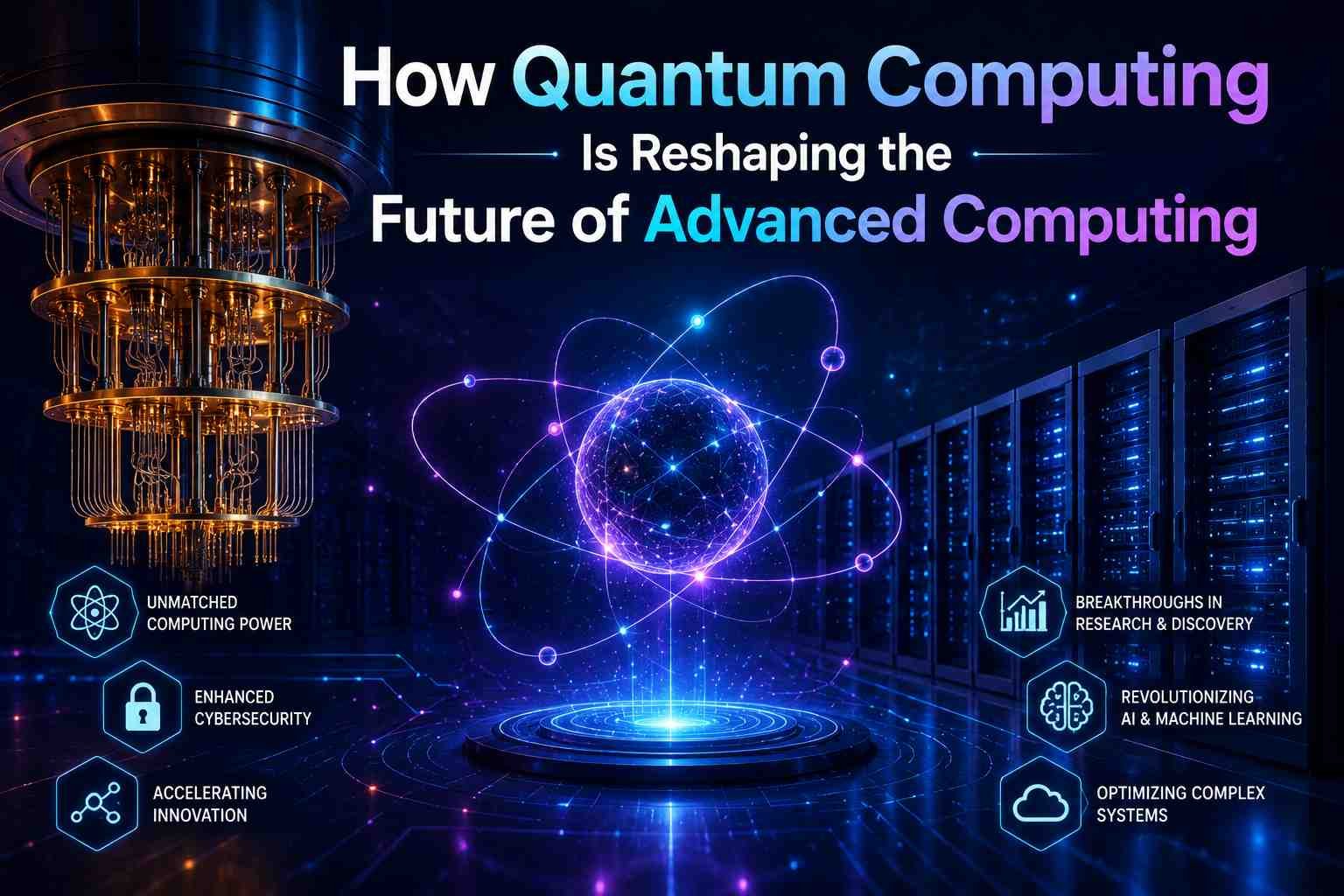
Quantum computing is steadily moving from theoretical research labs into practical business and scientific applications. Unlike classical computing systems that process information using binary bits, quantum computers rely on qubits, enabling them to perform highly complex calculations at unprecedented speeds. This capability is opening new possibilities across industries such as healthcare, finance, logistics, cybersecurity, and material science.
The growing need for advanced computational power is accelerating investments in quantum technologies worldwide. According to a recent quantum computing industry analysis, the industry was valued at USD 1.1 billion in 2023 and is projected to reach USD 5.2 billion by 2030, expanding at a CAGR of 38.98% during 2024–2030. The increasing demand for high-performance computing infrastructure and faster data processing capabilities continues to support industry expansion.
Why Quantum Computing Is Gaining Global Attention
Quantum computing has the potential to solve problems that would take traditional supercomputers years to process. Businesses and research institutions are exploring how these systems can optimize complex simulations, accelerate artificial intelligence training, and improve decision-making capabilities.
Governments are also increasing investments in quantum initiatives to strengthen technological competitiveness and national security. Organizations such as the National Institute of Standards and Technology (NIST) are actively working on post-quantum cryptography standards to prepare digital infrastructure for future quantum threats. This reflects the growing importance of quantum-ready cybersecurity frameworks.
Expanding Applications Across Industries
The healthcare sector is exploring quantum computing for drug discovery and molecular simulations. By analysing complex biological interactions more efficiently, researchers could reduce the time required for pharmaceutical development. Financial institutions are also evaluating quantum algorithms to optimize portfolio management, fraud detection, and risk analysis.
In manufacturing and logistics, quantum systems are being studied for supply chain optimization and route planning. These capabilities may help enterprises reduce operational costs while improving efficiency. Additionally, industries handling large datasets are increasingly interested in combining artificial intelligence with quantum computing to process information more effectively.
The energy sector is also becoming a significant adopter. Research surrounding quantum computing applications in oil and gas operations highlights how the technology can improve exploration modeling, reservoir simulations, and operational planning. Advanced optimization capabilities are helping companies analyze highly complex datasets more accurately.
Role of Artificial Intelligence and High-Performance Computing
The rise of artificial intelligence is contributing significantly to quantum computing development. AI systems require extensive computational resources for model training and data analysis. Quantum processors could potentially accelerate machine learning tasks that are computationally expensive for classical systems.
At the same time, the growing adoption of high-performance computing infrastructure is creating a supportive ecosystem for quantum innovation. Enterprises are increasingly investing in advanced computing architectures to handle expanding workloads, scientific research, and enterprise analytics. Industry observers also note that quantum computing is emerging as a complementary technology alongside AI and high-performance computing environments.
Cybersecurity and the Rise of Post-Quantum Cryptography
One of the most discussed aspects of quantum computing is its potential impact on modern encryption methods. Existing cryptographic systems rely heavily on mathematical problems that are difficult for classical computers to solve. Quantum systems, however, could eventually process these calculations much faster, creating new cybersecurity challenges.
As a result, organizations are accelerating research into post-quantum cryptography (PQC). Governments, financial institutions, and cloud providers are investing in quantum-resistant encryption frameworks to protect sensitive data against future quantum-enabled cyber threats. The growing focus on cybersecurity resilience is expected to remain closely tied to the advancement of quantum technologies.
Challenges Slowing Wider Adoption
Despite its potential, quantum computing still faces several technical and commercial challenges. Building stable quantum systems requires highly controlled environments, advanced cooling technologies, and significant financial investment. Error correction and qubit stability remain major hurdles for researchers and hardware developers.
Another challenge involves the shortage of specialized talent. Quantum computing combines expertise in physics, computer science, mathematics, and engineering, making skilled professionals relatively limited in supply. Educational institutions and technology companies are increasingly launching training programs to address this gap.
Infrastructure readiness is another consideration. Many enterprises are still evaluating how quantum systems can integrate with existing computing environments. Since large-scale deployment remains in the early stages, organizations are adopting cautious investment strategies while monitoring technological advancements.
North America Continues to Lead Innovation
North America remains a prominent region in the global quantum computing landscape due to strong research capabilities, government funding, and the presence of leading technology companies. Organizations including continue investing in quantum hardware and software development.
Universities, start-ups, and public-private partnerships across the United States and Canada are also supporting innovation in quantum algorithms, cloud-based quantum platforms, and next-generation computing architectures. Increasing collaboration between governments and private enterprises is expected to further accelerate research activity.
The Long-Term Outlook for Quantum Technologies
Quantum computing is still in a relatively early stage of commercialization, but industry momentum continues to strengthen. As hardware stability improves and enterprise use cases become clearer, organizations are likely to explore more practical implementations of quantum-enabled solutions.
Future progress will depend on advancements in qubit scalability, software development, infrastructure integration, and cybersecurity preparedness. While widespread adoption may take time, the technology is increasingly being viewed as a foundational component of next-generation computing innovation.
The broader industry focus is no longer limited to experimental research. Instead, businesses and governments are evaluating how quantum systems can address real-world computational limitations across healthcare, finance, energy, logistics, and cybersecurity. As investment activity and technological maturity continue to evolve, quantum computing is expected to play a growing role in the future digital economy.