How Professional Carpet Shampooing Works: From Pre-Treatment to Final Extraction
By SB Cleaning Services 01-10-2026 4
Professional carpet shampooing is a multi-step cleaning process that uses specialised shampoo solutions, agitation equipment, and hot water extraction to break down and remove embedded dirt, allergens, and stains from carpet fibres. The process typically includes inspection, vacuuming, pre-treatment, scrubbing, and final extraction — leaving carpets deeply cleaned rather than just surface-refreshed.
If you have never booked a professional cleaning before, it helps to know exactly what happens during the service. Carpet shampooing is not simply a wash-and-dry job. Each step has a purpose, and understanding the full process helps you set realistic expectations and get the best results for your home or office in Singapore.
Why Carpet Shampooing Is More Than Surface Cleaning
Vacuuming removes loose debris, but it does not reach the compacted dirt, bacteria, and moisture trapped deep within carpet fibres. According to the National Environment Agency (NEA) of Singapore, indoor air quality is directly affected by the cleanliness of soft furnishings, including carpets. Over time, carpets accumulate dust mites, mould spores, and allergens — particularly in Singapore's humid climate — making deep carpet cleaning a health priority, not just an aesthetic one.
Professional shampooing penetrates the pile to lift and suspend contaminants before they are fully extracted. This is what separates a professional service from a DIY rental machine.
The Step-by-Step Carpet Shampooing Process
Step 1: Initial Inspection and Assessment
Before any cleaning begins, a trained technician inspects your carpet. They assess the fibre type (wool, nylon, polyester, or blended), check for pre-existing damage, and identify problem areas such as heavy staining, pet odours, or high-traffic zones. This step determines which cleaning solution and agitation method will be used — preventing damage to delicate fibres.
This is also the point where the technician notes any areas requiring extra attention, such as stains from food, ink, or pet accidents.
Step 2: Dry Vacuuming
A thorough dry vacuum pass removes loose surface dirt, dust, hair, and debris before any liquid is introduced. Skipping this step would cause surface particles to mix with the shampoo solution, forming a muddy residue that makes cleaning harder, not easier.
Professional-grade vacuums used at this stage have stronger suction than most household units, pulling up embedded particles that typical vacuuming misses.
Step 3: Pre-Treatment of Stains and High-Traffic Areas
Pre-treatment is one of the most critical stages of the carpet cleaning process. Technicians apply a targeted pre-treatment solution directly to stained areas, grease spots, and heavily soiled zones. This solution begins breaking down organic matter, oils, and bonded soils before the main cleaning agent is applied.
Dwell time matters here. The solution is allowed to sit for several minutes to work into the fibres. Rushing this step is a common shortcut in low-quality services — and it shows in the final result.
Step 4: Shampoo Application and Agitation
This is the core of the process. A specially formulated carpet shampoo is applied across the carpet surface, then worked into the fibres using a rotary machine or brush agitator. The mechanical action creates foam that surrounds and lifts dirt particles, suspending them so they can be extracted.
The shampoo used in professional carpet shampooing is pH-balanced for carpet fibres and designed to rinse out cleanly — unlike household detergents, which can leave sticky residues that attract more dirt over time.
Step 5: Hot Water Extraction (Final Rinse and Removal)
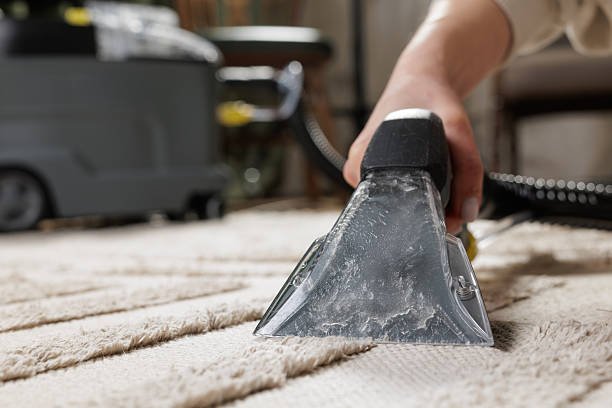
After agitation, a hot water extraction machine — often called a steam cleaner — is used to rinse the carpet thoroughly and simultaneously vacuum out the loosened dirt, shampoo residue, and moisture. High-temperature water is injected deep into the carpet pile and immediately extracted, along with everything it has suspended.
This step is what delivers truly deep carpet cleaning. It removes not just visible grime but also bacteria, mould spores, and allergens that are invisible to the naked eye. Professional machines extract significantly more moisture than portable rental units, which is critical for fast drying in Singapore's humidity.
Step 6: Post-Treatment and Grooming
After extraction, technicians may apply a post-treatment spray to neutralise any remaining odours or apply a fabric protector that helps repel future staining. The carpet pile is then groomed with a carpet rake or brush to restore the natural direction of the fibres and improve the final appearance.
Grooming also helps the carpet dry more evenly and prevents the pile from matting down as it dries.
What to Expect After the Service
Drying time typically ranges from two to six hours depending on carpet thickness, the amount of moisture used, and ventilation in the space. In Singapore's climate, keeping air conditioning running or windows open significantly speeds up drying.
Here is what you should do while the carpet dries:
- Avoid walking on the carpet with outdoor footwear
- Keep pets off the carpet until fully dry
- Place aluminium foil or plastic tabs under furniture legs to prevent rust or wood staining
- Run a fan or air conditioning to improve air circulation
A faint soapy smell immediately after the clean is normal and will dissipate as the carpet dries. If the smell persists beyond 24 hours, it may indicate that insufficient extraction was done — a sign of equipment quality differences between providers.
How Often Should You Shampoo Your Carpet in Singapore?
For most residential carpets in Singapore, professional carpet shampooing is recommended every six to twelve months. Homes with children, pets, or allergy sufferers may benefit from more frequent cleaning — every three to four months. Commercial spaces with daily foot traffic typically require quarterly deep cleaning to maintain hygiene standards.
Singapore's high humidity accelerates the growth of mould and dust mites in carpets, making regular professional cleaning more important than in drier climates.
Getting the Most From Your Professional Carpet Shampooing Service
A few simple preparations make a noticeable difference in results. Clear the area of small furniture and fragile items before the technician arrives. Point out specific stains or odour-affected areas during the initial inspection. And avoid spot-treating stains with household bleach or strong chemicals before the service — these can set stains permanently or damage fibre colour.
Frequently Asked Questions
Q: What is the difference between carpet shampooing and steam cleaning?
Carpet shampooing uses a foaming shampoo solution agitated into fibres before extraction, while steam cleaning (hot water extraction) uses high-pressure heated water to rinse and extract. Many professional services combine both steps — applying shampoo first, then using hot water extraction to rinse out residue and deep-clean simultaneously.
Q: How long does professional carpet shampooing take?
A standard room typically takes 30 to 60 minutes to clean, depending on carpet size, soiling level, and the number of stain treatments required. A full apartment or office floor may take two to four hours. Drying time after the service ranges from two to six hours.
Q: Is carpet shampooing safe for children and pets?
Yes, professional carpet shampooing uses pH-balanced, low-residue solutions that are safe once the carpet is fully dry. Reputable providers in Singapore use solutions that rinse out completely during extraction. Keep children and pets off the carpet during the process and until the carpet is dry — typically two to six hours.
Q: Will carpet shampooing remove all stains?
Most fresh and recent stains can be fully removed with professional treatment. However, old set-in stains, chemical bleaching, or permanent dye damage may not be fully reversible. Pre-treatment during the service significantly improves stain removal outcomes compared to surface-only cleaning methods.
Q: How should I prepare before a carpet shampooing appointment?
Clear small furniture, toys, and fragile items from the area before the technician arrives. Avoid using household chemicals or bleach on stains beforehand. Point out any specific problem areas during the initial inspection so the technician can apply targeted pre-treatment where it is needed most.
Q: How often should carpets be professionally shampooed in Singapore?
Residential carpets in Singapore should be professionally shampooed every six to twelve months. Households with pets, young children, or allergy sufferers benefit from cleaning every three to four months. Singapore's humid conditions accelerate dust mite and mould growth in carpet fibres, making regular deep cleaning especially important.
Tags : Carpet Shampooing