Introduction
In today’s rapidly evolving digital landscape, the tech industry is arguably the most dynamic and trend-sensitive sector. Market trends—be they technological advancements, shifts in consumer behavior, or macroeconomic factors—have a profound influence on how tech companies formulate, execute, and adapt their business strategies. From product development to marketing, from talent acquisition to investment decisions, the alignment with market trends determines whether a business will thrive or fall behind.
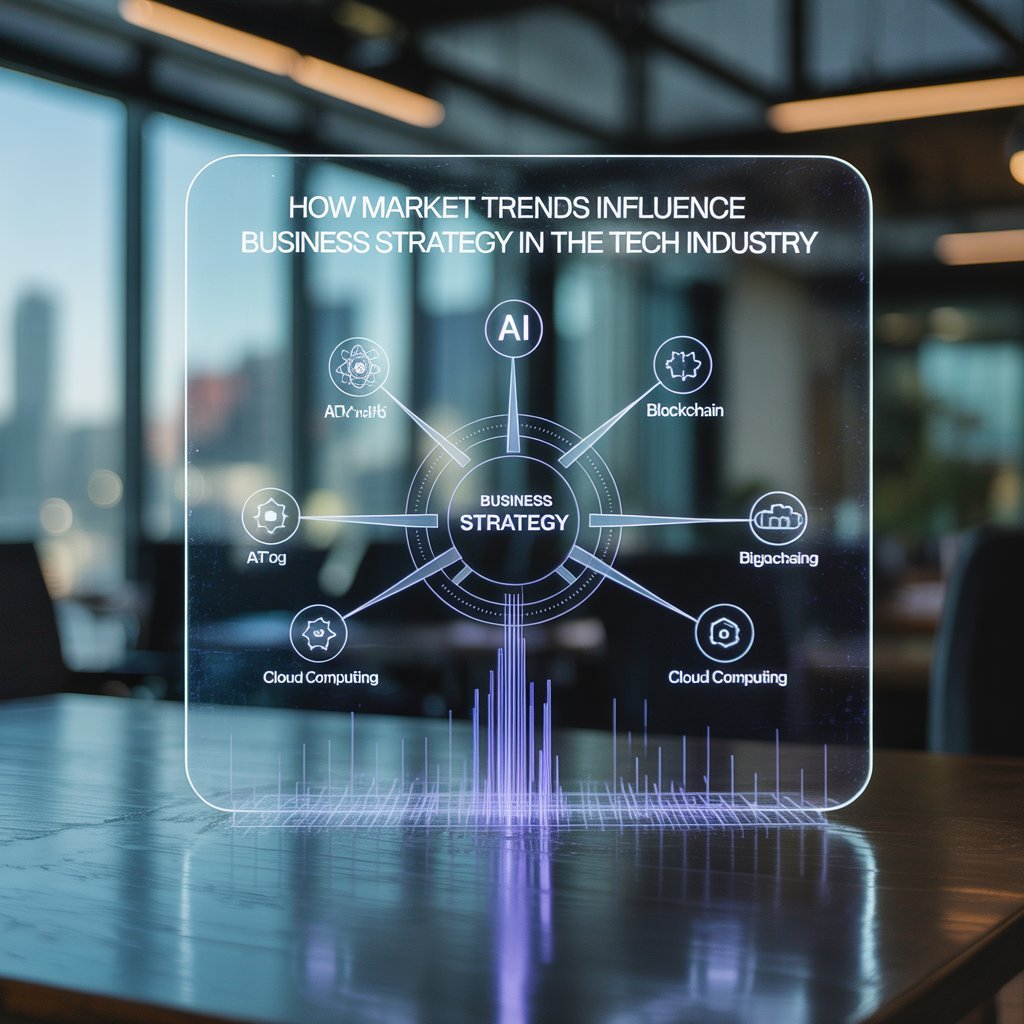
This in-depth article explores how market trends shape business strategy in the tech industry. We’ll examine the types of trends affecting tech businesses, the importance of data-driven insights, real-world examples, and best practices for aligning strategy with trends to remain competitive in an ever-changing market.
Understanding Market Trends in the Tech Industry
Market trends are patterns or shifts in the behavior of consumers, technologies, regulations, or global events that affect industries over time. In the tech world, these trends emerge quickly and can change direction within months. The fintech sector continues to experience rapid expansion as technological innovation and consumer demand for digital financial solutions reshape the global economy.
Some characteristics of tech industry market trends include:
- High volatility
- Driven by innovation
- Strong influence from consumer preferences
- Global impact
Recognizing and interpreting these trends is vital for strategic planning, especially in a sector where being first can mean everything.
Types of Market Trends Impacting Tech Businesses
1. Technological Advancements
Emerging technologies such as:
- Artificial Intelligence (AI)
- Quantum Computing
- Blockchain
- Augmented/Virtual Reality (AR/VR)
- 5G Networks
Companies must adapt quickly, investing in R&D and pivoting products to stay relevant.
2. Consumer Behavior Shifts
Modern consumers are more informed and tech-savvy than ever before. Trends such as:
- On-demand services
- Subscription models (SaaS)
- Personalization
- Privacy concerns
...are pushing tech companies to shift focus from product-centric to user-centric strategies.
The evolving behavior of digital consumers has pushed businesses to rethink how they reach potential customers. With the growing demand for hyper-local targeting and direct user engagement, many companies—especially in emerging markets—are leveraging classified ads sites as part of their marketing strategy. These platforms not only offer visibility but also generate organic traffic, making them a valuable asset for tech-driven businesses aiming to align with shifting market dynamics.
3. Regulatory and Policy Changes
Governments worldwide are imposing stricter regulations on data privacy (e.g., GDPR, CCPA), antitrust practices, and AI usage. Non-compliance not only leads to legal risks but can damage brand reputation.
4. Global Events
Geopolitical tensions, pandemics (like COVID-19), and environmental crises influence supply chains, remote work trends, and investment flows. These external shocks force businesses to rethink logistics, cybersecurity, and workforce strategies.
The Role of Data Analytics in Identifying Trends
Tech businesses rely heavily on data analytics to spot, validate, and respond to market trends. Techniques include:
- Predictive analytics to forecast future demand
- Social listening to understand customer sentiment
- Competitive intelligence tools to monitor rivals
- Big data analysis to uncover patterns
By using AI and machine learning, companies can process vast amounts of market data in real-time, enabling smarter and faster decisions.
How Market Trends Shape Business Strategies

1. Product Development
Companies that recognize trends early are able to develop products that meet emerging needs. For example:
- The rise of remote work drove Zoom and Microsoft Teams to expand features rapidly.
- The demand for eco-friendly tech is pushing companies like Dell and HP to produce sustainable devices.
2. Marketing Strategy
SEO, influencer marketing, omnichannel presence—these are all responses to changing digital consumption habits. Trends dictate tone, messaging, and even the platforms where tech firms engage users.
3. Investment & Funding Decisions
Investors follow trends too. A surge in AI startups in 2023, for example, was driven by investor belief in generative AI’s long-term potential. Tech firms must align their strategies to attract venture capital and manage financial risk.
4. Talent Acquisition and Workforce Planning
Trends such as the gig economy, remote-first culture, and upskilling influence hiring strategies. Tech businesses now seek talent not just with technical skills, but also adaptability and cross-functional expertise.
Case Studies: Real-World Examples
Apple Inc.
Apple consistently stays ahead by monitoring design, user experience, and hardware innovation trends. Its pivot to custom silicon (M1, M2 chips) aligned with growing demand for performance and energy efficiency.
Netflix
From DVD rentals to a dominant streaming platform, Netflix's strategy was shaped entirely by observing content consumption trends. Their push into original content was a proactive response to changing viewer habits.
Nvidia
Nvidia adapted from being a GPU maker to a major AI infrastructure player, capitalizing on the trend of deep learning and high-performance computing.
Adapting to Disruptive Trends: AI, Cloud, and More
The most disruptive trends today include:
- AI & Machine Learning: Automation and personalization are revolutionizing every facet of business.
- Cloud Computing: Scalability and cost-efficiency are driving cloud-first strategies.
- Edge Computing & IoT: New opportunities in real-time data processing and connected devices.
- Cybersecurity: Rising cyber threats make security a core part of business strategy, not just IT.
Tech companies that delay embracing such trends risk being overtaken by more agile competitors.
Challenges Businesses Face in Trend Adaptation
Despite the importance, adapting to trends is not easy. Common challenges include:
- Legacy systems and infrastructure
- Internal resistance to change
- High R&D costs
- Shortage of skilled professionals
- Regulatory uncertainty
Overcoming these challenges requires a flexible mindset and an innovation-first culture.
Best Practices for Aligning Strategy with Market Trends
- Establish a Trend Monitoring System – Use tools and teams to track relevant trends continuously.
- Invest in R&D and Innovation Labs – Stay on the cutting edge by fostering experimentation.
- Cultivate Agility – Implement agile frameworks to pivot quickly when trends shift.
- Encourage Cross-Functional Collaboration – Diverse teams interpret trends from multiple perspectives.
- Maintain Customer Feedback Loops – Stay connected to evolving user needs and sentiments.
Conclusion
In the tech industry, where change is the only constant, aligning business strategies with market trends is not optional—it is essential. By understanding trends, leveraging data, and fostering a responsive organizational culture, tech businesses can not only survive but lead in their respective markets.
Those who ignore or underestimate trends risk stagnation, irrelevance, or extinction. In contrast, those who adapt and innovate can turn market shifts into strategic opportunities.