The Middle East is experiencing one of the most significant leadership transformations in its corporate history. Organisations across the UAE, Saudi Arabia, Qatar, and the wider GCC are navigating rapid economic diversification, generational workforce shifts, and an intensifying demand for leaders who can operate with both strategic clarity and human intelligence.
Against this backdrop, executive coaching has moved from a niche professional development tool to a mainstream leadership priority. Organisations that once viewed coaching as a last resort for underperforming leaders now invest in it deliberately, as part of how they build leadership pipelines and sustain high performance at the top.
Why the Middle East Is Paying Attention
For much of the last two decades, leadership development in the region relied heavily on training workshops, classroom-based learning, and formal mentorship within organisations. These approaches served a purpose, but they had limits. A two-day workshop does not change how a leader behaves when the pressure is high. Knowledge delivered to a group rarely translates into lasting individual behaviour change.
Executive coaching works differently. It is not about delivering content. It is about creating the conditions for a leader to examine how they think, how they communicate, and how their behaviour lands on the people around them. That kind of development requires a sustained, confidential, one-on-one relationship, not a group setting or a fixed curriculum.
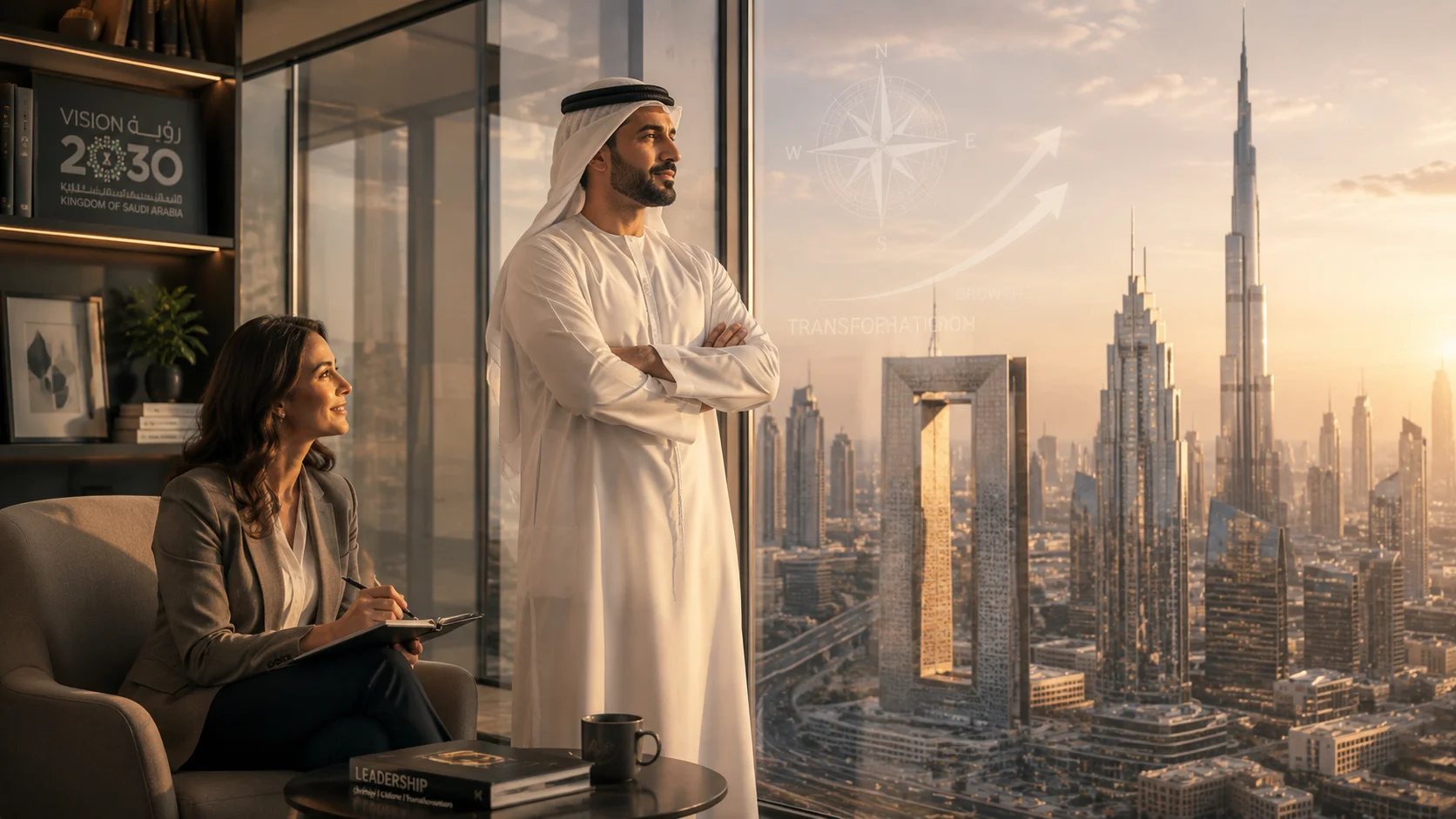
Leaders in the GCC are increasingly recognising this distinction. As regional organisations compete for global talent, pursue Vision 2030 goals in Saudi Arabia, and position themselves for post-oil economic futures, the quality of leadership at every level has become a direct business variable.
What Is Actually Changing in How Leaders Are Developed
There is a shift happening in how organisations across the Middle East think about leadership development, and it is worth naming clearly.
The old model positioned leadership capability as something people either had or did not have. Talent was identified early, and those individuals were fast-tracked through roles. Development happened mostly through exposure and experience, not through deliberate investment in how a person thinks or leads.
The new model treats leadership as a discipline. Like any discipline, it can be strengthened with the right kind of coaching, reflection, and practice over time.
This shift has been accelerated by a few forces. First, the complexity of leadership roles has increased. Leading a team across multiple nationalities, navigating political dynamics inside large organisations, and making decisions in conditions of genuine uncertainty requires a different kind of leader than the one who simply executes well.
Second, emotional intelligence is now widely understood as a core leadership competency, not a soft extra. Research from the fields of organisational psychology and neuroscience has made it difficult to ignore the connection between a leader's self-awareness and their team's performance.
Third, the GCC workforce itself is changing. Younger professionals expect leaders who communicate clearly, listen genuinely, and lead with values. Leaders who cannot adapt to this shift find themselves losing talent, struggling with engagement, and falling behind peers who have invested in their development.
How Executive Coaching Is Being Applied in the Region
Executive coaching in the Middle East is increasingly taking two forms: individual engagements for senior and C-suite leaders, and structured programmes designed for emerging and mid-level leaders within organisations.
For senior leaders, the coaching engagement is typically a private, bespoke process. A coach works with the leader over six to twelve months, using psychometric assessments to surface blind spots, and regular confidential sessions to work through the real challenges the leader is navigating. The focus is on expanding self-awareness, refining communication, and sharpening decision-making. It is not advisory. The leader is doing the work. The coach holds the space, asks the right questions, and keeps them accountable.
For organisations looking to develop leadership talent at scale, group coaching programmes and structured development tracks for different career stages are becoming more common. These approaches bring together small cohorts of leaders at similar points in their career, combining structured frameworks with real-time application and peer dialogue.
If you want to understand what these different coaching formats look like in practice, this overview of executive coaching programs covers the distinct tracks designed for emerging leaders, senior leaders, and those navigating transitions to the C-suite.
The Role of Assessment Tools in Coaching
One of the features that distinguishes rigorous executive coaching from informal mentoring or advice-giving is the use of validated psychometric tools. In the GCC context, where cultural dynamics, hierarchy, and indirect communication styles can make honest feedback difficult to obtain, these tools provide a rare source of objective data.
Assessments like the Hogan Leadership Suite, EQi 2.0, and 360-degree feedback frameworks allow both the coach and the leader to see patterns that would otherwise remain invisible. A leader may not realise that their communication style is being read as dismissive under pressure, or that their drive for results is creating a team culture of anxiety rather than accountability. Assessment data makes those patterns tangible and discussable.
This is part of why executive coaching is increasingly positioned not as a remedial tool but as a strategic one. The leaders who benefit most are often performing well by every external measure. The coaching helps them understand how they are actually showing up, and what they could do differently to lead at a higher level.
Women in Leadership and the Coaching Conversation
One thread of the executive coaching conversation in the Middle East that deserves specific attention is the growing focus on women in leadership.
As more women move into senior roles across the region, including in Saudi Arabia where policy shifts under Vision 2030 have accelerated this trend, the demand for coaching that addresses the specific challenges of leading as a woman in complex organisational environments has grown significantly.
This is not about coaching that assumes women need to change themselves to fit leadership. It is about coaching that helps women lead on their own terms, with clarity about their values, confidence in their presence, and skill in navigating the structural and cultural dynamics they encounter.
What This Means for Organisations
The organisations investing in executive coaching in the Middle East are doing so because they have seen the results. They are not spending on coaching because it sounds good. They are spending on it because they have watched leaders change how they operate, improve how their teams perform, and navigate transitions that would otherwise be costly and disruptive.
For organisations still on the fence, the more useful question is not whether executive coaching works, but whether the leadership challenges they are facing are serious enough to warrant a serious investment. In most cases, they are.
For leaders asking the same question about their own development, the answer is usually clearer after understanding what the coaching process actually involves. This in-depth guide to executive coaching is a useful starting point for anyone who wants to understand the process before committing to it.
The Bigger Picture
Executive coaching is not a trend in the Middle East. It is a response to a genuine leadership challenge that organisations across the region are facing as they grow, compete globally, and transition into more complex economic futures.
The leaders who will define the next chapter of business in the GCC are the ones investing in themselves with the same seriousness they invest in their organisations. Coaching is not the only tool for that investment, but it is one of the most effective ones available.
The conversation about what it means to lead well in this region is still evolving. Executive coaching is shaping that conversation, one leader at a time.