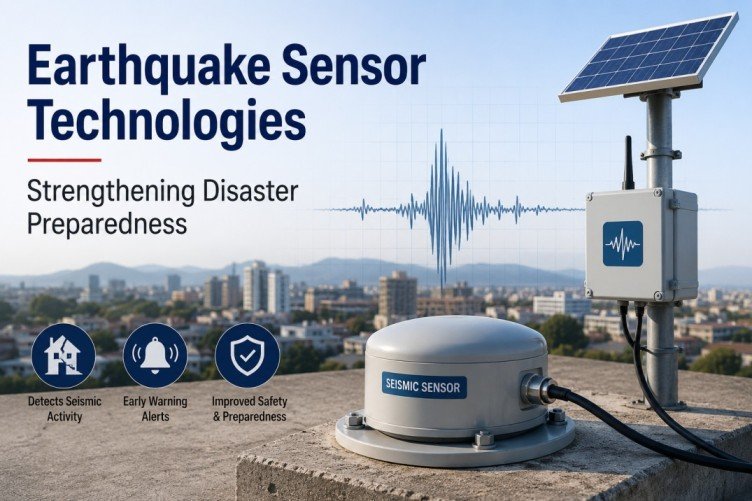
Earthquakes remain one of the most unpredictable natural disasters, often causing significant damage to infrastructure and posing risks to human life. As governments and organizations focus more on disaster resilience, earthquake sensor technologies are becoming an important component of early warning systems and structural monitoring networks. These sensors help detect seismic activity, enabling authorities and communities to respond more effectively before major impacts occur.
According to a recent Earthquake Sensor Market report by MarkNtel Advisors, the global market is valued at USD 2.1 billion in 2024 and is projected to reach USD 5.3 billion by 2030, growing at a CAGR of approximately 7.9% during 2024–2030. The increasing frequency of seismic events, combined with advancements in monitoring technologies, continues to influence industry development.
Understanding the Role of Earthquake Sensors
Earthquake sensors are specialized devices designed to detect ground vibrations and seismic waves generated by tectonic activity. These systems collect real-time data that can be analyzed to identify earthquake patterns and issue warnings before stronger waves reach populated areas.
Organizations such as the United States Geological Survey (USGS) and Japan Meteorological Agency (JMA) utilize extensive seismic monitoring networks to improve earthquake detection and response capabilities. These systems contribute to public safety by supporting emergency alerts, infrastructure monitoring, and disaster management planning.
Growing Adoption of Early Warning Systems
Many countries located in seismic zones are investing heavily in Earthquake Early Warning (EEW) systems. These networks combine seismic sensors, communication platforms, and data analytics to provide alerts seconds before strong ground shaking occurs.
According to this earthquake sensor market analysis, technological advancements are enabling more sophisticated warning systems that integrate GPS data, artificial intelligence, and cloud-based monitoring platforms. Such developments are improving the accuracy and speed of earthquake detection while helping authorities coordinate emergency responses more efficiently.
Countries including Japan, China, and Indonesia have expanded their earthquake monitoring infrastructure to strengthen preparedness efforts. Government-backed initiatives continue to encourage the deployment of advanced sensors across urban centers, transportation networks, and critical facilities.
Intelligent Sensors Are Gaining Attention
One of the notable developments within the industry is the increasing adoption of intelligent earthquake sensors. Unlike traditional monitoring devices, intelligent sensors utilize digital signal processing (DSP) technologies to analyze seismic signals in real time.
The global earthquake sensor growth forecast highlights rising demand for these systems because they can quickly identify seismic patterns and automatically trigger alerts to authorities and residents. Intelligent sensors can also communicate through smartphones, satellite networks, and internet-based platforms, supporting broader emergency communication efforts.
In addition to earthquake detection, these sensors are increasingly used for structural health monitoring in bridges, dams, tunnels, and commercial buildings. Their ability to provide continuous monitoring helps organizations assess infrastructure conditions and improve safety planning.
Infrastructure Protection Driving Market Expansion
Rapid urbanization and large-scale infrastructure development have increased the need for reliable seismic monitoring solutions. Modern buildings, transportation systems, and industrial facilities require advanced technologies to mitigate earthquake-related risks.
The Federal Emergency Management Agency (FEMA) emphasizes the importance of resilient infrastructure planning in earthquake-prone regions. Sensor-based monitoring systems can help engineers evaluate structural integrity and identify vulnerabilities before catastrophic failures occur.
According to this earthquake sensor industry report, corporate buildings currently represent a significant application segment due to the growing emphasis on workplace safety and asset protection. Organizations are increasingly deploying seismic monitoring systems to support emergency response protocols and reduce operational disruptions.
Asia-Pacific Remains a Key Regional Market
Asia-Pacific continues to represent a major region for earthquake sensor deployment because many countries are located along active seismic belts. Frequent earthquake activity, ongoing urban development, and government investments in disaster management programs contribute to regional growth.
According to a MarkNtel Advisors report, countries such as Japan and China have established extensive earthquake early warning networks to improve public safety and disaster readiness. These initiatives support the broader adoption of advanced seismic technologies across transportation systems, smart city projects, and public infrastructure.
Furthermore, regional authorities are increasingly exploring the integration of artificial intelligence and machine learning capabilities within seismic monitoring platforms to improve predictive analysis and warning accuracy.
Challenges Facing the Industry
Despite technological progress, several challenges remain. High deployment costs, limited public awareness, and the lack of standardization across warning systems can restrict wider adoption.
The report provides insights into industry growth trends while also highlighting concerns related to interoperability between different earthquake monitoring networks. Technical issues such as false alarms and communication delays may affect system reliability, emphasizing the need for continued research and development.
As sensor technologies become more sophisticated and accessible, industry stakeholders are expected to focus on improving accuracy, reducing operational costs, and expanding monitoring coverage in vulnerable regions.
Conclusion
Earthquake sensors are playing an increasingly important role in disaster preparedness, infrastructure protection, and public safety. Advances in intelligent monitoring technologies, real-time analytics, and early warning systems are helping governments and organizations strengthen their response capabilities.
With increasing investments in seismic monitoring infrastructure and growing awareness of disaster resilience strategies, the sector continues to evolve. Detailed insights can be found in the earthquake sensor market report, which examines technological developments, regional trends, and factors shaping future industry expansion.