How Does Your Body Repair Itself? A Complete Guide to Natural Healing
By triage meditech 03-03-2026 158
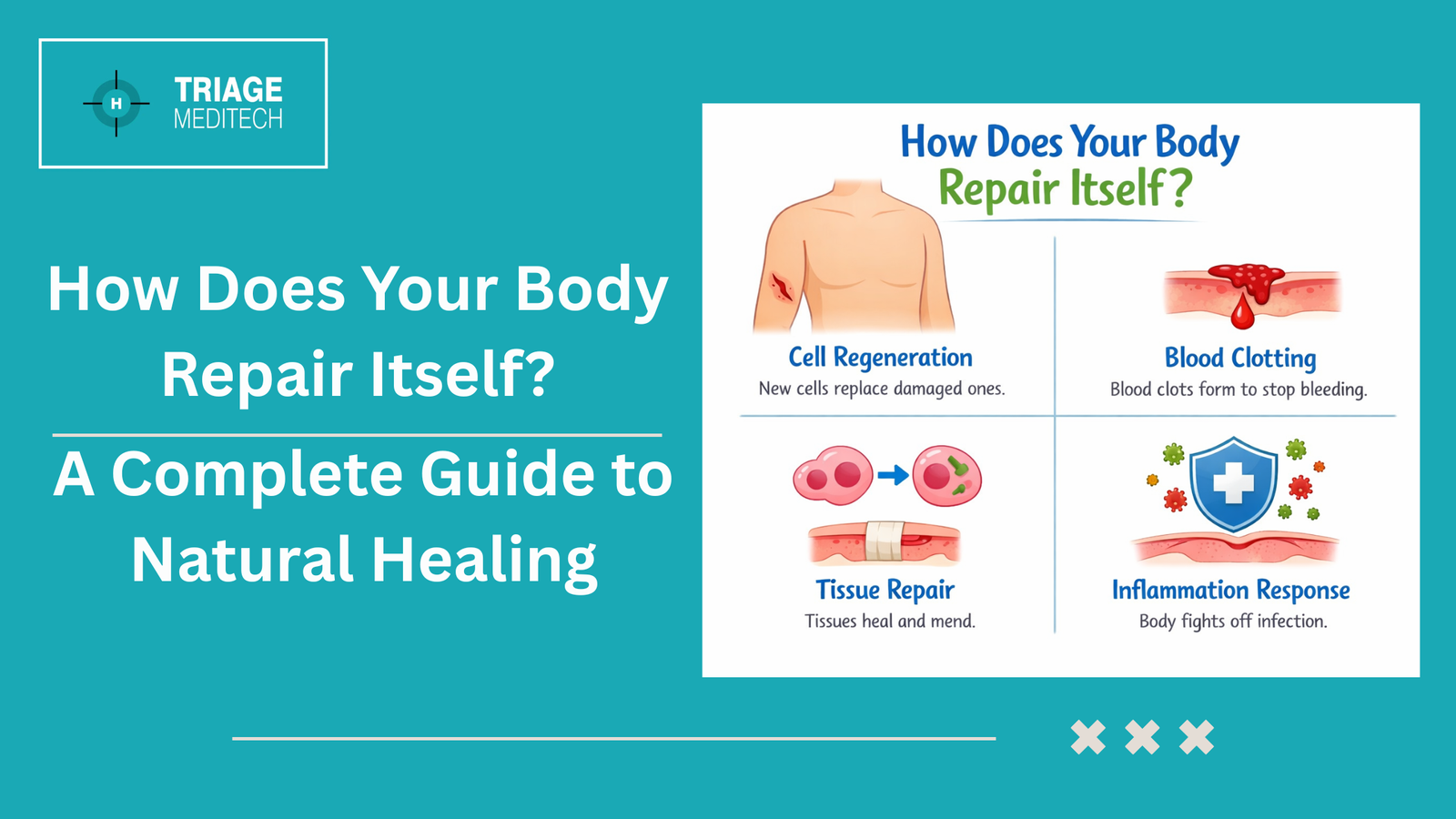
Have you ever wondered how does your body repair itself? Every time you get a cut, bruise, or even a minor infection, your body quietly begins an incredible healing process. Without you noticing, billions of cells coordinate to stop bleeding, fight germs, rebuild tissue, and restore balance.
The human body is designed with powerful self-repair mechanisms that work 24/7. From healing a small scratch to recovering from illness, your immune system, blood cells, and tissues work together in a highly organized way. In this comprehensive guide, we’ll explore exactly how your body repairs itself and what you can do to support this natural healing ability.
The Science Behind Healing: How Does Your Body Repair Itself?
The process of healing is a complex biological response involving the immune system, blood vessels, cells, and chemical messengers. When tissue is damaged, the body follows a structured repair sequence to restore normal function.
Healing generally occurs in four key stages:
Hemostasis (stopping bleeding)
Inflammation (cleaning and defense)
Proliferation (tissue rebuilding)
Remodeling (strengthening the repaired area)
Let’s break these down.
H2: Stage 1 – Hemostasis: Stopping the Bleeding
When you get injured, your body’s first priority is to stop blood loss.
H3: Blood Clot Formation
Within seconds:
Blood vessels constrict to reduce blood flow.
Platelets rush to the injury site.
A clot forms to seal the wound.
This clot acts like a temporary barrier, protecting the body from infection and further damage. It’s the foundation for the next healing stages.
H2: Stage 2 – Inflammation: The Body’s Defense Mode
Inflammation often gets a bad reputation, but it’s essential for healing.
H3: Immune Cells Go to Work
White blood cells travel to the injured area to:
Destroy bacteria and pathogens
Remove dead or damaged cells
Release growth factors that stimulate repair
You may notice:
Redness
Swelling
Warmth
Mild pain
These are signs that your body is actively repairing itself.
H2: Stage 3 – Proliferation: Rebuilding Tissue
Now comes the rebuilding phase.
H3: New Tissue Formation
During this stage:
Fibroblast cells produce collagen (a structural protein).
New blood vessels form (angiogenesis).
Skin cells multiply to cover the wound.
This is when you see new tissue filling the wound. The body essentially constructs a biological “patch” to restore structure.
H2: Stage 4 – Remodeling: Strengthening the Repair
The final stage can last weeks or even months.
H3: Tissue Maturation
Collagen fibers reorganize and strengthen. Although healed tissue may not be as strong as the original, it becomes functional and resilient over time.
Scars form during this stage. They are evidence of your body’s incredible repair ability.
How Does Your Body Repair Internal Damage?
Healing isn’t limited to visible wounds. Your body constantly repairs internal tissues as well.
Cellular Regeneration
Certain tissues regenerate quickly:
Skin cells replace every few weeks.
The liver has strong regenerative capacity.
The intestinal lining renews frequently.
However, some tissues (like nerve cells and heart muscle) repair more slowly or have limited regenerative ability.
The Role of the Immune System in Self-Repair
Your immune system is central to answering the question: how does your body repair itself?
It:
Detects injury or infection
Signals other cells to respond
Clears harmful debris
Coordinates tissue rebuilding
Without a healthy immune response, healing becomes delayed or impaired.
Factors That Affect Healing
Not all healing happens at the same speed. Several factors influence how efficiently your body repairs itself:
1. Nutrition
Protein, vitamin C, zinc, and iron are essential for tissue repair and collagen production.
2. Hydration
Water supports blood circulation and nutrient delivery.
3. Sleep
Growth hormone released during deep sleep promotes tissue regeneration.
4. Blood Circulation
Proper oxygen and nutrient supply accelerate healing.
5. Chronic Conditions
Diabetes, autoimmune diseases, and infections can delay repair.
How to Support Your Body’s Natural Healing Process
If you’re wondering how to help your body repair itself faster, here are practical steps:
Eat a balanced, protein-rich diet
Stay hydrated
Get 7–9 hours of sleep
Manage stress
Avoid smoking
Follow proper wound care guidelines
Supporting your immune system and overall health enhances natural recovery.
When Healing Doesn’t Happen Normally
Sometimes, wounds or injuries don’t heal as expected. Signs of delayed healing include:
Persistent redness or swelling
Increasing pain
Pus or unusual discharge
Fever
Chronic wounds are common in individuals with diabetes or poor circulation. Medical evaluation may be necessary in such cases.
The Bigger Picture: Your Body Is Always Repairing Itself
Even when you’re not injured, your body constantly repairs microscopic damage caused by daily wear and tear. Cells are continuously replaced, DNA damage is corrected, and tissues are renewed.
This ongoing maintenance is essential for survival and longevity.
Conclusion: The Incredible Power of Natural Healing
So, how does your body repair itself? Through a carefully coordinated process involving blood clotting, immune defense, tissue rebuilding, and long-term remodeling. Every small cut, bruise, or illness activates a remarkable biological system designed to protect and restore you.
Your body is not just reactive—it is proactive, constantly working to maintain balance and health. By supporting it with proper nutrition, rest, and healthy habits, you can enhance its natural ability to heal.
The next time you see a wound close or feel better after being sick, remember: your body is performing one of the most sophisticated repair systems known in nature.