Illustrations play a crucial role in the success of many books, especially those aimed at younger audiences, such as children's books. The right illustration style can bring a story to life, engage readers, and reinforce the book's themes and message. However, choosing the appropriate illustration style for a book is not a decision made lightly. Publishers must carefully consider various factors to ensure that the illustrations complement the narrative and resonate with the target audience.
In this article, we explore how publishers choose the right illustration style for a book, with a particular focus on children's book illustrations. We also compare Australian Book Publishers with other brands to showcase why Australian Book Publishers is considered a top choice for high-quality children's book illustrations.
The Role of Illustration in Modern Publishing
Illustrations serve multiple purposes in modern publishing, particularly in children's books. They are not just decorative elements; they are an essential part of the storytelling process. A well-executed illustration can:
- Help convey emotions and moods
- Clarify complex concepts or scenes
- Develop characters and settings
- Capture the attention of young readers
- Enhance the overall reading experience
In children's books, illustrations often help break down text-heavy pages, making the book more approachable and enjoyable for young readers. They guide the reader's imagination, helping them visualise the story as it unfolds.
Factors Publishers Consider When Choosing the Right Illustration Style
1. The Target Audience
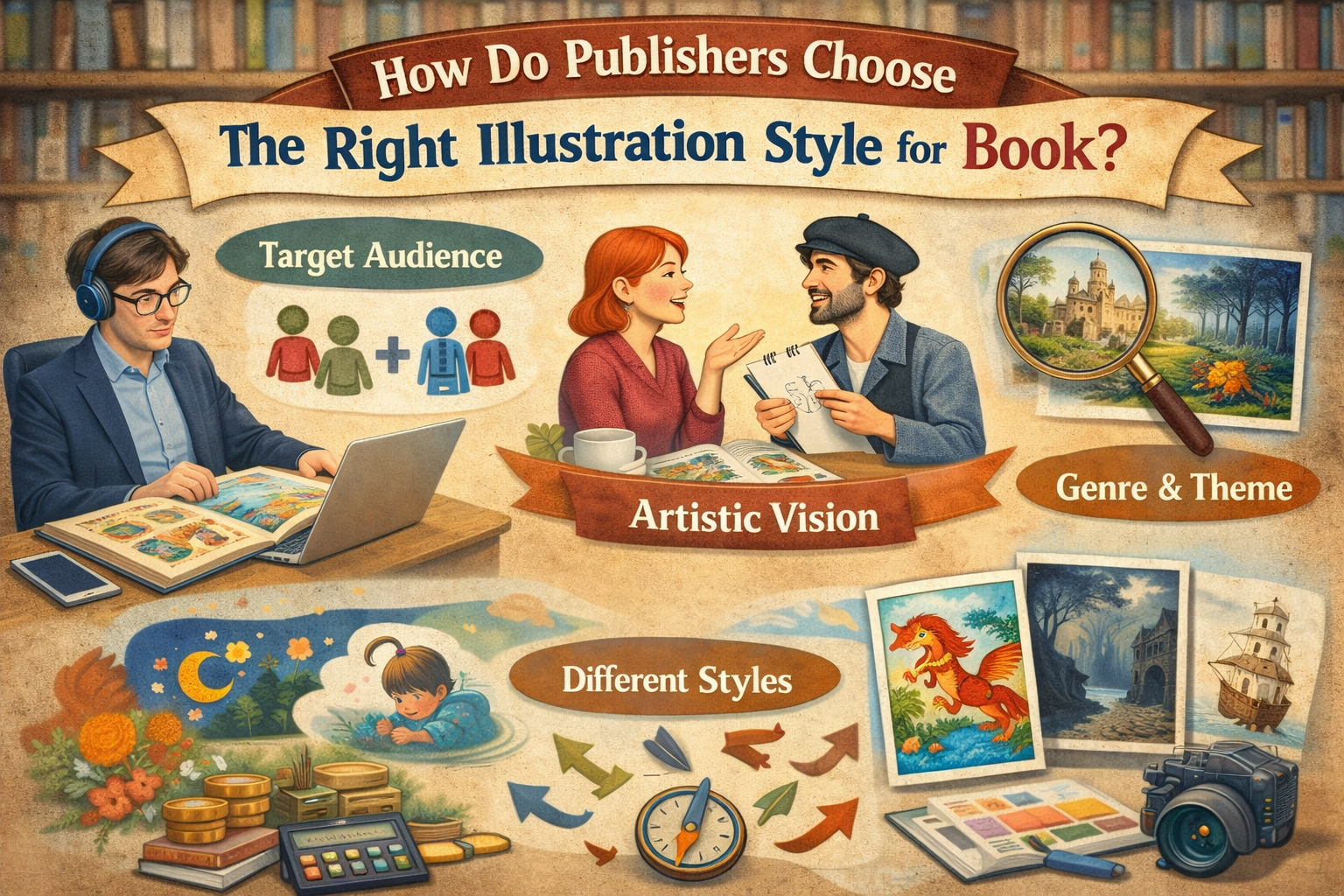
The first and most crucial factor in choosing the right illustration style is the target audience. For children's books, publishers must consider the age group the book is intended for, as this will significantly influence the illustration style.
- Picture Books (Ages 0-5): For younger readers, the illustrations should be vibrant, large, and simple to capture their attention and help tell the story. The use of bright colours and clear, easily recognisable characters is key to engaging this age group.
- Early Chapter Books (Ages 6-8): At this stage, children are beginning to read independently. Illustrations are still essential, but the complexity of the images can increase slightly. Characters and settings may be more detailed, while the illustrations are used to support the text rather than tell the story entirely.
- Middle Grade Books (Ages 8-12): For older children, illustrations may become more sophisticated. These books may feature fewer illustrations, or the illustrations may be more integrated into the text, providing additional depth to the story.
- Young Adult (Ages 12+): While many young adult books may not have illustrations at all, those that do often use them to evoke a particular atmosphere or provide visual elements that enrich the story. The illustration style is often more mature and subtle compared to that of younger readers.
Publishers like Australian Book Publishers understand the nuances of age-appropriate illustrations, especially in the case of children's book illustrations, and can help authors find the right balance of text and images for their audience.
2. Genre of the Book
The genre of the book also heavily influences the choice of illustration style. Different genres may require different artistic approaches to ensure that the illustrations reflect the tone and style of the narrative.
- Fantasy or Adventure: Books in these genres often benefit from highly imaginative and whimsical illustrations that evoke a sense of magic or adventure. For example, detailed, intricate illustrations that show mythical creatures or grand landscapes are common in fantasy books.
- Realistic Fiction: Books with realistic themes may require a more grounded, lifelike illustration style. These books may feature illustrations that reflect real-world settings and characters, helping young readers connect with the story.
- Educational Books: When it comes to educational children’s books, illustrations serve a more functional purpose. They need to simplify concepts and present information in an accessible way. Diagrams, charts, and clear visuals are commonly used in this genre.
At Australian Book Publishers, the team works closely with authors to choose an illustration style that complements the genre of the book. Their expertise in children's book illustrations ensures that the style matches both the content and the intended reader experience.
3. The Author’s Vision and Story
The author’s vision for their book is another key factor in determining the illustration style. Some authors have a clear idea of the visual style they want for their book, while others may need more guidance from the publisher.
- Character Design: Authors may have specific ideas about how their characters should look. The illustrator must work with the author’s description while adding their unique artistic touch to create a memorable character.
- Setting and Mood: The tone of the story influences the style of the illustrations. For example, a lighthearted, comedic story may require playful, exaggerated illustrations, while a more serious or emotional narrative may benefit from more subdued, atmospheric visuals.
Australian Book Publishers works closely with authors to understand their vision and ensure that the illustrations align with their expectations. Their team of illustrators is skilled in adapting to the author's style while offering creative input to enhance the overall aesthetic.
4. The Book’s Budget and Timeline
The budget and timeline for the project can also impact the choice of illustration style. High-quality illustrations can be costly and time-consuming, so publishers must balance artistic vision with practical considerations.
- Hand-Drawn vs. Digital: Traditional hand-drawn illustrations may take longer to create but can have a unique, personal touch. Digital illustrations are often faster and more cost-effective but may lack the charm and texture of hand-drawn work.
- Full-Page Illustrations vs. Spot Illustrations: Full-page illustrations are typically more expensive to produce, while spot illustrations smaller, simpler images scattered throughout the book are more cost-effective.
Australian Book Publishers offers flexible packages to suit different budgets and timelines, helping authors achieve high-quality illustrations within their means. Their children's book illustrations services are designed to accommodate the creative needs of the project while ensuring a timely and cost-effective outcome.
5. The Style of Illustration
The actual style of the illustrations is perhaps the most obvious factor in the decision-making process. The illustration style must resonate with the book’s tone and theme, and it should be appealing to the target audience. Some common illustration styles include:
- Whimsical and Playful: Bright colours, exaggerated characters, and fantastical elements are typical of whimsical illustrations, making them ideal for young children’s books.
- Realistic and Detailed: More mature children’s books may feature illustrations that are realistic and detailed, helping to bring the story’s world to life.
- Minimalist: Some modern children’s books embrace minimalism, using simple shapes and subtle colour palettes. This style is often used to convey complex ideas or to create a calming effect.
At Australian Book Publishers, the team carefully selects the right illustration style for each project, working closely with authors and illustrators to ensure the style matches the book's vision. Their expertise in children's book illustrations allows them to provide high-quality, engaging artwork that complements the narrative.
Conclusion
Choosing the right illustration style is crucial in the publishing industry, particularly for children’s books, where illustrations often form the core of the reading experience. Publishers must carefully consider the target audience, genre, author vision, and budget to determine the ideal style. With Australian Book Publishers’s expertise in children's book illustrations, authors can rest assured that their books will feature illustrations that complement and enhance the narrative, ensuring a successful and engaging experience for readers.
By offering high-quality, tailored illustration services and a comprehensive approach to publishing, Australian Book Publishers continues to lead the industry in providing outstanding book illustrations that captivate and inspire.