How AI Is Transforming Motorcycle Safety: From Blind Spot Detection to Real-Time Collision Warnings
By Ruby Wong 08-02-2026 97
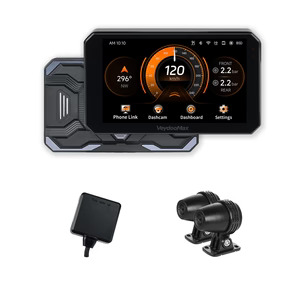
Motorcycle riding has always been one of the purest forms of freedom on two wheels — the rush of open roads, the immediate connection to your environment, and the simplicity of machine and motion. Yet, with that freedom comes undeniable risk. Unlike cars, riders lack the protective shell that shields occupants from crashes, meaning rider safety technology must work differently — and harder.
In recent years, AI (Artificial Intelligence) has emerged as a transformative force across industries, but perhaps nowhere is its impact more promising than in motorcycle safety systems. Technologies once exclusive to luxury cars — such as blind spot detection, real-time collision warnings, and predictive imaging — are being reimagined for the unique challenges of biking. This isn’t just incremental progress. It’s a paradigm shift in how riders perceive risk and respond to it.
The Unique Safety Challenge for Motorcycles
Cars enjoy stability, mass, and a built-in structure that absorbs impact — advantages that motorcycles simply do not possess. Riders are exposed to the elements, visibility is limited, and cognitive load is high: riders must constantly monitor speed, balance, navigation, surrounding traffic, and road conditions simultaneously.
Traditional safety systems for cars — lane-assist cameras, radar cruise control, 360° sensors — don’t transition well to motorcycles due to vibration, exposure, and the compact form factor. What a rider really needs is technology optimized for two-wheeled dynamics: systems that can see faster, predict smarter, and alert earlier.
Enter AI-driven motorcycle safety.
Blind Spot Detection: Seeing What the Rider Can’t
A common danger for riders is vehicles hiding in blind spots — those areas the rider can’t easily see even with mirrors. What’s worse, motorcycles are smaller and narrower than cars, making them more likely to be overlooked by other drivers during lane changes or merging maneuvers.
AI-powered Blind Spot Detection (BSD) systems change the game. Using a combination of sensors and machine learning algorithms, these systems constantly monitor adjacent lanes and alert riders to unseen vehicles approaching or occupying blind spots.
How AI Enhances BSD for Motorcycle Riders
AI doesn’t just detect objects — it understands them.
AI models can differentiate between harmless objects (like road signs or shadows) and actual vehicles.
Real-time processing enables instant alerts, crucial when moving at speed.
Continuous learning improves accuracy, reducing false positives.
Rider-optimized BSD helps turn what used to be a guessing game into an informed decision, enabling safer lane changes and reduced collision risk.
mmWave Radar: Why It Matters on Two Wheels
One of the most effective sensing technologies for motorcycle safety is mmWave (millimeter wave) radar. Unlike optical cameras that can be blinded by glare, rain, or darkness, mmWave radar penetrates environmental noise and delivers reliable distance and speed information.
What mmWave Radar Does
Sends out high-frequency radio waves that bounce off objects
Measures reflections to calculate distance, speed, and direction
Works in adverse weather, poor lighting, and high vibration conditions
Traditional cameras struggle in scenarios where lighting conditions change rapidly — like entering shade or riding at dusk. mmWave radar, by contrast, consistently detects objects regardless of lighting and weather, making it essential for robust safety systems on bikes.
Forward Collision Warning: AI Predicts, Rider Reacts
Perhaps one of the most powerful applications of AI is Forward Collision Warning (FCW) — systems designed to detect imminent collisions and alert riders with enough time to react.
Rather than simply monitoring proximity, AI-driven FCW evaluates:
Object trajectory and speed
Rider’s speed and direction
Road geometry and potential obstacles
This data is processed instantaneously, triggering alerts that give riders a critical edge.
AI vs Human Perception
A human rider’s reaction time is impressive — but limited. At highway speeds, every millisecond matters. AI doesn’t tire, blink, or misinterpret shadows. It tracks patterns and behaviors faster than the human brain can, converting raw sensor data into actionable risk assessments.
For example:
A car braking suddenly ahead triggers an immediate collision alert
A vehicle weaving into your lane activates an anticipatory warning
A truck approaching fast from behind triggers a blind spot alert
These milliseconds of lead time can be the difference between safe maneuver and crash.
Why Bikes Need Different Tech Than Cars
Motorcycles are not cars on two wheels — and they shouldn’t be treated as such in terms of safety tech.
1. Vibration and Movement
Motorcycles vibrate intensely, especially at higher speeds and on rough terrain. Cameras designed for cars struggle with motion blur and signal noise — unless AI stabilization and specialized imaging filters are applied.
2. Space and Power Constraints
Motorcycles have limited space for hardware, and weight directly affects handling. This means safety systems must be compact, efficient, and powerful without being bulky.
3. Rider Attention and Cognitive Load
Motorcycle riders already process a tremendous amount of real-time information: balance, throttle, clutch, lean angle, speed, upcoming turns, road texture… adding safety tech must augment perception, not overload it.
This is where AI excels — it sifts massive streams of sensor data and surfaces only the most relevant alerts, without distracting or overwhelming the rider.
The AI Advantage in Motorcycle Safety
AI isn’t a sensor itself — it’s the brain behind the system.
Here’s what it brings to the table:
Smarter Object Recognition
AI can tell the difference between a stationary mailbox and a moving car — a distinction that simple motion sensors cannot make.
Context-Aware Alerts
AI contextualizes risk. Is the vehicle speeding up? Is it drifting into your lane? AI evaluates patterns, not just raw detections.
Continuous Learning
Every mile ridden provides more data. High-quality systems can improve over time through firmware updates and refined algorithms.
Real-World Impacts Riders Will Feel
AI-enabled safety systems do more than reduce risk stats — they change the rider experience:
Greater Confidence: Riders trust systems that have proven reliable in varied conditions.
Enhanced Awareness: Alerts expand situational perception beyond natural sight.
Peace of Mind: Knowing you have an “extra set of eyes” on the road improves focus.
When riders feel safer, they can enjoy the ride more — not just endure it.
Looking Forward: Safety as Standard
Safety technology used to be a luxury. But now, AI-driven systems like BSD and FCW are becoming mainstream not just for cars — but for motorcycles too. The marriage of mmWave radar, AI imaging, and predictive collision warning represents the future of two-wheeled safety.
Motorcyclists are no longer left to instinct alone. With smart technology designed for bikes — not borrowed from cars — riders have a better chance of returning home from every ride.
Conclusion
Motorcycle safety has historically lagged behind automotive safety, not because riders deserve less protection, but because the challenges are fundamentally different. AI changes that.
By combining mmWave radar, advanced AI modeling, and real-time predictive systems, today’s safety tech is not just reacting — it’s anticipating. Blind spot detection and forward collision warnings aren’t futuristic add-ons; they’re essential tools for modern riding.
When technology respects the unique nature of motorcycling — vibration, speed, cognitive demand — safety stops being an afterthought and becomes a ride-enhancing experience.
And for riders everywhere, that means longer journeys, fewer close calls, and more freedom on the road — intelligently safeguarded by innovation.
Tags : #Veydoomax #SmartMotorcycling