A pump assembly fails after 47 days, not because the drawing was poor, but because the buyer accepted “same material, lower rate” without checking alloy chemistry. That is where Gun Metal Products become a procurement decision, not just a purchase line. C90500 gun metal/tin bronze is commonly specified with 86–89% copper, 9–11% tin, and 1–3% zinc, so a small chemistry drift can create a large service problem. India’s refined copper production also moved from 0.69 LT to 0.99 LT in April–May FY26, which points to a busier non-ferrous supply chain.
That is an expensive way to learn metallurgy.
Bad suppliers love vague words like “standard grade.” Most buyers accept that because the price looks clean. Nobody tells you that one wrong bush can stop a pump line faster than a delayed dispatch ever will.
The Alloy Detail Most Buyers Skip
Grade, form, and tolerance must match service
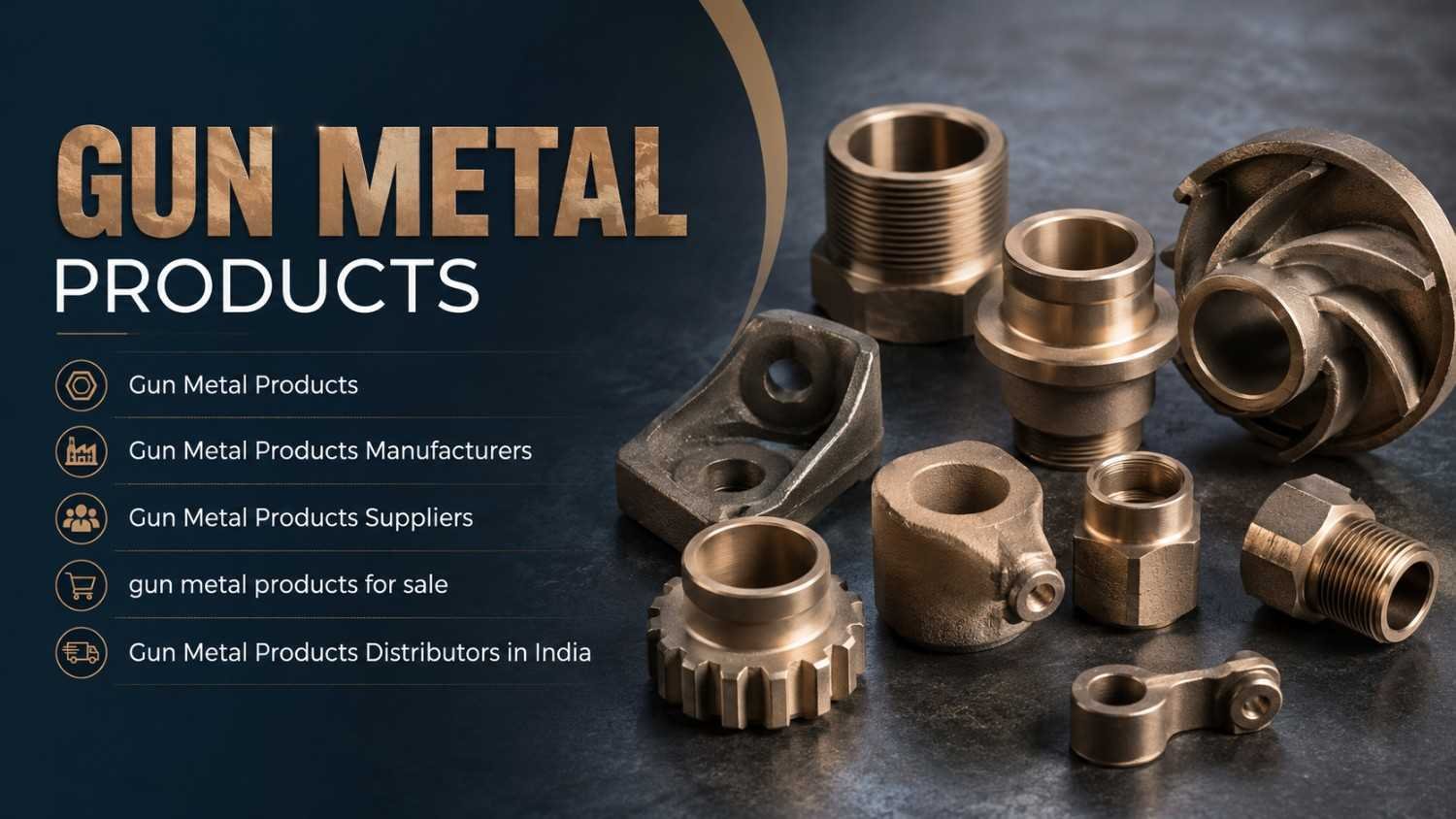
Gun metal sits in the copper-tin-zinc family, with lead present in some grades for machinability. Ganga R Ispat Metals lists Gun Metal Products in rods, bars, bushes, plates, sheets, ingots, castings and custom components; published ranges include bush IDs from 10 mm to 500 mm, ODs from 20 mm to 700 mm, and casting weights from 0.5 kg to 2,000 kg.
Here’s the overlooked part: a 40 mm rod, a pressure-tight valve casting, and a finished bush may all be “gun metal,” but their risk points are different. Which means the buyer must confirm grade, casting method, machining allowance, final tolerance, and operating medium before rate negotiation starts.
One detail buyers miss
Lead can improve machining behaviour, but it may not suit every compliance requirement. That caveat matters for exporters, potable-water parts, and OEM vendors.
5 Supplier Checks That Prevent Rejection
The bad-answer test
- Grade clarity: Good answer: C90500, LG2, IS 318 LTB grade, or another agreed grade. Bad answer: “normal gun metal chalega.”
- Chemistry proof: Good answer: Cu, Sn, Zn and Pb range with heat traceability. Bad answer: certificate “after dispatch.”
- Drawing tolerance: Good answer: ID, OD, length, finish and tolerance. Bad answer: no H7, H8, or drawing reference.
- Defect policy: Good answer: written action for porosity, hardness or size mismatch. Bad answer: “case by case.”
- Packing: Good answer: packing by shape and weight. Bad answer: loose bundles that arrive dented.
Where Gun Metal Protects Margin
- Lower leakage risk: Pressure-bearing parts need stable alloy behaviour, not shiny finishing.
- Better wear control: Gun metal works well for low-speed, heavy-load bushes and bearings.
- Corrosion resistance: Wet, steam and marine environments punish weak alloy selection quickly.
- Machining predictability: The right grade reduces tool wear, rework, and surprise scrap.
- Dimensional stability: Stable cast and machined sections reduce assembly rejection.
- Bulk consistency: Batch-to-batch control protects margin and schedule.
Cheap material is not cheap after rejection.
India Supply Is About Route, Not Just Rate
For buyers comparing Gun Metal Products Suppliers, location affects freight, follow-up, and emergency replacement. Ganga R Ispat Metals lists its registered office at Rakhial, Ahmedabad 380023 and Factory Unit 2 at Bhilwara, Rajasthan, which gives practical access to western and northern industrial movement.
And yet, availability does not mean “ready for dispatch.” Gun Metal Products Distributors in India should check grade, stock size, test document, cutting allowance, and packing before promising supply. Buyers searching for gun metal products for sale should ask for the actual heat and size available today, not a catalogue screenshot from last month.
What We Check Before Dispatch
At Ganga R Ispat Metals, we work with non-ferrous products including Gun Metal, Brass, Bronze, Copper and Copper Alloys in round, bush, flat, plate, square, hexagonal and other forms. We are certified to ISO 9001:2015, and we keep inspection close to production because paperwork after a bad melt does not save the buyer. We check chemistry and composition using Spark Absorption Spectrometers before casting; one wrong melt is cheaper to stop inside our plant than explain after a pump bush fails in service.
We have learned that buyers do not need louder promises; they need fewer surprises.
Send us the grade, size, drawing or sample photo, quantity, finish condition, and delivery city. We reply within 24 working hours with grade-wise clarity, not one loose “gun metal” line item. Our MOQ is product-specific because a stocked rod and a heavy casting cannot carry the same minimum; we confirm the exact MOQ after size and grade review. For gun metal products for sale from Ganga R Ispat Metals, we prefer one clear requirement over ten unclear rate enquiries.
Conclusion
Gun Metal Products are not bought safely by rate per kg alone. The right purchase starts with grade, chemistry, form, tolerance, documents, and supplier accountability. Ask sharper questions now, because the next serious buyer will expect proof before the first kilogram moves.
FAQs
What are Gun Metal Products used for?
Bushes, bearings, gears, valves, pump parts, fittings, marine components and low-speed heavy-load machine parts. Caveat: the same grade should not be forced into every application.
How do I compare Gun Metal Products Manufacturers before ordering?
Compare grade naming, chemistry report, size capability, defect policy, machining support and dispatch packing. A manufacturer who talks only about price is hiding the real questions.
Can Gun Metal Products Suppliers provide custom sizes?
Yes, many Gun Metal Products Suppliers provide rods, bars, bushes, plates, sheets, ingots and drawing-based castings. Still, custom sizes need tolerance discussion first.
Where can I find gun metal products for sale in India?
You can source these items through manufacturers, stockists and industrial distributors. Ask whether the quoted item is stock material, fresh casting or machined-to-order material.
What should Gun Metal Products Distributors in India check before bulk supply?
They should check grade, quantity, test certificate, packing method and delivery schedule. If they skip traceability, the buyer carries the risk.
Why do prices vary so much?
Copper content, tin level, lead content, casting weight, machining, tolerance and certificate requirements all affect price. Lower price is risky if chemistry proof is avoided.
Do Gun Metal Products Manufacturers provide certificates?
Professional suppliers can provide relevant quality and test documents. Honest caveat: a certificate is useful only when it matches the supplied heat, grade and size.