Gemstones Online: How to Choose Natural and Certified Gemstones Before Buying
By durgesh sharma 09-10-2026 1
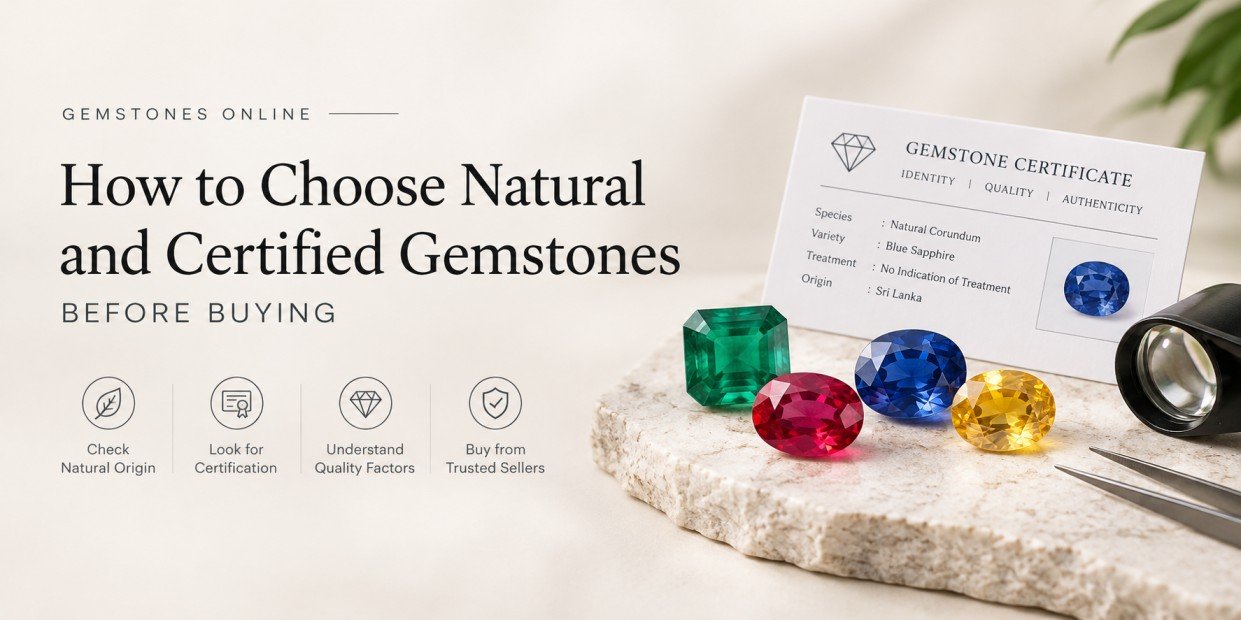
Buying gemstones online has become a convenient way to explore different stones, compare prices, and find options that match your preferences and budget. From emeralds and rubies to yellow sapphires and blue sapphires, online gemstone stores offer a wide variety of choices without requiring you to visit multiple jewellery shops.
However, choosing a gemstones online requires careful consideration. Product photographs may look attractive, but appearance alone cannot confirm whether a stone is natural, treated, or accurately described. Understanding gemstone quality, certification, origin, and pricing can help you make a more informed decision.
If you are planning to explore gemstones online, this guide explains what to check before placing an order and how to choose a stone with greater confidence.
Why Are More People Buying Gemstones Online?
Online gemstone shopping allows buyers to explore a wider selection than they might find at a single physical store. You can compare different gemstone varieties, carat weights, colours, and prices from the comfort of your home.
Another advantage is access to product specifications. Reputable sellers may provide information about gemstone weight, dimensions, treatments, origin when established, and available laboratory reports.
Online shopping also makes it easier to compare several stones before deciding which one suits your requirements. Whether you want a gemstone for jewellery, collecting, or traditional astrological purposes, researching your options can help you avoid rushed decisions.
Nevertheless, convenience should not replace verification. A professional-looking website does not automatically guarantee that every gemstone is natural or accurately represented.
1. Check Whether the Gemstone Is Natural
One of the first things to verify when shopping for natural gemstones online is whether the stone is genuinely natural.
Natural gemstones form through geological processes over time. Synthetic gemstones, in contrast, are produced in laboratories and may share many of the physical and chemical properties of their natural counterparts.
Imitations are different again. They may resemble genuine gemstones but have different compositions.
Before buying, look for a clear product description identifying the stone as natural, synthetic, or an imitation. If the listing describes a gemstone as natural, check whether supporting documentation is available.
For example, natural emeralds, rubies, and sapphires can vary significantly in appearance, clarity, and value. Two stones of similar weight may have very different prices because of their quality and treatment history.
Do not assume that a gemstone is natural simply because it looks authentic in a photograph or carries a high price.
2. Look for a Reliable Gemstone Certification Report
Certification is an important consideration when purchasing valuable gemstones online. An independent gemological laboratory can examine a stone and issue a report describing its identity and relevant characteristics.
Depending on the laboratory and the type of examination, a report may identify the gemstone variety, indicate whether certain treatments were detected, and provide other observations.
Before relying on a report, check the following details:
Laboratory name: Identify the organization that issued the report.
Report number: Check whether the number can be verified through the laboratory's official website or service.
Gemstone identity: Confirm that the report describes the same gemstone variety as the product listing.
Treatment information: Review any findings concerning heat treatment, filling, or other enhancements, where applicable.
Matching details: Compare the weight, dimensions, photographs, or identifying characteristics when available.
Remember that not every document called a certificate offers the same level of independent verification. A seller-issued card is not equivalent to an independent laboratory report.
Certification also does not automatically mean that a gemstone is untreated, rare, or worth a particular price. Read the report carefully and understand what it actually confirms.
3. Understand Gemstone Quality Before Comparing Prices
Gemstone prices depend on several characteristics, and carat weight is only one part of the equation.
Colour: Colour is often a major factor in determining the appearance and value of coloured gemstones. Buyers commonly consider hue, tone, saturation, and colour distribution.
Clarity: Many natural gemstones contain inclusions or internal characteristics. Their importance depends on the gemstone variety, the type and visibility of the inclusions, and their effect on durability and appearance.
Cut: The cut influences how a gemstone reflects light and how attractive it looks when viewed from different angles. A well-cut stone may appear more lively than a poorly cut stone of similar weight.
Carat weight: Carat measures gemstone weight, not physical size. Two gemstones with the same carat weight may have different dimensions because of their proportions and cutting styles.
Treatment: Treatments can improve a gemstone's colour, clarity, or overall appearance. Some are widely accepted in the trade, while others may substantially affect value. Buyers should understand which treatments are present and whether they have been disclosed.
When comparing gemstones online, evaluate these factors together rather than choosing a stone based only on its weight or price.
4. Examine Product Photographs and Videos Carefully
Photographs are particularly important when you cannot inspect a gemstone in person. However, lighting, camera settings, editing, and display screens can affect how a stone appears.
Look for clear photographs taken from multiple angles. Close-up images can help you examine colour distribution, visible inclusions, cutting, and surface characteristics.
If videos are available, use them to observe how the gemstone looks as it moves under changing angles. You can also ask the seller for additional images in neutral lighting.
Before ordering, check whether the displayed photographs show the exact gemstone you will receive or represent a similar item from the same collection.
This distinction matters because natural gemstones can differ from one another, even when they have similar specifications. A representative image may not show the exact colour or inclusions of your selected stone.
5. Compare Prices Without Assuming Cheaper Is Better
When exploring gemstone online shopping options, you may find substantial price differences between stones that appear similar.
These differences can result from variations in colour, clarity, cut, treatment, origin, rarity, certification, and seller pricing.
For example, two blue sapphires with identical carat weights may have different prices because one has more desirable colour and better transparency, while the other has visible inclusions or a treatment that affects its market value.
Be cautious of unusually low prices for gemstones advertised as rare, untreated, or premium quality. Such offers are not necessarily fraudulent, but they deserve closer examination.
Compare stones with similar specifications and treatment disclosures. Ask questions if the seller does not explain the reason for a significant price difference.
A fair comparison considers the gemstone's documented characteristics rather than marketing descriptions alone.
6. Choose an Online Gemstone Seller Carefully
The seller matters just as much as the gemstone itself. Before placing an order, review the website's policies and available business information.
Look for detailed product descriptions, accessible contact information, clear payment terms, shipping information, and a written return or exchange policy.
Customer reviews can offer useful insights into product descriptions, delivery experiences, and customer support. However, reviews should be considered alongside other evidence rather than treated as definitive proof of authenticity.
Check whether the seller explains how gemstones are selected, whether independent laboratory reports are available, and how concerns about authenticity are handled.
For higher-value purchases, consider asking questions before paying. A reliable seller should be willing to explain the stone's characteristics and clarify what documentation accompanies it.
7. Understand Return Policies and Shipping Terms
Even with detailed photographs and specifications, a gemstone may look different when it arrives. This makes the return policy an important part of online buying.
Before ordering, confirm the return window, eligibility requirements, refund process, and whether return shipping costs are your responsibility.
Check how the gemstone will be packaged and whether the shipment includes tracking and appropriate insurance for its value.
For international purchases, also review potential customs duties, taxes, delivery restrictions, and additional charges. These costs can affect the final amount you pay.
Keep your invoice, product description, certification report, and order confirmation. These records can be helpful if the delivered item differs from what was advertised.
8. Buy According to Your Purpose and Budget
The right gemstone depends on why you want it.
If you are selecting a stone for jewellery, consider its durability, intended setting, appearance, and suitability for everyday wear.
If you collect gemstones, you may place greater importance on rarity, documented characteristics, provenance, or unusual specimens.
If you are choosing a gemstone for traditional astrological reasons, research the recommendations carefully and distinguish cultural beliefs from scientifically established claims. A gemstone should not be considered a proven method of treating medical conditions or guaranteeing personal outcomes.
Set a budget before comparing products. This helps you focus on stones that meet your requirements without paying extra for characteristics that are not important to you.
Final Thoughts
Buying gemstones online can be a rewarding experience when you approach the process with the right information. Verify whether the stone is natural, examine independent laboratory reports, understand quality factors, compare prices fairly, and review the seller's policies before placing an order.
Most importantly, do not let attractive photographs or persuasive descriptions replace evidence. Ask questions, compare similar gemstones, and choose a seller who provides clear information about the stone being offered.
With careful research, you can explore gemstones online more confidently and select a gemstone that matches your preferences, intended use, and budget.
Tags : .....