Fall Arrester Rope Systems: How They Work and What Buyers Need to Know
By Karan Sharma 22-08-2026 52
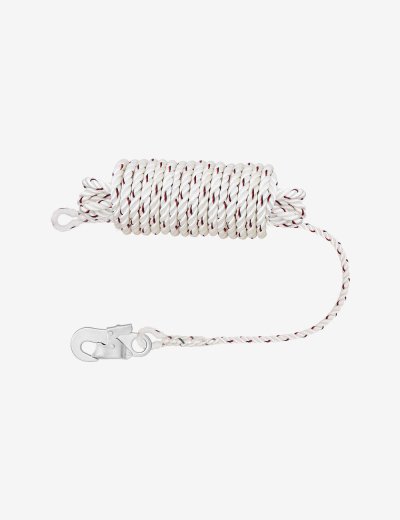
When a worker operates at height, the equipment protecting them from a fall needs to do two things well: allow free movement during normal work, and arrest any fall immediately and with minimum force transmitted to the body. A fall arrester rope system is specifically designed to deliver both. Understanding how these systems work, what distinguishes one type from another, and which variables affect the purchase decision helps safety managers and procurement teams make better-informed choices for their specific working-at-height scenarios.
The Components of a Complete System
A fall arrester rope system is always a system, not a single product, and it must be specified as a complete assembly rather than as individual components purchased independently.
The anchorage rope or lifeline forms the vertical backbone of the system. Its diameter, material, and construction determine which rope grab devices are compatible with it. Common configurations use 14mm to 16mm diameter polyamide twisted rope for most industrial applications, or 12mm kernmantle rope for applications where a more compact, less flexible anchorage line is appropriate. The rope must be anchored at the top to a certified anchor point rated for the appropriate load, which is typically a minimum of 10 kN for personal fall protection applications.
The rope grab is the mechanical device that slides along the lifeline and locks during a fall. It must be specified for the exact rope diameter and construction used in the system. A rope grab rated for 14mm twisted polyamide rope will not perform correctly on a 12mm kernmantle rope. This compatibility requirement is not a technicality: it directly affects the locking performance of the grab during a fall event. Rope grabs are available in openable and non-detachable configurations. Openable grabs can be attached and removed from the rope at any point along its length. Non-detachable grabs are permanently integrated onto the rope, which eliminates the risk of the grab being omitted from the setup or attached incorrectly.
The connection element links the rope grab to the harness attachment point on the worker's full body harness. This is typically a certified karabiner or snap hook. The choice between a screw-locking, quarter-turn locking, or triple-action locking connector affects the speed of connection and the resistance to accidental opening in the working environment.
Types of Rope Grab Systems
Beyond the standard openable configuration for polyamide twisted rope, rope grab systems are also available in stainless steel construction for corrosive environments, including marine, offshore, coastal chemical, and humid processing environments where carbon steel would be subject to accelerated degradation. Stainless steel rope grabs carry the same certification and performance standards as standard steel units but provide significantly longer service life in corrosive atmospheres.
Making the Purchase Decision
The fall arrester rope price is best evaluated in the context of the total system cost, which includes the anchorage rope, the rope grab, the connection hardware, the energy absorber if separate, the full body harness, and the top anchorage. Evaluating each component's price in isolation misses the point that the system performs as a whole. A high-quality rope grab paired with an incompatible rope, or an anchorage rope used past its service life to reduce replacement cost, creates a system that may not perform when it is needed most.
The more important purchasing criteria are the compatibility of the rope grab with the rope being used, the certification of both to EN 353-2 as a tested system, the material specification appropriate to the working environment's corrosion and UV exposure level, and the availability of replacement components and inspection support from the supplier. Explore the full fall protection range at karamonline.com.