Energy Consulting Market: Supporting the Global Transition Toward Efficient and Sustainable Energy Systems 2030
By rikove21 12-03-2026 120
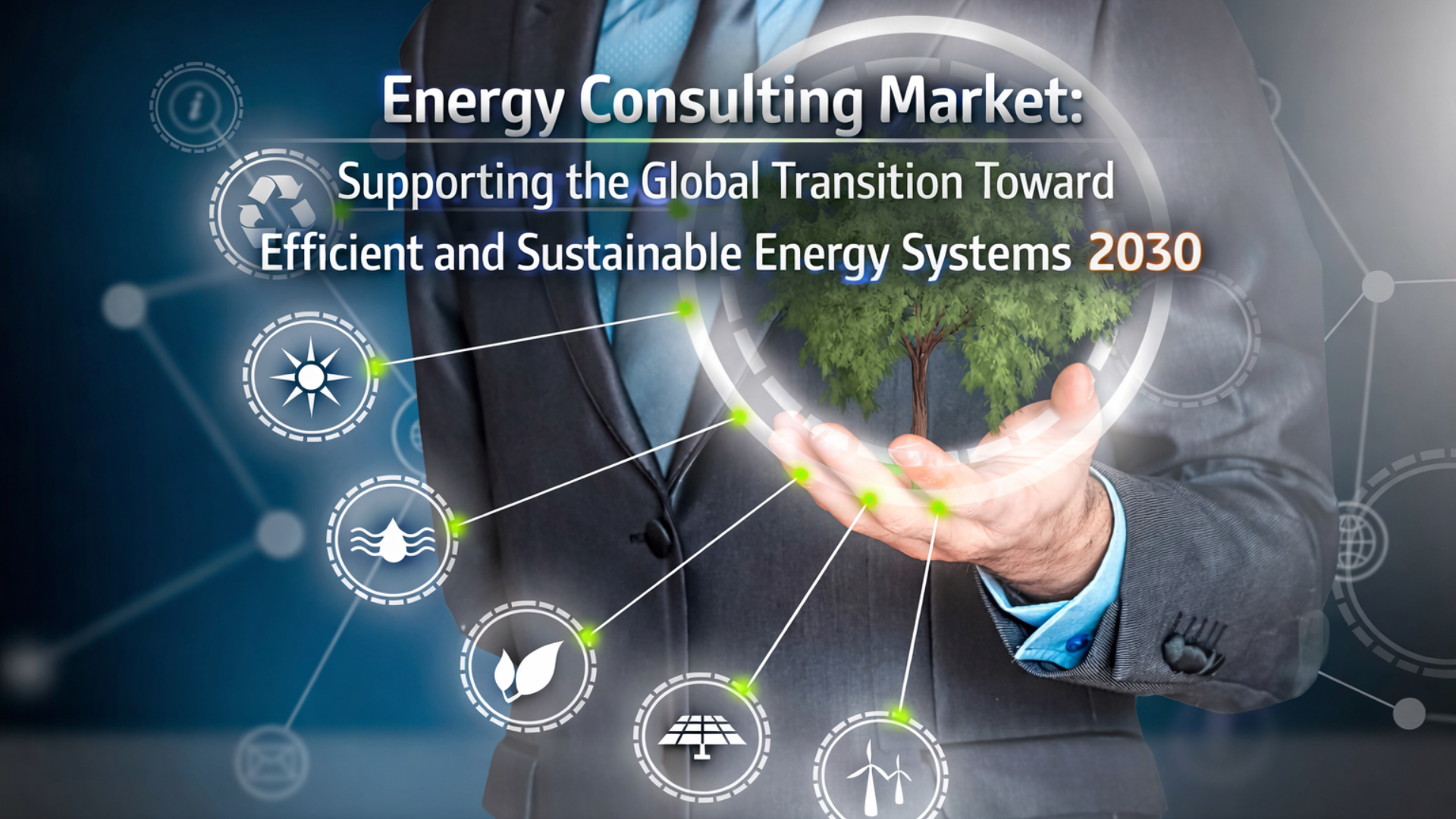
Energy consulting is an advisory service that is professionally provided to organizations, industries and governments to maximize energy consumption, enhance efficiency in the operation of their organizations and also shift to sustainable system of energy production. Such services are generally auditing on energy, integration strategy on renewable energy, regulatory compliance advising and planning of energy management over a long period.
With the current trend of increasing energy consumption in the world, business enterprises are ramping up their attention on formalized energy management policy. Energy consultants are very essential in the assessment of the existing energy consumption, determination of inefficiencies, and solutions that would be able to put operational performance into harmony with the environment goals.
Increased sophistication of the energy markets, regulation systems and sustainability requirements have also contributed to the increased emphasis of the professional advisory support in energy planning and implementation processes.
Market Forecast and Developmental Direction.
The energy consulting industry in the world has been growing consistently as organizations are seeking expert services in order to control the cost of energy, adhere to environmental laws and to adopt renewable energy plans.
A report released by MarkNtel Advisors stated that the Global Energy Consulting Market was estimated to reach about USD 16 billion in 2024 and to almost USD 21 billion in 2030 with a 20252030 compound annual growth rate (CAGR) of nearly 5%.
This growth is an indication on the rising need of energy saving solutions in other sectors like manufacturing, utility, infrastructure, and commercial establishments. Consulting is being incorporated more frequently in the long-term operations planning as the management of energy emerges as a key component in corporate corporate sustainability strategies.
Technological Advancements that are transforming energy management.
The rapid development of digital technologies in the energy management systems has been among the major driving factors in the increasing demand of energy consulting services. To monitor energy consumption and enhance business performance, companies have become dependent on the following tools: advanced metering infrastructure, real-time monitoring platforms, and predictive analytics.
Such technologies enable companies to obtain in-depth data on energy consumption habits. But such systems are usually implemented with the need of technical skills, a good strategy and integration with the current operations. Energy consultants assist companies to make sense of the data, recognize the inefficiencies, and formulate policies that will cut down the energy usage and still achieve productivity.
The consulting market is also changing with the introduction of artificial intelligence and data analytics. The technologies permit the optimization of energy in advance, which means that companies have a chance to predict consumption patterns and control the energy demand in a more cost-effective manner.
Sustainability Objectives that Propel Demand of Advisory Services.
The global sustainability obligations and climate policies have been an important factor that drives energy consulting services. Carbon reduction strategy, renewable energy goals, and net-zero promises are becoming more popular in governments and corporations around the globe.
Energy consultants guide the companies through such transitions with expertise on the adoption of renewable energy, carbon offsets, and the implementation of low-carbon technologies. These services assist companies to harmonize the operational plans with the environmental policies and the sustainability goals in the long run.
The growing interest in sustainability is also transforming the energy strategies of corporations. Instead of considering energy management as solely a cost-management initiative, most organizations have come to see it as a part of the environmental, social and governance (ESG) initiatives.
Advisory Services as a Mainstream Division.
In the energy consulting environment, the advisory services have become a leading block. Strategic advisory services guide organizations in accessing the opportunity of energy transition, creating sustainability roads, and addressing regulatory compliance needs.
The industry analysis has shown that advisory services take up about 45 percent of energy consulting market in the world, as more effort is demanded to provide strategic advice to energy transformation efforts.
Organizations frequently need the services of experts in terms of appraising renewable energy investments, carbon management schemes or infrastructure modernization initiatives. Advisory consulting is used to assist decision-makers in risk evaluation, technology evaluation, and long-term energy strategy planning.
Local Dynamics and Market Leadership.
Regional-wise, North America is presently taking a dominant position in the international energy consulting market due to the developed energy infrastructure, the well-structured regulatory frameworks, and a high level of investments in renewable energy technologies.
Other nations like the United States have highly invested in solar, wind and energy efficiency programs. The developments have put pressure on consulting services that are specialized and help in integrating renewable energy, modernizing energy infrastructure, and environmental regulations.
Meanwhile, as of today, there is a new field of opportunity in emerging economies in Asia and Africa that consulting firms can offer. The rise in demand and supply of electricity, blistering urbanization processes and the building of the infrastructure are pushing governments and companies to start requesting advice on sustainable energy planning.
New Practices Redefining the Consulting Encircling.
The energy consulting industry is undergoing several structural trends that are impacting its development.
Among the trends that can be noted is the growing adoption of microgrid systems that enable generation of energy locally and enhance resiliency in areas where the supply of electricity is unpredictable. Microgrids are used to assist communities and industries to attain a higher level of energy self-sufficiency and incorporate renewable energy sources.
The other trend that is developing is the popularity of Energy-as-a-Service (EaaS) models. These models present the solutions of energy on subscription forms, and thus organizations are able to avail themselves of energy infrastructure and management services without subjecting them to excessive initial investments. The consulting firms are also useful in assisting organizations in appraisal of these new business models.
Also, the smart grid technologies and energy storage are becoming more popular around the world. The growth of these technologies has seen the involvement of energy consultants to design energy optimization models that embrace the use of distributed energy resources in combination with conventional power systems.
Energy Consulting Industry Competitive Landscape.
There are a combination of consultancy firms in the world, specialized advisory companies and energy technology providers in the energy consulting market. The leading firms in the business include Deloitte, KPMG, Bain and Company, Boston Consulting Group, SLR Consulting, McKinsey and Company, South Pole, Siemens Energy, Brattle Group, Rystad Energy, Accenture, Ernst and Young, Enel X, Verde Solutions LLC, NV5 Inc., the Energy and Environmental Economics, Inc. and the 360 Energy Group, E&C Consultants and Enerdata among others.
The services that are offered by these organizations are diverse, such as strategic consulting, digital transformation, regulatory advisory, and sustainability planning. A variety of companies are also increasing their data analytics, carbon, and renewable energy strategy to meet changing customer demands.
Future Prognosis of Energy Consulting Industry.
The energy industry in the world is experiencing structural change due to sustainability objectives, technological advancement and evolving regulatory systems. The demand will be stable as organizations seek to decarbonize their energy systems and modernize energy systems on a more intensive basis.