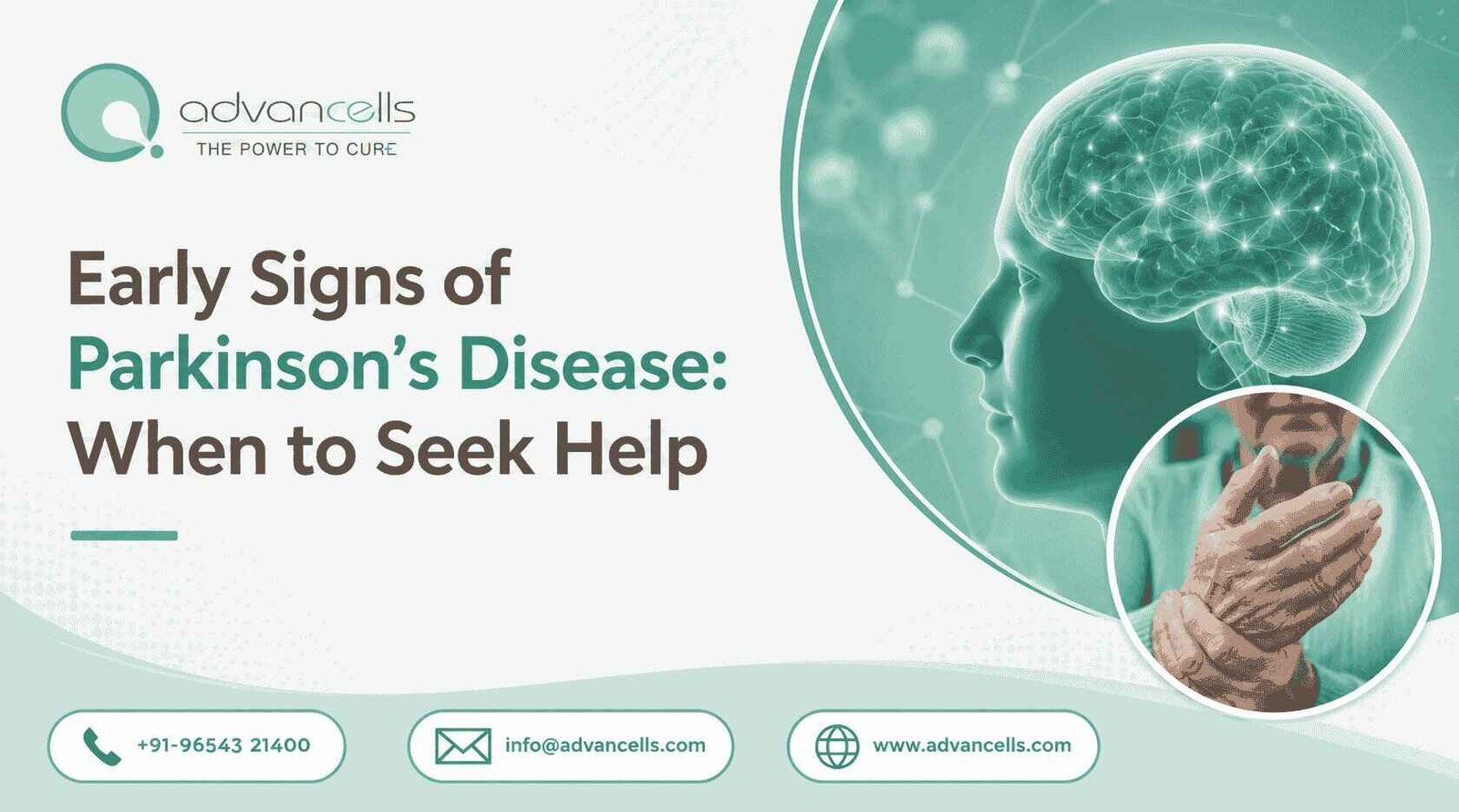
Early Signs of Parkinson’s Disease: When to Seek Help?
By Advancells Stem Cell Lab and Research 25-06-2026 178
Introduction
Parkinson's begins at an early stage, far before it is diagnosed. Some common early signs include shaking hands, tremors, reduced sense of smell, changes in sleep patterns, stiffness, or a slight slowing of movement can appear years before a diagnosis is made.
However, early signs often get ignored as they share similarities with normal aging or stressful situations. Recognizing the symptoms early aids in adequate management and improves the quality of life of the patient.
What Is Parkinson’s Disease?
Parkinson’s Disease is a developmental condition that affects the nerves leading to altered brain control of movement. It develops when certain nerve cells in the brain gradually stop producing enough dopamine, a chemical that helps coordinate smooth and controlled movements.
As dopamine levels decline, people may begin to experience difficulties with movement, balance, coordination, and even mood or sleep. Parkinson’s is a progressive condition, which means symptoms tend to develop gradually over time. Although it is more common in older adults, younger people can also be affected.
What Causes Parkinson’s?
The exact parkinson’s disease causes remains elusive. Researchers have highlighted a combination of factors, including:
- Genetics comes with a family history of the condition
- Environmental exposures, such as pesticides, certain industrial chemicals, toxins, etc.
- Age remains the strongest known risk factor
*Risk factors do not mean the occurrence of disease. Besides, more than one factor is involved in disease occurrence
Early Symptoms of Parkinson’s Disease
Parkinson's Disease Symptoms can be difficult to recognize because symptoms often appear gradually. The common symptoms includes:
- Tremor at Rest: Slight tremor in a finger, hand, or foot. Many people first notice subtle shaking when their hand is resting in their lap. In the beginning, the tremor may come and go, making it easy to ignore.
- Delayed Task: Parkinson’s disease can cause a slowing of movement known as bradykinesia. Tasks such as buttoning a shirt, getting out of a chair, tying shoelaces, etc., may gradually become more difficult.
- Delayed Response: People sometimes describe this feeling as if their body is not responding as quickly as their mind wants it to.
- Stiffness: Occasional muscle stiffness is common, especially after physical activity. However, persistent stiffness in the neck, shoulders, arms, or legs can be an early sign of Parkinson’s disease. This stiffness may make movements feel less natural and can sometimes be accompanied by aches or discomfort that do not have an obvious cause
- Changes in Walking and Posture: Family members or primary caregivers notice the change at an early stage. A person may begin taking shorter steps, walk more slowly, or swing one arm less than the other while walking.Some people also develop a slightly stooped posture or feel less steady when turning or changing direction.

Symptoms That Have Nothing to Do With Movement
One of the lesser-known aspects of Parkinson’s disease is that it can affect much more than movement.
Many people experience non-motor symptoms before any obvious physical signs appear. These may include:
- A reduced sense of smell
- Constipation that persists without a clear cause
- Difficulty sleeping or acting out dreams during sleep
- Anxiety or depression
- Ongoing fatigue and low energy
Because these symptoms are common and can occur for many reasons, they are often overlooked as potential early indicators of Parkinson’s disease.
When Should You Seek Medical Help?
If symptoms persist, gradually worsen, or begin affecting daily life, it is worth discussing them with a healthcare professional.
Many people wait months or even years before seeking help because they assume the symptoms are part of getting older. While aging can bring physical changes, persistent symptoms should not be ignored.
If you notice a combination of tremors, slowed movement, stiffness, balance problems, or unexplained non-motor symptoms, scheduling an evaluation with a neurologist is a sensible next step.
How is Parkinson’s Disease Diagnosed?
Parkinson's disease diagnosis involves review of symptoms, medical history, and a neurological examination. They look for characteristic signs such as tremors, muscle rigidity, balance difficulties, and slowed movement.
Sometimes imaging tests may be recommended to rule out other neurological conditions. In certain cases, symptoms are monitored over time before a definitive diagnosis is made.
Parkinson’s Disease Treatment: What Are the Options?
There is no complete cure against Parkinson's disease. The major treatments intend to manage the symptoms and improve the quality of life of the patient. Current treatment can significantly improve symptoms and help people stay active and independent.
- Medications: Increase dopamine levels or help the brain use dopamine more effectively. For many individuals, these treatments provide meaningful relief and improve day-to-day functioning.
- Physical therapy: Gain maintain mobility and balance
- Occupational therapy: Supports everyday activities
- Speech therapy: Address communication or swallowing difficulties that arise.
- In severe cases, advanced treatments such as deep-brain stimulation (DBS) are recommended with medications.
Researchers are also investigating new approaches, including regenerative medicine and cell-based therapies, which may shape the future of Parkinson’s Disease Treatment.
Conclusion
Parkinson’s disease begins with subtle changes that are easy to brush aside—a slight tremor, unexplained stiffness, changes in sleep, or a slower pace of movement. Paying attention to early signs leads to earlier diagnosis and timely treatment. If you or a loved one notices persistent symptoms, seeking medical advice is the best way to understand what is happening and take the next steps with confidence. Early awareness may not change the diagnosis, but it can make a significant difference in how the journey is managed.