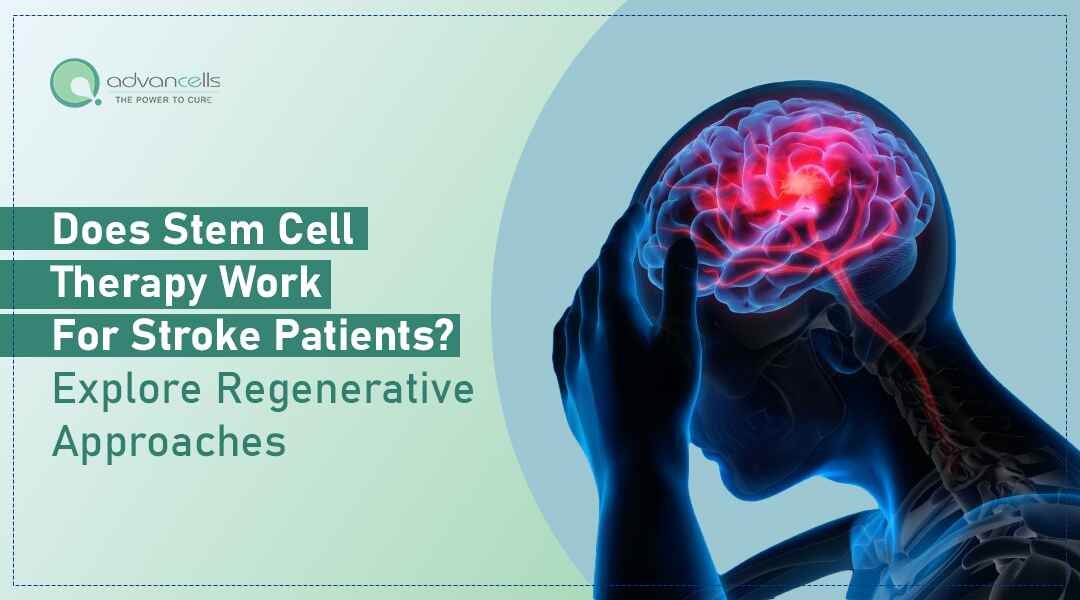
Does Stem Cells for Stroke Works? Explore Regenerative Approaches
By Advancells Stem Cell Lab and Research 03-06-2026 194
Introduction
Stoke is characterized by a medical emergency caused by a blockage or partial obstruction of blood flow to the brain. Its occurrence leads to a cut of oxygen supply, increasing the risk of brain cell death. It can occur at any time without warning signs.
Recovery after a stroke is challenging, and it can be potentially emotionally and physically demanding. Currently, rehabilitation therapy remains a standard part of the recovery. For better management, regenerative medicine in the form of Stem Cells for Stroke is widely explored. It can potentially enable the regeneration of damaged or dead cells and support the repair mechanism.
What is Stoke?
A stroke happens when the blood supply to a part of the brain is interrupted. Brain cells depend on a constant supply of oxygen and nutrients, so when blood flow stops, those cells begin to get damaged within minutes.
There are two major types of Stroke:
- An ischemic stroke happens because of a blocked blood vessel
- Hemorrhagic Stroke, which happens because of bleeding inside the brain
Both can affect movement, speech, memory, balance, and muscle control. The extent of recovery usually depends on how quickly treatment starts and how much of the brain is affected.
This is why doctors always stress the importance of early medical attention during a stroke.
Stroke Symptoms and Signs You Should Not Ignore
One of the biggest problems with Stroke is that many people fail to recognize the warning signs early enough. Symptoms usually appear suddenly, and even a small delay can affect recovery outcomes.
The Common Symptoms Include:
- Experiencing weakness or numbness on one side of the body
- Facial drooping
- Difficulty speaking or understanding words
- Sudden confusion
- Trouble walking or balancing
- Blurred vision
- Severe dizziness
The FAST method is useful in the quick identification of Stroke:
- Face drooping
- Arm weakness
- Speech difficulty
- Time to call emergency medical help
The faster the treatment begins, the better the chances of reducing long-term brain damage.
Hemorrhagic Stroke Symptoms and Signs
Hemorrhagic strokes are different because they involve bleeding inside the brain. These strokes are often more severe and may become critical very quickly.
Some common hemorrhagic stroke symptoms and signs include:
- Suddenly, an extremely severe headache
- Vomiting or nausea
- Loss of consciousness
- Seizures
- Sudden confusion
- Weakness or paralysis
In many cases, patients require emergency hospital care, intensive monitoring, and sometimes surgery to control the bleeding.
Brain Stroke Treatment in India
Treatment for Brain Stroke in India is dedicated to stroke units and neurological rehabilitation programs.
Initially, the treatment focuses on stabilizing the patient and further preventing other brain injury. Depending on the stroke type and severity, clinicians prescribe medications, removal of clots (angiography), or surgery (bypass surgery in severe cases). Followed by hospitalization, stroke management involves long-term rehabilitation measures. This includes:
- Physiotherapy
- Speech therapy
- Occupational therapy
- Cognitive rehabilitation
Some patients recover well over time, while others continue to struggle with weakness, speech problems, or limited mobility even after months of therapy. This is one reason stem cell therapy has begun to gain attention in discussions of stroke recovery.

What Are Stem Cells and Why Are They Being Studied for Stroke?
Stem cells are specialized cells that support repair and healing within the body. In regenerative medicine, researchers are studying whether these cells can help improve recovery after neurological damage, including Stroke.
The idea behind stem cells for Stroke is not that they magically replace damaged brain tissue overnight. Instead, researchers believe they may help by supporting the brain’s natural healing process.
Research reflected multiple mechanisms of stem cell therapy for Stroke. This includes:
- Reducing neural inflammation in the brain by releasing anti-inflammatory molecules
- Introduces regeneration of the damaged cells
- Supports the repair mechanism by releasing various growth factors and cytokines
- Boost communication between surviving brain cells
- Supporting blood vessel formation improves oxygen and blood supply in the brain
Currently, the research is still at an early stage of application. The future focuses on introducing large-scale clinical trials to establish safety, efficacy, and tolerance over a longer period. There is also a need to standardize therapy.
Is Stem Cell Therapy Good for Stroke Patients?
Stem cell therapy is not considered a cure for stroke currently. However, many clinicians believe this is a supportive option alongside conventional approaches. Preclinical and clinical studies have reported certain improvements, including:
- Muscle movement
- Balance and coordination
- Walking ability
- Hand function
- Speech and communication
- Overall quality of life
However, outcomes vary among individuals. Some of the determining factors, such as age, severity of the problem, quality of stem cells, treatment timing, and rehabilitation consistency, influence recovery.
Who May Be Considered for Stem Cell Therapy?
Not every stroke patient is automatically suitable for stem cell therapy. A detailed medical evaluation is usually required before eligibility is determined.
Doctors may consider factors such as:
- Type and severity of Stroke
- Overall health condition
- Existing neurological deficits
- Recovery progress with rehabilitation
- Time has passed since the Stroke
Patients with long-term weakness, speech difficulty, or mobility issues after a stroke are often the ones exploring regenerative treatment options.
What Patients Should Know Before Considering Treatment?
Patients and families need to understand that stroke recovery still depends heavily on rehabilitation, physical therapy, and long-term neurological support.
Stem cell therapy is still an evolving field of medicine, and research continues worldwide. Choosing experienced medical professionals and evidence-based treatment centers is extremely important.
Patients should also have realistic expectations. Recovery may be gradual, and results are never identical for everyone.
Conclusion
Stroke recovery is a whole complex process. Currently, conventional therapy remains the foundation of stroke treatment. Regenerative medicine with stem cell treatment is evolving, offering new possibilities to improve patients' conditions and quality life.