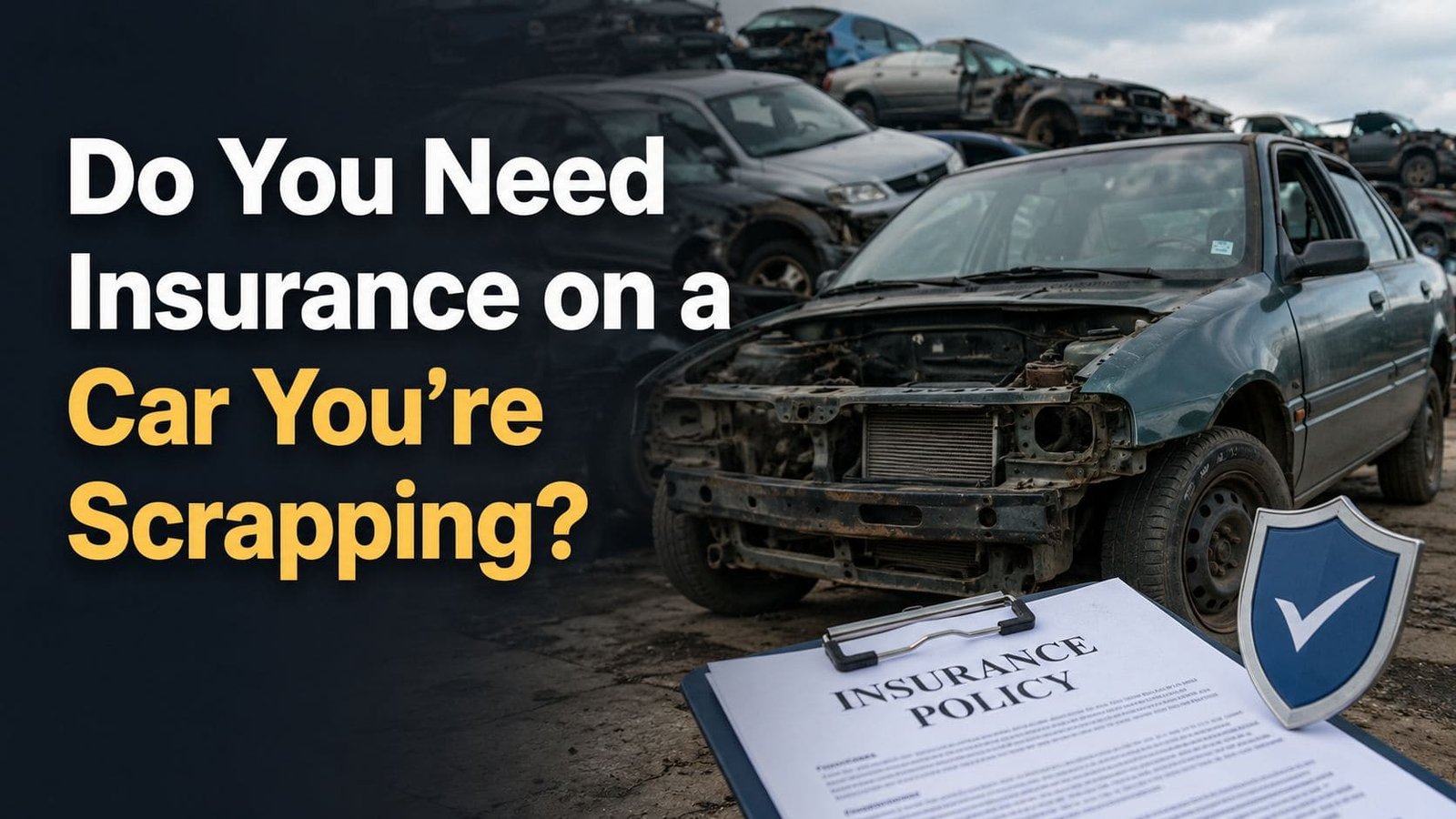
Yes, until the plates are surrendered and the vehicle is out of your name. Insurance and registration are linked in nearly every state, so cancelling coverage while the car is still registered triggers an automatic lapse notice and, in some states, a registration suspension. The car does not need to run, move, or leave your driveway for that to happen. Work out what the vehicle is worth using a car scrap value calculator, then compare it against what you are paying to insure it, because minimum coverage alone averages between $773 and $1,576 a year.
Here is the order that keeps you out of trouble, and what happens when it goes wrong.
Why the state cares about a car you are not driving
Insurers report policy cancellations to motor vehicle agencies electronically, usually within days.
Once that notice arrives and the vehicle is still registered, the agency treats it as a registered car without financial responsibility. That is a violation regardless of whether the car is drivable, and the notice generates itself without anyone reviewing your circumstances.
This is why the sequence matters more than the timing. There is no version of this where cancelling first and explaining later is easier.
The correct order
Four steps, and reversing any two creates a problem.
First, surrender the plates and close the registration. In most states the plates belong to you rather than to the vehicle, and returning them is what tells the agency the car is off the road.
Second, complete the sale and transfer. Keep coverage active through pickup, since you still own the vehicle until money changes hands and documents are signed.
Third, file your state's ownership transfer notice. California uses a Notice of Transfer and Release of Liability; Nevada calls it a resale notification. The name differs, the function does not.
Fourth, contact your insurer. With the registration closed and the vehicle transferred, remove the car from your policy or cancel it outright.
What happens if you cancel first
The penalties are specific, and they vary considerably by state.
Pennsylvania suspends the vehicle's registration privilege for three months following a coverage lapse, unless the lapse ran 30 days or less and the owner proves the vehicle was not operated during it. The registration plate and card must be surrendered to serve that suspension, and credit toward the three months does not begin until the state receives them. Owners may instead pay a $500 civil penalty in place of the suspension, though only once in any twelve-month period, with a restoration fee on top.
Pennsylvania also applies a deadline in the other direction: plates and registration card not returned within 30 days of an insurance cancellation date produce the same three-month suspension.
California takes a lighter approach on paper. A suspended registration is cleared with proof of insurance and a $14 reinstatement fee. The state also operates no grace period on registration deadlines, so timing errors accumulate quickly.
Check your own state before acting, since these rules are among the most variable in vehicle law.
If the car is sitting and not yet scrapped
Owners often reach this question with a vehicle that has been parked for months while they decide. There is a legitimate route for that, and it is underused.
California offers two mechanisms. An Affidavit of Non-Use, form REG 5090, applies to a currently registered vehicle you have stopped using, and filing it allows you to cancel insurance without a DMV penalty. Planned Non-Operation, form REG 102, applies when registration is coming up for renewal and carries a filing fee of around $23 instead of full registration fees.
The conditions are strict. PNO means the vehicle will not be driven, towed, stored, or parked on a public road for the entire registration year. If it is operated or parked anywhere it could be cited, full registration fees and penalties for that year become due. Filing is available up to 60 days before the registration expiration date without penalty, or up to 90 days after with penalties added.
Other states run equivalents under different names. Pennsylvania uses a Statement of Non-Operation, form MV-221.
One long-term caution: vehicles left inactive tend to drop off state databases after roughly five to seven years, and recovering one means re-registering and retitling from scratch.
The three situations that change the answer
Not every scrapped car sits in the same position, and three cases have their own rules.
The car was totaled by an insurer. Coverage on that vehicle usually ends as part of the settlement, and the insurer often takes possession. If you retained the car, it now carries a salvage title, cannot be legally driven, and the plates generally must be surrendered within a short statutory window. Confirm the deadline rather than assuming it matches the ordinary process.
The car is financed. An active lien means the lender contractually requires coverage and the vehicle cannot be scrapped at all until the balance clears. Cancelling insurance on a financed car can trigger force-placed coverage from the lender, which is substantially more expensive than anything you would buy yourself.
The car is not registered to you. An inherited vehicle, or one bought without the title transferring, cannot be closed out through the normal route because the state's record names someone else. Resolve ownership first, since neither the plate surrender nor the insurance cancellation will process cleanly otherwise.
Coverage on pickup day
Keep liability in force until the vehicle physically leaves and the paperwork is signed.
Until that moment you are the owner, and the car sitting in your driveway is your responsibility. Coverage costs a few dollars for those final days and closes the gap where an incident during loading would otherwise land on you personally.
Remove the plates before the truck leaves, photograph them alongside the odometer and the vehicle, and keep the surrender receipt. That paper trail is what resolves a dispute months later.
You almost certainly do not need full coverage
Comprehensive and collision are priced against a vehicle's actual cash value, and on a junk car that value is a few hundred dollars.
Paying to insure against the total loss of a car already worth its scrap weight rarely makes sense. Dropping to liability while you arrange the sale reduces the premium immediately, and liability is what the state's financial responsibility requirement actually asks for.
The exception is an active lien, where the lender contractually requires full coverage until the loan is settled. A financed vehicle cannot be scrapped anyway until the debt clears.
Getting your refund
Cancelling mid-term usually produces a prorated refund for the unused portion of the policy period.
Some insurers deduct an administrative or short-rate fee first, so the figure may be smaller than a straight calculation suggests. Ask what applies before you cancel.
Have the documentation ready, since insurers generally want proof rather than a phone assurance. The bill of sale, the title transfer record and your plate surrender receipt together establish that the vehicle is gone and when. Submitting all three at once avoids the back-and-forth that delays refunds.
Frequently asked questions
Can I cancel insurance the day I schedule the pickup? No. Keep it active until the car leaves and the transfer is filed. Scheduling a pickup is not a transfer of ownership, and the vehicle remains yours until the buyer takes it.
The car has not run in two years. Do I still need coverage? If it is still registered, yes. File a non-operation affidavit or place the vehicle on planned non-operation status first, which is the mechanism that allows you to drop coverage legally.
What if I already cancelled and got a notice? Respond quickly rather than waiting. Requirements differ by state, but generally involve surrendering plates, submitting proof of non-operation, and paying a reinstatement fee or civil penalty. Pennsylvania's civil penalty option runs $500 and is available once per twelve months.
Does the buyer's insurance cover the car once they collect it? Their coverage applies to their business operations, not to your ownership period. That is why your liability should remain active until the handover is complete.
Will cancelling create a coverage gap that raises my future rates? It can, if you are left without any auto policy. Carriers treat coverage history differently from one another, and a gap can affect pricing later. If you own another vehicle, removing the scrapped car from an existing policy avoids the issue entirely.
Do I need to tell my insurer why I am cancelling? Yes, and it works in your favor. A cancellation tied to a documented sale is treated differently from one for non-payment, and it supports your refund claim.
How much am I saving by scrapping? Minimum coverage averages roughly $773 to $1,576 a year, and premiums rose about 18% year over year in early 2026. Add registration and the annual cost of keeping an unused car often exceeds what the car itself is worth.
Should I cancel or just remove the vehicle from my policy? Remove it if you have other cars on the same policy, since that avoids any gap in your own coverage history. Cancel outright only when the scrapped car is the last vehicle you insure.
What to do this week
Call your state motor vehicle agency and ask two questions: how to surrender plates, and whether your vehicle can be placed on non-operation status while you arrange the sale. Then call your insurer and ask what documentation they need for a mid-term cancellation refund. Both calls take minutes, and doing them in that order is what prevents a $500 problem from a decision that felt like saving money.
Tags : .....