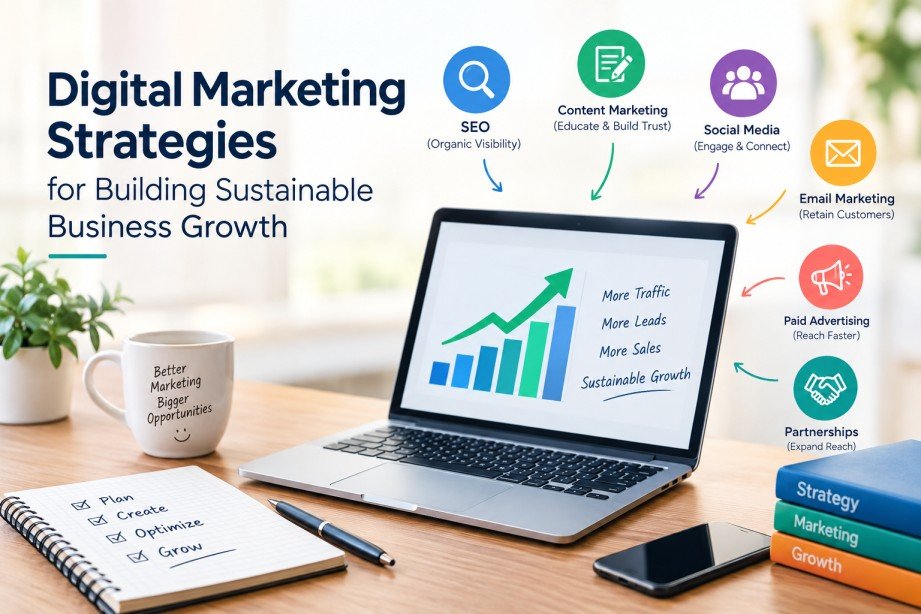
Digital marketing has become a core part of modern business growth. Companies can use online channels to introduce their products and services, connect with potential customers, strengthen brand recognition, and generate sales. Unlike many traditional marketing methods, digital campaigns allow businesses to target specific audiences and track how people respond to their efforts.
Search engines, social networks, email, content, paid advertising, and partnerships all offer different ways to reach customers. When these channels are selected according to business goals and audience behavior, they can work together to create a more effective and sustainable marketing strategy.
Understanding the Basics of Digital Marketing
Digital marketing is the promotion of a business, product, service, or brand through internet-based and digital channels. Common examples include business websites, search engines, social media platforms, email campaigns, mobile applications, online advertisements, and digital content.
The purpose is to reach people at different stages of their buying journey. A potential customer may first discover a company through a search result, learn more through a blog post, interact with the brand on social media, and eventually become a customer through an email offer or targeted advertisement.
Because digital campaigns can be measured and adjusted, businesses of different sizes can develop strategies that match their budgets, industries, and objectives.
Why Businesses Need a Strong Online Marketing Strategy
Consumer behavior has changed significantly with the growth of the internet. Before making purchasing decisions, people often search for information, compare alternatives, read reviews, watch videos, and investigate companies online.
A strong digital presence allows businesses to participate in this research process instead of relying only on traditional advertising.
Some of the main advantages include:
- Expanded market access: Online channels allow companies to reach audiences outside their immediate geographic area.
- Audience targeting: Campaigns can be tailored according to factors such as interests, location, demographics, and behavior.
- Performance tracking: Marketers can measure traffic, engagement, leads, sales, and other campaign outcomes.
- Budget flexibility: Digital campaigns can be adjusted based on available resources and performance.
- Direct interaction: Social platforms, email, websites, and other channels allow brands to communicate with customers more directly.
These capabilities make digital marketing useful for businesses that want to build awareness as well as companies focused on lead generation and sales.
The Main Digital Marketing Channels to Explore
Different digital channels perform different roles. Rather than treating every platform equally, businesses should identify the channels that best match their customers and marketing objectives.
Search Engine Optimization for Organic Visibility
SEO focuses on improving a website's ability to appear in relevant organic search results. The process can include keyword research, technical optimization, content development, internal linking, user experience improvements, and earning relevant backlinks.
A well-developed SEO strategy can attract people who are actively searching for information, products, or services related to a business. Unlike paid advertising, organic visibility can continue generating traffic after individual pieces of content have been published.
Content That Educates and Builds Trust
Content marketing involves creating useful resources for a specific audience. Businesses can use blog articles, guides, tutorials, case studies, videos, infographics, and other formats to answer questions and demonstrate expertise.
Effective content should provide genuine value rather than simply repeat promotional messages. Helpful resources can bring new visitors to a website, support search visibility, and give potential customers more reasons to trust a brand.
Social Media for Audience Engagement
Social media provides businesses with an opportunity to communicate with customers in a more interactive environment. Platforms such as Facebook, Instagram, LinkedIn, TikTok, and others can be used to share educational material, product updates, customer stories, visual content, and promotional campaigns.
Businesses can publish educational posts, product information, videos, stories, and customer-focused content. Video editing services can help businesses create polished social media videos that maintain a consistent visual style across platforms. Consistency and audience engagement are important for building a recognizable online presence.
Email Marketing for Customer Retention
Email marketing gives businesses a direct communication channel with people who have subscribed to their updates. Newsletters, product announcements, educational content, special offers, and automated campaigns can all be used to maintain customer relationships.
Personalization can make email campaigns more relevant by allowing businesses to send different messages according to subscriber interests, actions, or previous interactions.
PPC for Immediate Online Exposure
Pay-per-click advertising allows businesses to display paid advertisements across search engines and other digital platforms. Advertisers generally pay when users click their advertisements.
PPC can generate visibility relatively quickly, but successful campaigns require more than simply launching an advertisement. Keyword selection, audience targeting, ad copy, landing pages, conversion tracking, and budget management all influence campaign performance.
Affiliate and Influencer Partnerships
Affiliate marketing uses external partners to promote a company's products or services, generally with compensation tied to specific results. Influencer marketing, meanwhile, involves collaborating with creators who have established audiences around particular topics or interests.
Both methods can help businesses introduce their offerings to new audiences. However, partner relevance and audience quality should be considered carefully when selecting affiliates or influencers.
A Quick Comparison of Digital Marketing Channels
Building a Digital Marketing Strategy Step by Step
A successful digital marketing campaign starts with planning rather than immediately publishing content or purchasing advertisements. Businesses should establish clear objectives and understand how different channels can support them.
Define Who You Want to Reach
Understanding the target audience is one of the first steps in developing an effective strategy. Businesses should consider customer needs, common problems, interests, purchasing habits, preferred platforms, and the type of information people need before making a decision.
The more clearly a business understands its audience, the easier it becomes to create relevant campaigns.
Establish Measurable Marketing Objectives
Goals provide direction and make performance easier to evaluate. Depending on the business, objectives might include increasing organic traffic, generating qualified leads, improving ecommerce sales, increasing email subscribers, or strengthening brand awareness.
Goals should be specific enough to measure over a defined period.
Select Channels Based on Business Needs
Every business does not need to maintain an identical digital presence. A B2B company may rely heavily on SEO, educational content, and LinkedIn, while a visually focused consumer brand may receive more value from social media, video, and influencer partnerships.
Choosing channels based on audience behavior can prevent businesses from wasting resources on platforms that provide little value.
Develop Useful and Relevant Content
Content should address genuine customer questions and problems. Instead of creating material solely to promote products, businesses can publish guides, comparisons, tutorials, examples, case studies, and other resources that help their audiences make informed decisions.
Useful content can also support other channels by providing material for social media posts, email newsletters, and paid campaigns.
Track Results and Refine the Strategy
Digital marketing should be treated as an ongoing process. Analytics can reveal which campaigns attract visitors, generate engagement, produce leads, and contribute to revenue.
By reviewing performance regularly, marketers can increase investment in effective activities and adjust areas that are not producing the expected results.
Metrics That Help Measure Marketing Performance
Tracking the right metrics is essential for understanding whether a digital marketing strategy is delivering meaningful results. Common KPIs include:
- Website traffic: Shows how many visitors reach a website and can help identify major traffic sources.
- Click-through rate (CTR): Measures how frequently people click an advertisement, search result, email link, or other digital element.
- Conversion rate: Shows the percentage of visitors who complete a desired action, such as submitting a form or purchasing a product.
- Cost per lead: Indicates how much a business spends to generate an individual lead.
- Return on investment (ROI): Compares the financial return from marketing activities with their associated costs.
- Engagement rate: Measures interactions such as comments, shares, reactions, saves, or other audience actions.
The most useful metrics depend on the campaign's objectives. High website traffic, for example, does not necessarily indicate success if those visitors do not take meaningful actions.
Digital Marketing Problems Businesses Should Avoid
Even businesses with good products and substantial marketing budgets can struggle when their campaigns are built around the wrong priorities.
One common issue is creating content without understanding the target audience. Content may receive little engagement when it does not address genuine customer needs.
Another problem is focusing exclusively on immediate sales. Building credibility, answering questions, providing useful resources, and maintaining customer relationships can be equally important for long-term growth.
Businesses should also pay attention to mobile experiences. Slow-loading pages, difficult navigation, unclear calls to action, inconsistent branding, and poorly optimized websites can create unnecessary friction.
Keyword stuffing is another outdated approach to avoid. Modern SEO strategies should prioritize relevance, helpful information, user experience, and overall website quality rather than repeating the same terms excessively.
Practical Ways to Strengthen Digital Marketing Performance
Improving digital marketing usually requires ongoing testing rather than relying on a single campaign or tactic. Businesses can use the following practices to improve their approach:
- Research customer-focused keywords before developing SEO content.
- Publish original and genuinely useful resources.
- Make websites responsive and easy to navigate on mobile devices.
- Improve page speed and technical performance.
- Use clear and relevant calls to action.
- Experiment with different ad messages and landing pages.
- Review analytics and campaign data regularly.
- Refresh older content when information becomes outdated.
- Maintain authentic communication with customers.
- Prioritize content quality and audience relevance over publishing volume.
Small improvements made consistently can have a significant effect when they are based on reliable performance data.
Emerging Trends Shaping Digital Marketing
Digital marketing continues to change as technology develops and consumer expectations evolve. Artificial intelligence, marketing automation, personalization, short-form video, voice-based search, and advanced analytics are influencing how businesses plan and deliver campaigns.
AI tools can help marketers analyze information, automate repetitive tasks, identify patterns, personalize communication, and support content development. At the same time, businesses still need human judgment to ensure that campaigns remain accurate, useful, authentic, and aligned with customer expectations.
The growing importance of video also means businesses have more opportunities to communicate through visual storytelling. Short-form videos, tutorials, product demonstrations, and educational clips can help brands explain ideas in formats that are easy for audiences to consume.
Conclusion: Turning Digital Channels Into Sustainable Growth
Digital marketing gives businesses a wide range of ways to attract prospects, communicate with customers, and build long-term visibility. SEO can generate organic discovery, content can establish expertise, social media can encourage interaction, email can support retention, and paid advertising can provide targeted exposure.
However, using every available channel is not necessarily the right strategy. Businesses should focus on understanding their audiences, selecting appropriate platforms, creating valuable content, tracking meaningful KPIs, and improving their campaigns based on performance.
With a clear strategy and consistent execution, digital marketing can become a practical foundation for building stronger customer relationships and supporting sustainable business growth.
Tags : .....