DFMD: A Practical Guide to Door Frame Metal Detectors for Security Screening
By Global Outreach 09-10-2026 24
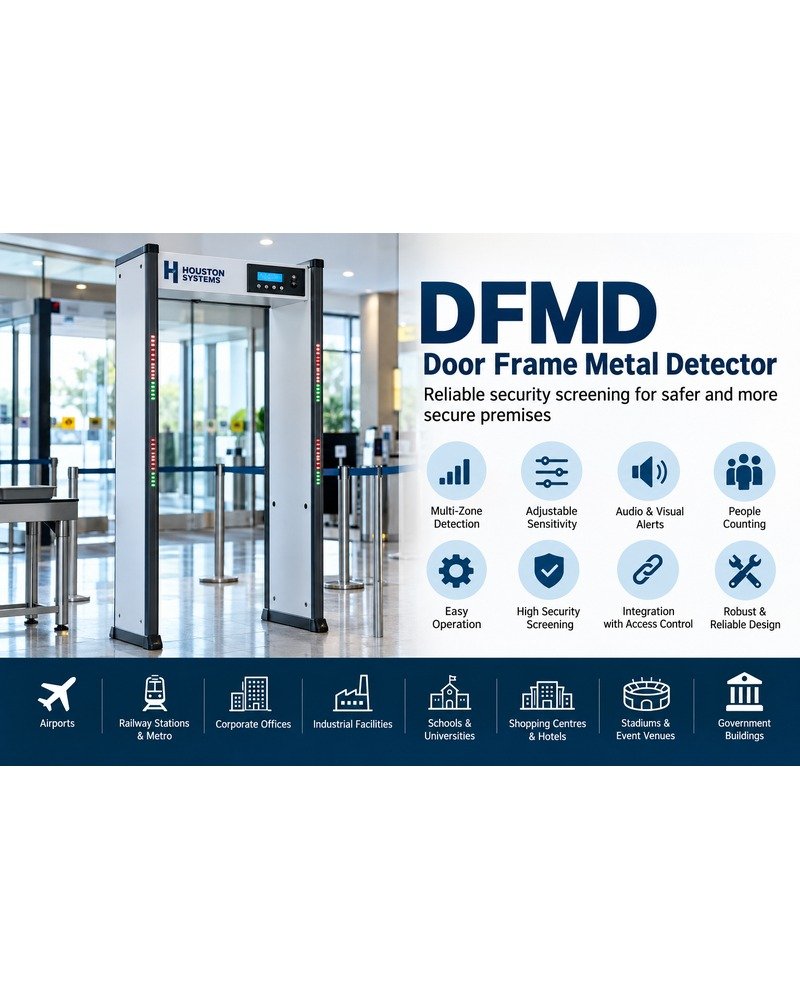
Managing entry points is an important responsibility for organizations that need to protect their premises and maintain an orderly flow of people. Airports, railway stations, offices, factories, schools, shopping centres, hotels, stadiums, and government buildings may require a reliable way to check people entering designated areas.
A Door Frame Metal Detector, commonly known as a DFMD, is a walk-through device designed to identify metallic objects carried by a person. It can support entry inspection while allowing people to move through a designated checkpoint.
What Is a Door Frame Metal Detector?
A Door Frame Metal Detector is an electronic inspection device shaped like a doorway. A person walks through the frame, and the system checks for metallic objects within its detection area.
The detector operates using an electromagnetic field. When a metallic object changes the field, the system can activate an audible alarm or visual indicator.
Depending on the model, a DFMD may include multiple detection zones, adjustable detection settings, a digital control panel, and a people counter.
How Does a DFMD Work?
The operation follows a simple process.
First, the system establishes a detection field across the passage. A person then walks through the frame. If a metallic object produces a detectable change in the field, the device activates an alert.
The operator can review the alarm indication and carry out an additional check when necessary.
Models with multiple zones can indicate the approximate area where metal was detected. This information helps security personnel decide where further inspection may be required.
Important Features of DFMD Systems
Multiple Detection Zones
Some models divide the frame into several detection zones. Indicators can help operators identify the approximate height or area associated with a detection event.
The number of zones varies by model. Buyers should select a configuration according to the inspection requirements of their premises.
Adjustable Detection Settings
Different locations have different inspection needs. Adjustable settings allow operators to configure the equipment according to the intended application and operating conditions.
The final settings should be selected and tested by trained personnel.
Audible and Visual Alerts
When the system detects metal, it may activate a sound alarm and illuminated indicators. These alerts help operators recognize when an additional check is required.
People Counting
Certain models include a built-in counter that records the number of people passing through the frame. Some systems can also record alarm events, helping operators review activity at an entrance.
Digital Control Panel
A control panel allows authorized operators to configure available settings and review system indications. The controls and display options depend on the selected model.
Durable Construction
Equipment used at busy entrances should be suitable for regular operation. Buyers should review the frame material, construction quality, power requirements, and environmental specifications before installation.
Where Are DFMD Systems Used?
Airports and Transport Facilities
Transport facilities manage large numbers of passengers throughout the day. Walk-through metal detectors can support inspection procedures at designated entry points.
Corporate Offices
Businesses can install DFMD systems at employee entrances, visitor reception areas, and restricted workplace zones.
Factories and Warehouses
Industrial premises may use metal detection equipment to support controlled entry for employees, contractors, and visitors.
Government Buildings
Government offices and other protected facilities can include DFMD equipment as part of their broader entry inspection arrangements.
Schools and Universities
Educational institutions may consider walk-through metal detectors at selected entrances according to their site requirements.
Shopping Centres and Hotels
Commercial buildings can use DFMD systems at designated entrances where visitor inspection is required.
Stadiums and Event Venues
Large venues often experience heavy pedestrian movement. A designated inspection point can help security teams organize entry procedures during events.
Hospitals and Institutional Buildings
Some institutions may use walk-through detection equipment at selected entrances as part of their site security arrangements.
Benefits of Using a DFMD
Organized Entry Inspection
A designated inspection point gives security personnel a structured way to check people entering a facility.
Useful Alarm Indications
Audible and visual alerts notify operators when the system detects metal, allowing them to decide whether additional checking is necessary.
Support for Busy Entrances
Walk-through operation can help maintain pedestrian movement while supporting the facility's inspection procedures.
Configurable Operation
Available settings and detection zones allow organizations to select a model suited to their operational requirements.
Integration With Other Equipment
A DFMD can be used alongside CCTV cameras, baggage inspection equipment, visitor registration software, and electronic entry-control systems. Each device performs a different function within the overall security arrangement.
Single-Zone and Multi-Zone DFMD Systems
A single-zone system provides an alert when metal is detected within its detection field.
A multi-zone system divides the detection area into several sections and can indicate the approximate location of detected metal.
The appropriate option depends on the facility's inspection objectives, expected pedestrian volume, and the level of information required by operators.
What Should Buyers Check Before Purchasing?
Before purchasing a Door Frame Metal Detector, organizations should review the following factors:
Number of detection zones
Available detection settings
Passage width and height
Expected pedestrian volume
Audible alarm functionality
Visual indicators
People-counting options
Control panel features
Power supply requirements
Installation environment
Construction quality
Maintenance requirements
Warranty terms
Technical assistance
Availability of replacement parts
Buyers should request the technical specifications for the exact model being considered rather than assuming that every DFMD includes the same features.
Choosing a DFMD Manufacturer in India
Choosing a suitable manufacturer or supplier is an important part of a security equipment project.
Buyers should review the product range, technical documentation, installation guidance, warranty coverage, maintenance arrangements, and availability of service support.
It is also important to explain the intended location, number of entry points, daily pedestrian volume, and inspection requirements before requesting a quotation.
Houston Systems provides security and electronic entry-control solutions for commercial, industrial, institutional, and infrastructure applications. Organizations planning an inspection project can discuss their requirements and request information about suitable equipment.
Installation and Maintenance
The installation location should be assessed before the equipment is positioned. Entrance dimensions, nearby electrical equipment, pedestrian movement, power availability, and environmental conditions should be considered.
After installation, the system should be configured and tested according to the manufacturer's instructions.
Routine maintenance may include checking the control panel, alarm indicators, electrical connections, frame condition, and detection performance. Operators should also follow the recommended inspection and servicing schedule.
Combining DFMD With Other Security Equipment
A DFMD can form part of a wider inspection arrangement.
For example, a facility may use a DFMD to check for metallic objects carried by people, an X-ray baggage scanner to inspect luggage, CCTV cameras to monitor activity, and an electronic entry-control system to manage authorized movement.
Visitor registration software may also be used to record guest details. The combination of equipment should be selected according to the facility's actual requirements.
Conclusion
A Door Frame Metal Detector provides a walk-through method for detecting metallic objects at designated entrances. Depending on the model, features may include multiple detection zones, adjustable settings, audible and visual alerts, a digital control panel, and people counting.
DFMD systems can support entry inspection at transport facilities, corporate offices, factories, educational institutions, commercial buildings, stadiums, and other controlled locations.
Before selecting a system, buyers should compare the technical specifications, passage dimensions, available features, installation requirements, warranty, and service arrangements. A properly selected and maintained DFMD can support a more organized entry inspection process.
Frequently Asked Questions
What is the full form of DFMD?
DFMD stands for Door Frame Metal Detector. It is a walk-through device used to identify metallic objects carried by people.
How does a DFMD operate?
The system creates an electromagnetic detection field. When a metallic object produces a detectable change in that field, the device activates an alert.
What is the difference between single-zone and multi-zone models?
A single-zone model provides a general detection alert. A multi-zone model can also indicate the approximate area associated with the detection.
Can a DFMD count people?
Some models include a people counter. Buyers should confirm this feature in the technical specifications before purchasing.
What should buyers consider before purchasing a DFMD?
Buyers should review the detection zones, available settings, passage dimensions, alarm functions, installation environment, maintenance needs, warranty, and technical support.