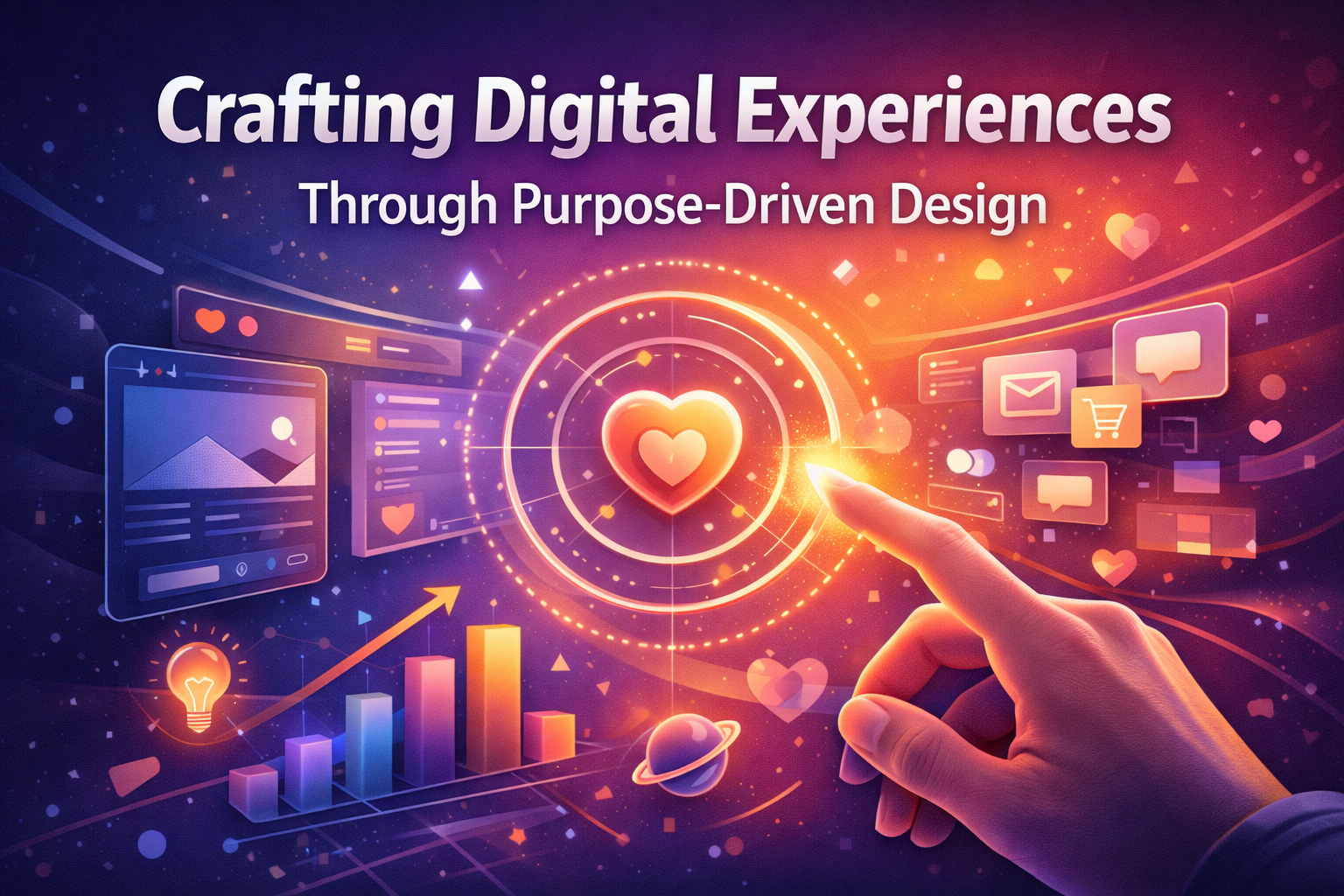
Websites today are more than digital brochures. They act as storefronts, communication hubs, customer support spaces, and learning platforms. The quality of online experience decides whether users stay, read, interact, and take action. Purpose-driven design focuses on this experience. It aligns every element of a website with real business goals and user needs, not just appearance.
Purpose-driven web design connects design choices with meaning. Colors, layout, typography, images, content tone, and navigation are not random. Each part supports a purpose such as trust building, sales, education, or service enquiry.
This blog explains what purpose-driven design means, how it shapes online experience, why it matters for businesses in growing digital markets like Kochi, and how companies can apply it in practical ways.
What Is Purpose-Driven Web Design?
Purpose-driven design is the practice of building websites around clear goals and audience expectations.
It asks questions such as:
- Who will use this website?
- What do they want to achieve here?
- What action should they take after visiting?
- How can the journey be simple and stress-free?
Instead of focusing only on visuals, purpose-driven design connects usability, psychology, branding, and strategy. It ensures users feel guided, comfortable, and confident when interacting with the site.
Why Purpose Matters More Than Aesthetics Alone
Good-looking websites can still fail if users cannot find what they need. Design without purpose may lead to confusion, long navigation paths, and abandoned pages.
Purpose-driven design:
- reduces friction in user journeys
- turns visits into meaningful actions
- supports customer trust
- aligns website content with business objectives
- gives consistency in brand communication
In simple terms, purpose gives direction. It changes design from decoration into function.
Understanding Users: The Foundation of Purpose-Driven Design
Strong digital experience starts with understanding real people who will use the website.
Identifying user needs
Businesses must know:
- why visitors come to the site
- what problem they want to solve
- what questions they usually ask
- what information matters most
When these needs guide design, websites feel natural to use.
Mapping user journeys
User journey mapping identifies:
- entry points (social media, search, ads)
- key pages visited
- final actions such as enquiry or purchase
Design then supports this journey clearly, without unnecessary steps.
Clear Goals Lead to Clear Design Decisions
Every section of a purpose-driven website serves a reason.
Examples of design goals
- Generate enquiries
- Build brand authority
- Provide service details
- Share educational content
- Sell products
When goals are defined early, designers choose layout, content, and features that support them. This prevents clutter and confusion.
Content as the Heart of Digital Experience
Design and content are connected. Purpose-driven design treats content as the core element, not an afterthought.
Clear and simple language
Users prefer:
- short sentences
- clear headings
- practical information
Complex language pushes readers away. Simple language builds clarity and trust.
Structured information
Proper sectioning helps readers:
- scan quickly
- find answers easily
- understand the next step
Good design guides the eyes without effort.
Emotional Connection Through Design Psychology
Websites shape how people feel about a business long before they speak to anyone.
Colors and emotions
Colors influence perception. For example:
- blue often signals trust
- green suggests calmness or nature
- red indicates urgency or energy
Purpose-driven design selects colors that match brand personality and user expectations.
Images that support meaning
Images should add clarity, not noise. Realistic visuals, context-based photos, and meaningful graphics help users relate to the message.
Simplicity as a Key Principle
One strong trend in digital design is simplification. Users value clarity and speed over visual overload.
Benefits of simple design
- faster decisions
- easier reading
- better mobile usability
- cleaner layout
Minimal distractions keep focus on essential actions such as reading service information or submitting a form.
Mobile-First Experience and Responsive Layout
Users in cities like Kochi rely heavily on smartphones. Purpose-driven design begins with the smallest screen and scales upward.
What mobile-first design includes
- readable text without zooming
- buttons easy to tap
- menus that are simple and clear
- fast-loading images
Responsive design ensures a consistent experience whether someone uses a laptop, tablet, or phone.
Accessibility as a Responsibility
Purpose-driven design respects inclusiveness. Websites should function for people with different abilities and conditions.
Key accessibility practices
- proper text contrast
- alt text for images
- keyboard-friendly navigation
- descriptive link labels
Accessibility is not just compliance. It reflects care, responsibility, and professional ethics.
Performance and Speed as Part of User Experience
A website can be visually strong but still fail if it loads slowly. Speed is part of purpose-driven design.
How designers support performance
- optimized images
- efficient code
- reduced unnecessary plugins
- content delivery best practices
Fast sites improve satisfaction, search visibility, and conversions.
Personalization and Context-Based Experience
Purpose-driven design often adjusts content to user context.
Examples of contextual design
- highlighting local contact details
- showing relevant services
- adapting layout based on device type
This approach makes the experience feel relevant without being intrusive.
Consistent Branding Across Pages
Consistency strengthens identity. Users remember brands that speak in a steady tone across pages and platforms.
Branding elements include
- color style
- typography
- messaging tone
- visual pattern
Consistency reduces confusion and increases recognition.
Collaboration With Experienced Designers
Businesses often turn to professionals for strategic web design guidance. Many firms choose a web design company in kochi to build strong local and digital presence. Teams such as Inter Smart work with structured processes that connect design with goals rather than treating design as decoration.
Practical Steps for Businesses Moving Toward Purpose-Driven Design
Even small changes make a difference.
Step 1: Review existing website
Check:
- Is navigation simple?
- Do pages load quickly?
- Is contact information easy to find?
- Does content answer real questions?
Step 2: Define purpose
Identify the main goal of the site:
- leads
- brand trust
- customer support
- product sales
Step 3: Align design with purpose
Ensure that each page supports that goal through layout, content, and calls to action.
Step 4: Test with real users
Observe:
- where they click
- how long they stay
- where they leave
Feedback shapes better design decisions.
Common Mistakes That Weaken Digital Experience
Without purpose, even attractive websites struggle.
Overloading with elements
Too many banners, pop-ups, and animations distract users from the main message.
Ignoring mobile experience
If users on phones face difficulty, most will leave within seconds.
Writing for search engines only
Content that is stuffed with keywords but unhelpful leads to mistrust. Helpful content always comes first.
How Purpose-Driven Design Supports Business Growth
Purpose-driven digital experiences improve results in practical ways.
Measurable benefits include
- higher engagement time
- more form submissions
- repeat visits
- better perception of credibility
A purposeful website works as a silent business partner, active 24/7, guiding users and communicating value clearly.
Future Direction of Purpose-Driven Web Design
Design will continue moving toward:
- human-centered layouts
- ethical use of data
- accessibility standards
- faster, lighter frameworks
- clear storytelling through content
The focus will remain on people, not trends alone. Technology may change, but clarity, empathy, and usefulness will stay at the core.
Designing With Meaning Creates Lasting Impact
Purpose-driven design is not just about making pages look modern. It is about giving every digital element meaning. When websites are built around genuine user needs and clear business goals, they become powerful communication tools.
Such websites are easier to use, easier to understand, and easier to trust. They support customers in their journey instead of standing in the way. For businesses, this means stronger relationships, better online reputation, and steady growth over time.
Design with purpose creates digital experiences that feel natural, helpful, and memorable — and that is what truly sets modern web design apart.