Why Does Choosing the Right Ethernet Cable Matter for Future-Proofing?
As networking technology continues to evolve, choosing the right Ethernet cable has become increasingly important. Homes, offices, businesses, data centers and other connected environments are handling more data than ever before. High-speed internet, cloud applications, video streaming, gaming, surveillance systems and large file transfers all place greater demands on network infrastructure.
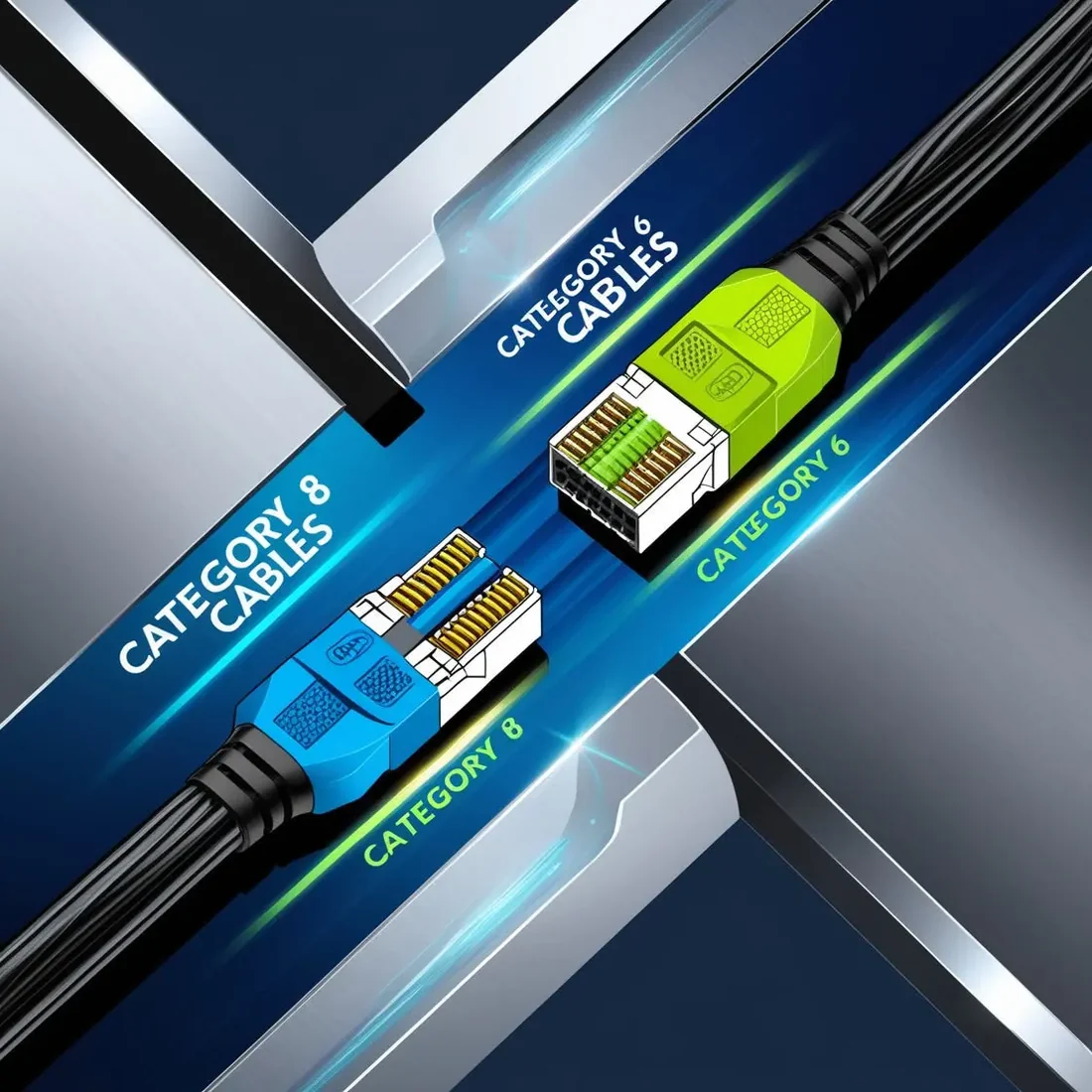
Ethernet cabling forms the physical foundation of many wired networks, and different cable categories are designed for different levels of performance. Among the commonly discussed options, Cat6 and Cat8 represent two very different approaches to network design.
Cat6 is widely used because it offers a strong balance of performance, compatibility and cost. Cat8, on the other hand, is designed for much higher bandwidth and is primarily intended for specialized high-performance environments.
Understanding the differences between these categories can help you decide which cable makes sense for your current requirements and future networking plans.
What Is the Difference Between Cat6 and Cat8 Ethernet Cables?
Cat6 and Cat8 are both twisted-pair Ethernet cable categories, but they differ considerably in their frequency ratings, supported network speeds, distance capabilities, shielding and intended applications.
Cat6 is rated up to 250 MHz and is commonly used for Gigabit Ethernet. It can also support 10 Gigabit Ethernet over shorter distances when the installation conditions and equipment are suitable.
Cat8 is designed for significantly higher performance. It is rated up to 2000 MHz and can support up to 40 Gbps over cable lengths of up to approximately 30 meters for supported Ethernet applications.
These specifications make Cat8 particularly relevant to data centers, server environments and high-performance networking rather than typical home installations.
How Fast Is Cat6 Compared With Cat8?
The biggest difference between the two categories is their potential performance.
Cat6 is widely used for 1 Gbps Ethernet over standard channel distances. Under suitable conditions, it can also support 10 Gbps Ethernet over shorter runs, commonly up to around 55 meters.
Cat8 supports Ethernet speeds of up to 40 Gbps over shorter distances, typically up to 30 meters.
It is important to remember that cable speed is only one part of the network. The actual connection speed depends on the capabilities of the switch, router, network interface, connectors and other components.
Buying a higher-category cable does not automatically make a network faster if the connected equipment does not support the higher speed.
Why Does Cat8 Have a Higher Frequency Rating?
Cat8 is rated up to 2000 MHz, which is substantially higher than the 250 MHz rating of Cat6.
A higher frequency rating indicates that the cable is designed to meet more demanding electrical performance requirements. Cat8 uses tighter specifications for signal transmission and is generally shielded to maintain signal integrity in high-performance environments.
This makes it more suitable for specialized applications where high bandwidth and low transmission delays are important.
Which Cable Provides Better Shielding: Cat6 or Cat8?
Shielding is another important difference.
Cat6 is available in both unshielded and shielded constructions. Unshielded Cat6 is commonly used in homes and offices where electromagnetic interference is relatively low.
Shielded versions are available for environments where additional protection from electrical interference is needed.
Cat8 cabling is normally shielded because of its higher performance requirements. Depending on the construction, shielding may include foil and braided layers.
Proper grounding and compatible connectors are important when installing shielded cabling. Simply choosing a shielded cable does not guarantee improved performance if the system is not installed correctly.
Is Cat6 Enough for Most Home Networks?
For most homes, Cat6 is more than capable of handling modern networking requirements.
It can support Gigabit Ethernet for applications such as:
High-speed internet
4K video streaming
Online gaming
Smart TVs
Computers and laptops
Network storage
Wi-Fi access points
IP cameras
Home offices
For many users, the internet connection itself is the limiting factor rather than the cable category.
If your router and internet plan support 1 Gbps and your home requires reliable wired connectivity, Cat6 can provide an excellent balance between performance and cost.
When Does Cat8 Make More Sense?
Cat8 is most useful when the network itself requires very high data throughput over relatively short distances.
It can be considered for:
Data centers
Server rooms
High-performance computing environments
Enterprise backbone connections
Specialized storage networks
High-bandwidth server-to-switch links
For these applications, the additional bandwidth can justify the higher cost and more demanding installation requirements.
For a standard home network, however, Cat8 may provide capabilities that are rarely used.
Which Cable Is Better for Future-Proofing?
There is no single answer because future-proofing depends on how the network is expected to evolve.
If your future requirements are likely to remain within Gigabit Ethernet and occasional higher-speed connections over shorter distances, Cat6 can be a very practical long-term option.
If you are building infrastructure specifically for extremely high bandwidth and short-distance data center applications, Cat8 offers significantly greater performance headroom.
Future-proofing does not always mean buying the highest specification available. It means selecting a cable category that provides enough capability for expected future requirements without unnecessary expense.
Is Cat8 Always Better Than Cat6?
Technically, Cat8 offers higher bandwidth and greater supported Ethernet speeds. However, that does not mean it is automatically the better choice for every installation.
A cable should be evaluated based on:
Required network speed
Cable distance
Installation environment
Equipment compatibility
Budget
Shielding requirements
Future expansion plans
For a home or small office, Cat6 may be the more practical choice. For high-performance server environments, Cat8 may offer a better fit.
What Is the Cost Difference Between Cat6 and Cat8?
Cat6 is generally more affordable and widely available.
Its lower cost makes it attractive for large residential, commercial and office installations where hundreds of meters of cable may be required.
Cat8 is usually more expensive because of its advanced electrical specifications, shielding and specialized construction.
The additional investment may make sense in environments that can actually use its higher performance. In applications where connected devices operate at 1 Gbps, the extra cost may not provide a meaningful practical benefit.
Which Cable Is Easier to Install?
Cat6 is generally easier to handle and install.
Its flexibility, widespread availability and compatibility with common Ethernet components make it suitable for a wide range of networking projects.
Cat8 cables tend to be thicker and less flexible because of their construction and shielding. This can make cable routing, termination and installation more challenging, especially in tight spaces.
Installation quality is important with both categories, but it becomes particularly important when dealing with high-performance cabling.
Are Cat6 and Cat8 Compatible With Existing Ethernet Equipment?
Both categories use Ethernet connectivity and can work with compatible network equipment. However, the network will operate according to the capabilities of the connected devices.
For example, connecting a high-category cable to a switch that only supports Gigabit Ethernet will not turn the switch into a 10 Gbps or 40 Gbps device.
This is why you should evaluate the entire network path before upgrading your cabling.
Which Cable Is Better for Gaming?
For most gaming setups, Cat6 is already sufficient.
Online gaming typically does not require 40 Gbps network speeds. A stable wired connection can be more important than choosing the highest cable category.
Latency is affected by several factors, including your internet connection, router, ISP, server location and network configuration. Therefore, changing from Cat6 to Cat8 will not automatically reduce ping.
Cat8 may be useful in specialized high-speed local networks, but most gamers will not need its maximum capabilities.
Which Cable Is Better for Office Networking?
Cat6 is generally an excellent option for standard office environments.
It can support computers, printers, access points, IP phones, surveillance systems, network storage and other Ethernet-connected devices.
For offices that require high-speed server connections or specialized data infrastructure, higher-performance cabling may be considered depending on the equipment and network architecture.
The best choice should be based on actual bandwidth requirements instead of simply selecting the highest category.
Is Cat8 Suitable for Data Centers?
Yes. Cat8 is specifically designed for high-performance networking environments and is well suited to short-distance server and switch connections.
Its 40 Gbps capability and high frequency rating make it useful in environments where large volumes of data need to be moved quickly.
Data center deployments also require careful attention to cable management, connectors, grounding, installation practices and equipment compatibility.
What Are the Main Advantages of Cat6?
Cat6 offers several important advantages:
Up to 250 MHz frequency rating
Strong Gigabit Ethernet performance
Support for 10 Gbps over shorter distances
Broad compatibility
Availability in shielded and unshielded versions
Lower installation cost
Suitable for homes and businesses
Easier installation compared with higher-category cabling
These benefits make it one of the most practical choices for general-purpose networking.
What Are the Main Advantages of Cat8?
Cat8 is designed for environments requiring substantially higher performance.
Its key advantages include:
Up to 2000 MHz frequency rating
Support for up to 40 Gbps Ethernet over short distances
Advanced shielding
High-performance signal transmission
Suitability for specialized data center and server applications
Greater bandwidth headroom for demanding local networks
Its main limitation is that these capabilities come with greater cost and installation complexity.
How Should You Choose Between Cat6 and Cat8?
The decision becomes easier when you compare your actual networking requirements.
Choose Cat6 when you need reliable, high-speed networking for homes, offices, gaming setups, CCTV systems, smart homes or standard business infrastructure.
Consider Cat8 when you require very high local network speeds, have short cable runs and are working with equipment designed to take advantage of its performance.
Think about the complete network rather than the cable alone. A faster cable is beneficial only when the connected devices and network hardware can support it.
Can Cat6 Be Considered Future-Proof?
Cat6 can be considered future-ready for many mainstream networking applications.
It provides sufficient performance for Gigabit Ethernet and can support higher-speed networking over shorter distances. For many homes and businesses, this provides a reasonable upgrade path without the cost and complexity of more specialized cabling.
However, if your organization expects to deploy high-speed server infrastructure or data center equipment requiring 25 Gbps, 40 Gbps or other advanced networking technologies, a different cabling strategy may be more appropriate.
Conclusion: Cat8 vs Cat6 — Which One Should You Choose?
The choice between Cat6 and Cat8 depends on your network's speed requirements, distance, environment, equipment and budget.
Cat6 remains an excellent all-purpose Ethernet solution for homes, offices, small businesses and many commercial installations. Its 250 MHz rating, widespread Gigabit Ethernet support and ability to handle higher speeds over shorter distances make it a practical and cost-effective choice.
Cat8 offers much greater bandwidth, with support for up to 40 Gbps over short distances and a frequency rating of up to 2000 MHz. This makes it better suited to data centers, server rooms and other specialized high-performance environments.
For most users, choosing Cat8 simply because it has higher specifications is unnecessary. The best future-proofing strategy is to select cabling that matches both your current network and your realistic future requirements.
In simple terms, Cat6 is the practical choice for most networks, while Cat8 is the specialized choice for extremely high-speed, short-distance networking.