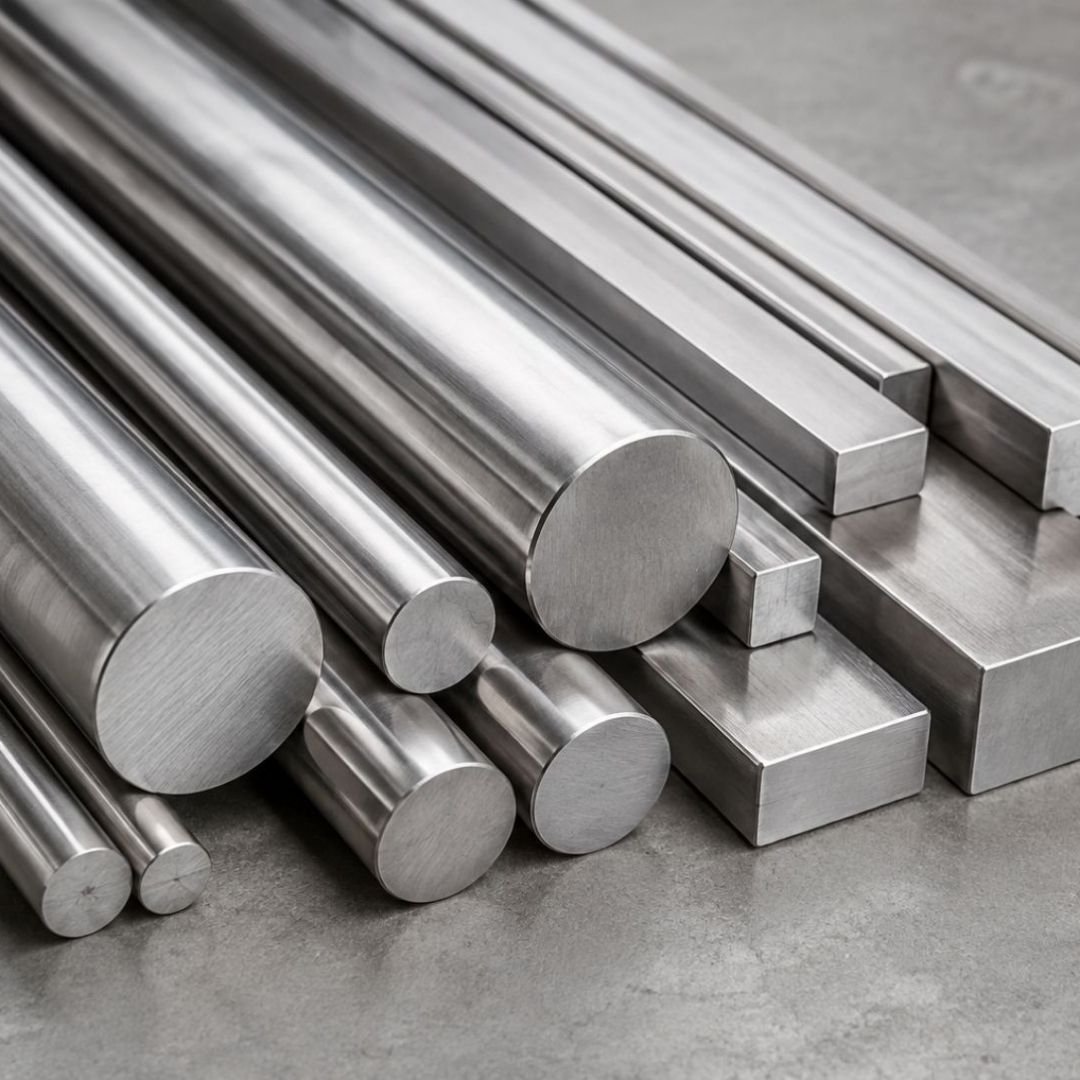
Carbon steel flanges connect pipes, valves, pumps, and other equipment to form a complete piping system. Builders select carbon steel heavily for pressure-bearing industrial piping systems. The base metal provides high tensile strength and handles heavy mechanical stress well. Engineers specify exact Carbon Steel Flange Grades and types before construction starts. You need to identify manufacturing standards, pressure classes and field applications. The baseline requirement for many projects starts with ASTM A105 Carbon Steel Flanges. Proper hardware specification ensures the joint holds the internal process fluid safely.
What Are Carbon Steel Flanges?
A flange is a forged metal ring with a machined sealing face and bolt holes. You weld or thread this heavy metal ring onto the end of a pipe segment. You then bolt two flanges together with a gasket trapped between them. This mechanical connection seals the pipe.
The bolted design enables rapid installation on site. It allows maintenance crews to open the line later for internal inspection, cleaning or equipment replacement. You cannot do this with a fully welded joint. Material grade dictates the physical strength. Dimensions dictate how the mating parts fit together. The pressure rating determines how much internal force the connection handles. The flange face configuration determines how the gasket gets compressed. You must match these structural variables to the existing pipe.
Common Carbon Steel Flange Grades
Engineers specify different grades based directly on operating temperatures and structural load.
ASTM A105 is the common forged carbon steel flange material for ambient and higher temperature service in pressure piping. It machines easily and welds well. Most standard industrial projects use this baseline grade.
ASTM A350 LF2 handles lower temperatures. This grade requires impact notch toughness testing. Builders specify LF2 for applications requiring improved low-temperature toughness in cold climates or chilled fluid process lines.
ASTM A694 covers high-strength carbon steel grades. Steel mills produce this in distinct grades like F42, F52, and F65. These grades are commonly used for high-pressure transmission and heavy piping applications requiring extreme physical yield strength.
ASTM A516 is primarily a pressure-vessel plate specification. It is not a standard forged flange grade. You should not specify this for a standard flange unless a specific fabrication requirement applies and the flange is cut directly from plate steel. Mechanical characteristics change across these grades. Match the metal to the system temperature and load requirements.
Types of Carbon Steel Flanges
Piping systems require different connection methods. Carbon Steel Flange Types vary primarily by how they attach to the host pipe.
Weld Neck Flanges feature a long tapered hub. You butt-weld the pipe directly to this extended hub. The taper transfers physical stress into the pipe wall. This design is preferred for high-pressure, high-temperature and severe cyclic loading applications.
Slip-On Flanges slide entirely over the outside of the pipe. You weld both the inside and outside to hold the flange in place. They are easy to install and commonly used in general industrial piping where space is limited.
Blind Flanges have no center bore hole. They are solid metal discs. You use them to close pipe ends, equipment nozzles and unused sections of piping securely.
Socket Weld Flanges have an internal machined step. The pipe sits flat on this step before you weld the outside perimeter. These are suitable for smaller-diameter, high-pressure piping.
Threaded Flanges have internal threads matching the pipe. They are useful where welding is undesirable, dangerous or physically impractical.
Lap Joint Flanges slip over the pipe but are never welded. They are used with separate stub ends where frequent dismantling is required for inspection.
Flange selection must be based on pressure, temperature, pipe size, welding requirements and service conditions rather than flange type alone.
Carbon Steel Flange Standards and Pressure Classes
Industry standards dictate the physical dimensions and metallurgical testing of these components. ASME B16.5 flanges represent the most common standard for pipe assemblies up to 24 inches. ASME B16.47 covers larger-diameter flanges up to 60 inches. You must match the ASTM A105, ASTM A350, or ASTM A694 material specifications exactly with these dimensional standards.
Carbon Steel Pipe Flanges come in specific pressure classes. These include Class 150, 300, 600, 900, 1500 and 2500. A higher class number designates a thicker and heavier metal component. Pressure-temperature ratings depend directly on the base material and the applicable standard. Buyers should verify the relevant ASME rating tables. Never assume a flange class corresponds to one universal working pressure across all temperatures. System heat reduces the actual pressure capacity of the steel.
How to Select the Right Carbon Steel Flange
Procurement requires accurate technical data. Use this practical selection checklist before issuing a purchase order.
Identify the exact pipe size and wall thickness.
Determine the maximum operating pressure and temperature.
Select the proper carbon steel grade based on the physical environment.
Pick the flange type based on welding capabilities and access.
Specify the required ASME pressure class.
Confirm the facing configuration and gasket compatibility.
State the applicable ASTM and ASME standard.
Note any specific corrosion issues in the operating environment.
Review the field welding and installation requirements.
State all inspection and certification requirements.
You must view the flange as part of the complete piping system. It is not an isolated component. The bolted connection will fail if it does not match the adjacent hardware perfectly.
Conclusion
Carbon Steel Forged Flanges provide heavy structural connections for demanding process piping. You must evaluate the operating temperature, internal pressure and field installation methods before selecting a grade or type. Matching the hardware to recognized dimensional standards ensures the joint will seal properly under stress. A qualified Carbon Steel Flanges Supplier like Neoimpex processes these raw materials to meet exact mechanical requirements. Proper selection prevents costly joint failures in industrial environments.
Tags : Carbon Steel Flanges