Builder-Grade Roofs on Newer Calgary Homes: What Buyers of 10-to-15-Year-Old Houses Should Expect
By Chetan Vaishnav 12-08-2026 57
Buying a 10-to-15-year-old home in a Calgary community that felt brand new not long ago comes with an assumption that the roof still has plenty of life left. Sometimes that is true. Often, the roof on a production-built home was chosen to meet a construction budget and a builder's warranty window, not to maximize longevity for whoever eventually owns the house past that window, and buyers are frequently surprised by what that means for their timeline.
This guide explains what "builder-grade" roofing typically means, why it ages differently than a homeowner-chosen upgrade, and what a buyer or current owner of a home in this age range should actually expect and check for.
What "builder-grade" actually means
Production home builders work within tight per-unit construction budgets across an entire subdivision, and roofing materials are one of many line items where the standard specification tends toward the lower end of what meets code and warranty requirements, rather than the higher-performing options a homeowner might choose if shopping independently for their forever roof. This typically means standard three-tab or entry-level architectural shingles rather than premium, impact-resistant, or extended-warranty products.
This is not necessarily a defect or a scandal; it is simply an economic reality of how production homes get built at scale, and most builder-grade roofs meet code and perform adequately for a meaningful stretch of time. The issue is that "adequately" and "as long as possible" are different standards, and a homeowner who assumes builder-grade means premium is planning around the wrong expectation.
Why the 10-to-15-year mark is a meaningful checkpoint
Standard three-tab shingles rated around 20 to 25 years, installed on a production home, are commonly showing real wear in the 15 to 20 year range in Calgary's climate specifically, given the hail and freeze-thaw cycling covered elsewhere in this series. A home at the 10-to-15 year mark is not necessarily due for replacement yet, but it is squarely in the window where a professional inspection stops being optional diligence and starts being a genuinely useful planning tool.
This age range is also frequently past the original builder's roofing warranty period, which on production homes is often shorter than a premium installer's workmanship warranty would be. A buyer assuming builder-backed warranty protection on a 12-year-old home is usually assuming coverage that has already expired.
What to check specifically on a home in this range
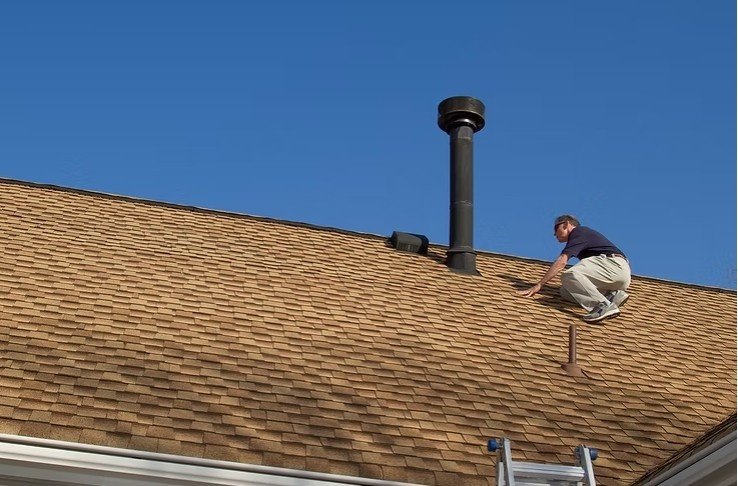
A pre-purchase or ownership-review inspection at this age should look specifically for granule loss visible in gutters and downspouts, curling or cupping at shingle edges especially on south and west exposures, and any signs of prior hail damage that may never have been claimed or repaired by a previous owner who did not notice or did not bother.
Attic ventilation deserves particular attention on production-built homes, since builder-standard ventilation sometimes meets minimum code requirements rather than the more generous intake-and-exhaust balance that maximizes shingle lifespan. Inadequate ventilation on a builder-grade roof compounds the shorter-lived material with faster aging from heat trapped underneath, a combination that can bring the real replacement timeline forward significantly.
- Request or commission a professional roof inspection before or shortly after purchase.
- Check gutters and downspouts for accumulated granule loss.
- Ask the seller directly whether any hail claims were ever filed on the roof.
- Have attic ventilation assessed as part of the same inspection.
- Confirm whether any builder or manufacturer warranty is still active.
- Budget realistically for replacement within the 15-to-20 year window, not the 25-year wrapper number.
Upgrading versus replacing, when the time comes
When a builder-grade roof does reach replacement age, homeowners have a genuine opportunity to upgrade materials rather than simply matching what was originally installed. Moving to a higher-grade architectural shingle, an impact-resistant Class 4 product suited to Calgary's hail exposure, or a synthetic option like Euroshield changes both the lifespan and the ongoing insurance conversation, since some insurers offer premium considerations for impact-resistant roofing.
This is also the point where a homeowner can correct any ventilation shortfall inherited from the original build, improving intake and exhaust balance during the tear-off rather than simply reinstalling the same undersized system that shortened the first roof's life.
What this means for resale, either direction
If you are buying a home in this age bracket, factor the roof's likely remaining life into your offer and your near-term budget planning rather than treating it as a non-issue simply because the house itself feels new. If you are selling a home with an aging builder-grade roof, an honest pre-listing inspection and disclosure, or a proactive replacement before listing, can prevent a buyer's inspection from becoming a late-stage negotiation problem.
Finding out what was actually installed
Original building permits filed with the City of Calgary sometimes reference the roofing materials used during construction, though the level of detail varies and is not always product-specific. Past listing photos from when the home last sold can occasionally help estimate the roof's age and general condition at that point. The most reliable source is usually the roof itself: an inspector can identify shingle type, estimate age from wear patterns, and check for any manufacturer markings still visible on exposed tabs.
If the current or previous owner kept any paperwork from the original build or a prior repair, that documentation is worth requesting specifically, since it can confirm both the product installed and whether any warranty registration was ever completed, which affects whether coverage is still theoretically available.
Negotiating roof condition into a home purchase
A pre-purchase inspection that flags a roof nearing the end of its realistic lifespan is legitimate negotiating leverage, whether that means a price adjustment, a seller-funded repair credit, or a request that the seller complete specific repairs before closing. Sellers are often more willing to negotiate on this point than buyers expect, particularly if the inspection report is specific and professionally documented rather than a vague concern.
If negotiation does not fully close the gap, factor the likely replacement cost into your post-purchase budget deliberately rather than treating it as a surprise a few years down the road. A roof that needs replacing in year two of ownership is a far less stressful expense when it was already anticipated at the time of purchase.
Why your whole subdivision may be due around the same time
Production homes in a given community are typically built and roofed within a fairly tight window, a few years at most across an entire phase of development. That means when your roof is approaching end of life, many of your neighbours' roofs are on a similar timeline, which can affect contractor availability and scheduling if a large share of a community books replacements in the same construction season.
This is worth factoring into your own planning: if you know your home's roof is approaching the realistic replacement window, booking earlier in the season rather than waiting until a visible failure prompts an emergency call can mean more scheduling flexibility and a wider choice of contractors than waiting until the whole neighbourhood is calling at once.
Talking to neighbours before you talk to a contractor
If several homes on your street were built in the same phase, a neighbour who has already had their roof inspected or replaced can be a genuinely useful, unbiased source of information about condition, cost range, and which contractors they found straightforward to deal with. This is informal research, not a substitute for your own inspection, but it can help you enter the conversation with a contractor already knowing roughly what to expect for a home of your community's age and construction style.
New house, aging roof: they are not the same clock
A home's overall age and its roof's real remaining life are two different numbers, and builder-grade materials on a production home often mean that gap matters sooner than owners expect. The 10-to-15 year mark is the right time to check, not to panic.
If you own or are buying a home in this range and have not had the roof looked at, a full Calgary residential roof inspection before you renovate will tell you where you actually stand, and it is worth understanding the signs that mean replacement, not repair before those signs show up as a leak instead of an inspection note.
About the author: this article was contributed by Angel's Roofing, a Calgary roofing contractor that inspects builder-grade roofs on production homes for hail history, ventilation adequacy, and remaining service life. The company is certified in GAF, IKO, Malarkey, and Euroshield roofing systems.