Best Energy Drinks in India (2026): Types, Prices, Ingredients & the New FSSAI Rules Explained
By furymode 03-09-2026 4
If you've typed “best energy drinks in India” into Google recently, you've probably noticed something odd — half the results talk about “energy drinks,” and the other half now call them “caffeinated beverages.” That's not a typo. It's the result of a regulatory shift that's reshaping how every brand in this category, old and new, is allowed to talk about its product.
This guide breaks down what's actually in these cans and bottles, which brands dominate Indian shelves right now, what the new rules mean for you as a buyer, and how to choose a drink that matches your body, your budget, and your goals — without falling for marketing noise.
What Is an Energy Drink, Legally, in India Right Now?
Most buyers assume “energy drink” is just a marketing category. In India, it's actually a regulated one — and the rules just changed in a big way.
As of July–August 2026, the Food Safety and Standards Authority of India (FSSAI) has directed manufacturers of high-caffeine drinks to stop using the term “energy drink” on labels altogether, giving companies a 90-day window to switch to “caffeinated beverage” instead. This isn't a new idea — FSSAI has argued since 2016 that “energy” implies a functional health claim the products can't scientifically back up. What's new is that the regulator is now actively enforcing it, and it affects every major name on the market, from Red Bull to Sting to Monster.
For consumers, the practical rules haven't disappeared, they've just been formalised:
Requirement | FSSAI Standard |
|---|---|
Caffeine content | Must be between 145 mg/litre and 300 mg/litre |
Labelling term | “Caffeinated beverage” (not “energy drink”) |
Mandatory warning | Not recommended for children, pregnant or lactating women, or caffeine-sensitive individuals |
Daily intake disclosure | Maximum recommended serving per day must be printed on the label |
Ingredient caps | Limits on taurine, sucralose, saccharin sodium, and other additives |
So when you're comparing “best energy drinks,” you're really comparing FSSAI-regulated caffeinated beverages that are still widely sold — and still commonly searched for — under their older, more familiar name. That's the terminology this guide uses too, since that's how most people actually search for and talk about these products.
Types of Energy Drinks Sold in India
The Indian market has diversified well beyond the carbonated can. Here's how the category breaks down today:
Type | Examples | Best For |
|---|---|---|
Carbonated, sugar-based | Red Bull, Sting, Monster (classic) | Quick, familiar boost; occasional use |
Sugar-free / zero-calorie | Monster Ultra, Celsius, several newer entrants | Calorie-conscious buyers, daily-ish use |
Cola-based functional drinks | Charged by Thums Up | Cola drinkers wanting a caffeine add-on |
Herbal / Ayurvedic | Shilajit-based sips, kombucha brands | Buyers preferring “natural” positioning |
Powder sachets / RTM mixes | Various fitness-focused brands | Travel-friendly, portion-controlled use |
Each format changes the answer to “how much caffeine am I really getting?” — which is exactly the question most first-time buyers skip and later regret.
Top Energy Drink Brands in India — Compared
Here's how the most-searched brands stack up on the two numbers that matter most: caffeine and sugar.
Brand | Approx. Caffeine | Sugar | Typical Price | Positioning |
|---|---|---|---|---|
Red Bull | ~80 mg (250 ml) | ~27 g | ₹125–₹250 | Premium, globally recognised |
Monster Energy | ~160 mg (500 ml) | ~54 g (classic) | ₹110–₹125 | High-intensity, gym/gaming crowd |
Sting | ~70 mg (250 ml) | High | ₹20–₹50 | Budget, mass-market |
Charged (Thums Up) | ~80 mg | Medium | ₹40–₹60 | Cola drinkers, casual boost |
Predator Energy | ~80 mg | Medium | ₹40–₹70 | Value-for-money, Red Bull's sister brand |
Tzinga | Moderate | Medium | ₹20–₹40 | Regional, price-led |
Note: caffeine and sugar figures vary by flavour and pack size; always check the can for the exact number, since FSSAI now mandates this disclosure on every label.
A pattern worth noticing: price in India correlates far more with marketing spend than with caffeine content. A ₹40 can and a ₹200 can can carry near-identical caffeine per serving — the difference is brand, packaging, and distribution reach, not necessarily the ingredient list.
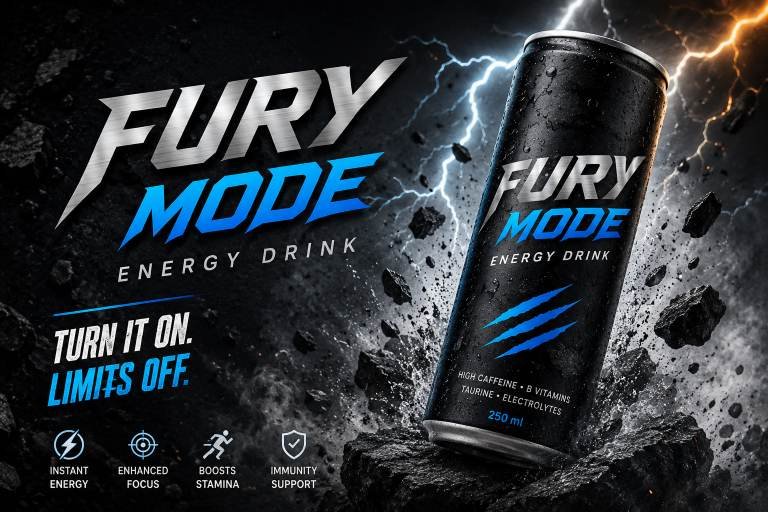
How Fury Mode Energy Plans to Enter India's Energy Drink Market
India's caffeinated beverage market is growing at a double-digit pace, driven largely by younger, price-sensitive buyers in tier-2 and tier-3 cities — a segment that's currently underserved by premium imported brands. Fury Mode Energy is one of the newer names preparing to enter this space, positioning itself as an India-first brand built around this exact gap: consumers who want a dependable functional drink without paying an import premium.
At this stage, the brand is in its pre-launch phase, which means any product built under it will need to fully comply with FSSAI's current caffeinated-beverage standards from day one — including the caffeine cap, the mandatory safety warnings, and the now-required “caffeinated beverage” labelling. That's a meaningfully different starting point than most legacy brands had, several of which are only now retrofitting their packaging to meet these rules.
How to Choose the Right Energy Drink for You
Before picking a can off the shelf, run through these five checks:
Question to Ask | Why It Matters |
|---|---|
How much caffeine do I already consume daily (tea, coffee, cola)? | Total daily caffeine matters more than any single can |
Do I need it for physical activity or mental focus? | Some formulations lean stimulant-heavy, others add electrolytes |
Am I sensitive to sugar or managing weight? | Sugar-free variants use sweeteners that don't suit everyone |
Will I drink it daily or occasionally? | Daily use changes the safety math significantly |
Do I have any heart, anxiety, or sleep-related conditions? | These are the groups FSSAI specifically warns against high-caffeine intake |
A simple rule that works well in practice: if you wouldn't drink four cups of coffee in a day, don't drink the caffeine equivalent in energy drinks either.
Side Effects, Safety Limits & Who Should Avoid Them
This is the section most marketing pages skip — but it's the one that actually protects you.
Common, well-documented side effects of high caffeine intake include jitteriness, elevated heart rate, disrupted sleep, and, in sensitive individuals, anxiety-like symptoms. The World Health Organization has flagged that exceeding recommended caffeine limits can affect behaviour and cardiovascular response, particularly in younger consumers and those with existing sensitivities.
FSSAI's label warning exists precisely because of this evidence base. It explicitly calls out four groups who should avoid these drinks:
- Children and adolescents
- Pregnant or lactating women
- People sensitive to caffeine
- Individuals with cardiac or anxiety-related conditions (widely recommended by health bodies, even where not always printed verbatim)
If you fall into any of these categories, no branding — premium or budget — changes the underlying chemistry.
Fury Mode Energy vs Established Players: What Buyers Should Watch For
When any new brand — Fury Mode Energy included — enters a category this crowded, the smart way to evaluate it isn't the tagline on the can. It's three concrete things:
- Label transparency — does it clearly state caffeine per serving, in line with FSSAI's disclosure rule?
- Compliance from launch — is it using the legally required “caffeinated beverage” terminology and warning labels, rather than retrofitting them later?
- Actual ingredient value — is the caffeine-to-price ratio competitive with the ₹40–₹80 mid-market segment, where most of India's growth is happening?
New entrants that get these three right from day one tend to earn trust faster than legacy brands still adjusting to the 2026 rule change — a genuine opening in an otherwise saturated shelf.
Conclusion
India's energy drink shelf is bigger, cheaper, and more regulated than it's ever been — and 2026's FSSAI relabeling order is the clearest sign yet that the category is being held to real accountability standards, not just marketing claims. Whether you stick with an established name or keep an eye on newer entrants like Fury Mode Energy as they prepare to launch, the same three checks apply every time: know your caffeine number, read the warning label, and buy for your actual routine — not the can's tagline.
FAQs
Q1. Is “energy drink” still an accurate term to search for in India?
Yes, for now. FSSAI has ordered brands to drop the term from packaging, but consumer search behaviour hasn't shifted yet, and most products are still commonly referred to as energy drinks even as their labels transition to “caffeinated beverage.”
Q2. What is the maximum caffeine allowed in an energy drink in India?
FSSAI caps caffeine at 300 mg per litre and requires a minimum of 145 mg per litre for a product to legally qualify as a caffeinated beverage.
Q3. Which energy drink has the least sugar in India?
Sugar-free variants from brands like Monster Ultra and several newer clean-label entrants typically use sucralose instead of sugar, though exact content varies by SKU — always check the label.
Q4. Is it safe to drink an energy drink every day?
Daily use is generally discouraged by health experts unless you've accounted for your total daily caffeine intake from all sources; occasional use is considered lower-risk for most healthy adults.
Q5. When is Fury Mode Energy launching in India?
Fury Mode Energy is currently in its pre-launch phase. Specific launch dates, flavours, and product specifications will be confirmed closer to release.
Q6. Why are Indian energy drink brands removing the word “energy” from their labels?
FSSAI ruled that “energy” implies a functional health benefit that isn't scientifically substantiated for these products, so it's mandating the neutral term “caffeinated beverage” instead, effective within a 90-day compliance window announced in 2026.
Q7. What's the difference between an energy drink and a pre-workout supplement?
Energy drinks are ready-to-drink caffeinated beverages meant for general alertness, while pre-workout supplements are typically powdered, dosed specifically for exercise, and often contain higher, more concentrated stimulant and performance-ingredient levels.
Q8. Are herbal or Ayurvedic energy drinks safer than caffeinated ones?
“Natural” positioning doesn't automatically mean lower risk — some herbal formulations still contain caffeine or stimulant compounds, so the same label-reading rules apply regardless of category.