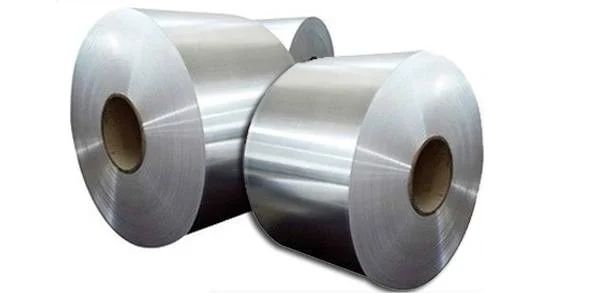
Carbon steel corrodes steadily in seawater and dilute acids. Standard stainless steels fare better, but chlorides trigger pitting, crevice damage, and stress corrosion cracking at the surface level. Monel, a family of nickel-copper alloys, resists chloride stress corrosion cracking and remains stable in seawater, alkaline, and selected acid service.
Monel plates give fabricators a flat product form for tanks, vessels, heat exchanger components, and marine structures that face this exposure. Performance depends on the specific Monel grade and the service environment.
What Are Monel Plates?
Monel alloy plates are flat rolled products made from nickel-copper alloys. Monel 400 contains a minimum of 63% nickel, 28 to 34% copper, and up to 2.5% iron. Monel K500 keeps a similar nickel-copper base and adds 2.3 to 3.15% aluminium and 0.35 to 0.85% titanium, allowing it to respond to precipitation hardening.
Each grade serves a different purpose. Monel 400 covers seawater and hydrofluoric acid service, while Monel K500 trades some ductility for much higher strength after aging and appears in highly loaded components.
Suppliers cut plates to the thickness and size an order specifies and deliver them in finishes such as heat-rolled and pickled or cold-rolled and annealed. Match the grade to the corrosion conditions and the mechanical requirements together, because a grade that resists the fluid but cannot carry the design load still fails the application.
Key Properties of Nickel-Copper Alloy Plates
Seven properties explain why engineers specify this alloy family:
- Corrosion resistance in moisture, brackish water, and selected process fluids
- Low corrosion rates in seawater and marine atmospheres
- Resistance to selected acids and alkaline solutions, including hydrofluoric acid and caustic soda
- Mechanical strength that supports pressure and structural loads
- Toughness and ductility that hold at subzero temperatures
- Resistance to erosion corrosion in suitable flow conditions
- Weldability, formability, and machinability in the grades intended for fabrication
8 Benefits of Using Monel Plates in Corrosive Environments
1. Excellent Corrosion Resistance
Nickel and copper together resist degradation in moisture, seawater and alkaline solutions without relying on a chromium-rich passive film. Corrosion-resistant Monel plates maintain their wall thickness where carbon steel thins and standard stainless steel pits. Nitric acid, ferric chloride and aerated ammonia solutions still damage the alloy, so every process fluid needs a compatibility review.
2. Strong Performance in Marine Environments
Published data for clean, flowing seawater indicates a corrosion rate of Monel 400 near 0.025 mm per year. Saltwater piping, marine atmosphere fittings, and offshore equipment benefit from that low rate. Marine engineers also specify Monel for seawater valves, pump parts and tube sheets. Stagnant seawater and crevices under deposits promote pitting, so evaluate velocity, temperature, and contaminants such as sulfides before choosing a grade.
3. Resistance to Chemical Attack
Chemical-resistant Monel plates handle hydrofluoric acid, caustic soda, and dilute sulfuric acid under controlled conditions. Refineries use Monel 400 in hydrofluoric acid alkylation units. Concentration, temperature, aeration, and impurities change the corrosion rate, so confirm each application against a laboratory immersion test or a published corrosion table.
4. Good Mechanical Strength
Nickel-copper alloy plates carry a load and resist corrosion. Annealed Monel 400 holds a minimum tensile strength of 485 MPa, and aged Monel K500 exceeds 900 MPa. That strength allows designers to specify pressure equipment, marine components, and industrial machinery without a separate protective lining. Monel 400 also maintains toughness at subzero temperatures, without ductile-to-brittle transition, suitable for cold service equipment.
5. Resistance to Erosion Corrosion
Fast-moving fluid strips surface films and exposes fresh metal to severe damage. Suitable Monel grades resist the combined action of flow and chemistry, which is why they are used in pump components, valves, piping parts, and seawater handling systems. Check design velocity and solids content, since abrasive particles reduce the margin. Monel K500 appears in pump shafts and impellers, where its strength and seawater resistance work together.
6. Durability in Demanding Conditions
Low metal loss rates lead to fewer shutdowns for plate replacement. Monel costs more per kilogram than carbon steel or standard stainless steel, so the economic case rests on service life. When the grade matches the environment, Monel alloy plates support longer service intervals, reducing maintenance labour, spare part orders, and lost production hours. Operators still schedule inspections, as crevices, deposits, and adverse conditions can change corrosion behaviour over time.
7. Good Fabrication Characteristics
Fabricators machine, form, and weld nickel-copper alloy plates with established procedures. Monel 400 work-hardens during machining, so shops use sharp tools, positive feeds, and steady coolant flow. Welders use matching nickel-copper filler metal and clean the joint of sulfur, lead, and oil residues, which cause cracking when heated. Fabricate Monel K500 in the annealed condition and age it afterwards.
8. Versatility Across Industries
Corrosion-resistant Monel plates serve marine and offshore platforms, chemical processing units, oil and gas facilities, petrochemical plants, power generation stations, desalination units, and water treatment systems. Inside those plants, the alloy forms heat exchanger components, pump casings, valve bodies, and process vessels.
Quality Checks for Monel Alloy Plates
Verified material protects a corrosion project from avoidable failures. Buyers should require chemical composition analysis and positive material identification (PMI) on every plate, plus mechanical property testing for tensile strength, yield strength, and elongation.
Dimensional inspection and surface inspection confirm thickness, flatness, and finish. Ultrasonic testing detects internal defects if the order specifies it, and heat treatment records document the annealing or aging cycle. Each shipment needs a Material Test Certificate, for instance, EN 10204 Type 3.1, with heat number traceability that links every plate to its test results. Ask the supplier to name the product standard on the certificate, such as ASTM B127 for Monel 400 plate.
Conclusion
Monel plates combine corrosion resistance, marine performance, chemical resistance, mechanical strength, durability, and fabrication flexibility in one material. The combination explains their role in seawater systems, acid and alkali handling, and high flow equipment.
Performance still varies by grade and service conditions. Before selecting chemical-resistant Monel plates, review chemical concentration, temperature, fluid velocity, mechanical loads, and applicable standards.
Tags : Monel Plates














