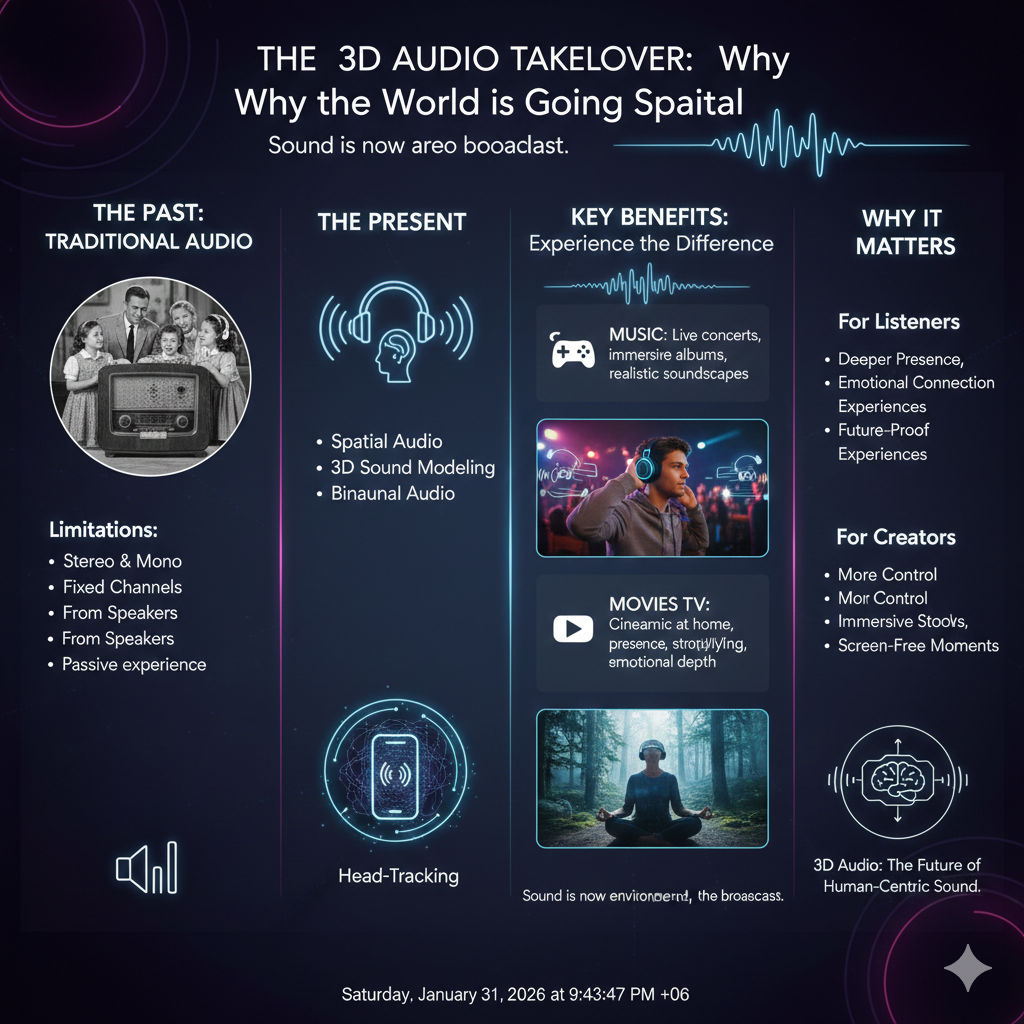
AudioVR is an immersive, cinematic audio storytelling platform where you shape the story. Unlike traditional podcasts or audiobooks, AudioVR blends interactive choices, atmospheric 3D soundscapes, and subtle visual clues to create experiences you don’t just listen to you explore. Every decision you make influences the outcome, pulling you deeper into the world of sound.
What Are Cinematic Sound Effects?
Cinematic sound effects are amplified audio elements. They are designed to pull the listener into a scene by enhancing realism, emotion, and depth. With the blend of echoes, explosions, wind, and subtle room tones, they make the listener feel immersion and presence.
These effects use reverb modeling, spatial audio, dynamic range control, layered sound design, and other advanced sound techniques to grab the attention of the audience. They genuinely act as invisible storytellers, ensuring the feel of being alive, reacting to the environment, and moving through space.
What Is Regular Audio?
Regular is the common format for music streaming. Without immersive design, it provides basic sound playback. Rather than emotional impact, it focuses on functionality and clarity. Simple background music, notification sounds, and standard voice recordings are the concrete examples of regular audio.
With minimal post-processing, regular audio played in stereo. This type of audio is recorded to store, capture, and reproduce sounds for future listening. When it’s heard, it enables artistic preservation, communication, and documentation.
Cinematic Sound Effects vs Regular Audio: Core Differences
The key difference between regular audio and cinematic sound effects lies in experience. In addition, they both have different intentions. To explain it in detail, cinematic sound effects are designed to immerse, whereas regular audio is to inform. Look at the below table:
Cinematic Sound Effects
Regular Audio
Designed to immerse the listener in an experience
Designed to inform the listener clearly
Uses movement, direction, and depth to place listeners inside a scene
Focuses on clarity and consistency without spatial movement
Sounds can come from above, behind, far away, or multiple directions
Sound remains centered and fixed
Mimics real-world acoustics for realism and atmosphere
Prioritizes clean, distraction-free delivery
Enhances emotions like suspense, fear, drama, or joy
Generally emotionally neutral
Requires advanced sound design skills and specialized tools
Easier to produce with basic audio tools
More complex and time-intensive to create
Faster and simpler to produce and deploy
Commonly used in films, games, immersive storytelling
Commonly used in podcasts, lectures, announcements, voiceovers
What is Best Between Cinematic Sound Effects vs Regular Audio?
Cinematic sound effects vs regular audio:
Which one is best totally depends on what fits your objective. If you want a sound for engagement, storytelling, or emotional connection, then there is no alternative to cinematic sound effects. This type of audio is unmatched for making audiences feel involved and transforming them into an experience.
But if you solely need audio for communication, regular audio should be your right pick. Without overwhelming the listener, this type of sound ensures clear message delivery. In all applications, it spontaneously delivers essential information and dialogues.
FAQs About Cinematic Sound Effects vs. Regular Audio
Why are cinematic sound effects more immersive than regular audio?
Cinematic sound effects seem more immersive than regular audio. That’s because they use emotional sound layering, realistic acoustics, and spatial depth. They make the experience more engaging for listeners. But the regular audio can’t do it.
Can cinematic sound effects replace regular audio?
To be honest, cinematic sound effects can never replace regular audio, as both have their own use cases. Both serve different purposes when it comes to sound engineering.
Which is better for interactive audio experiences?
Apparently, cinematic sound effects are always a better option when it comes to experiencing interactive audio. That’s because they can make emotionally rich interactions by responding to user actions.
Why are cinematic sound effects important in storytelling?
They can signal narrative shifts, add depth to characters, and guide the audiences’ feelings. As a result, they can influence emotion faster than visuals. That’s why they are important in storytelling.
Conclusion
It’s not all about sound quality when it comes to judging the difference between cinematic sound effects vs. regular audio. The experience, purpose, and functionality come into play to differentiate them. In simple terms, cinematic sound effects immerse, whereas regular audio informs.
Cinematic audio appears to be a powerful storytelling tool, as it can make audiences seek interactive, emotional, and memorable experiences. But where efficiency and clarity matter most, regular audio remains inevitable.
Tags : Audio VR Improves Focus