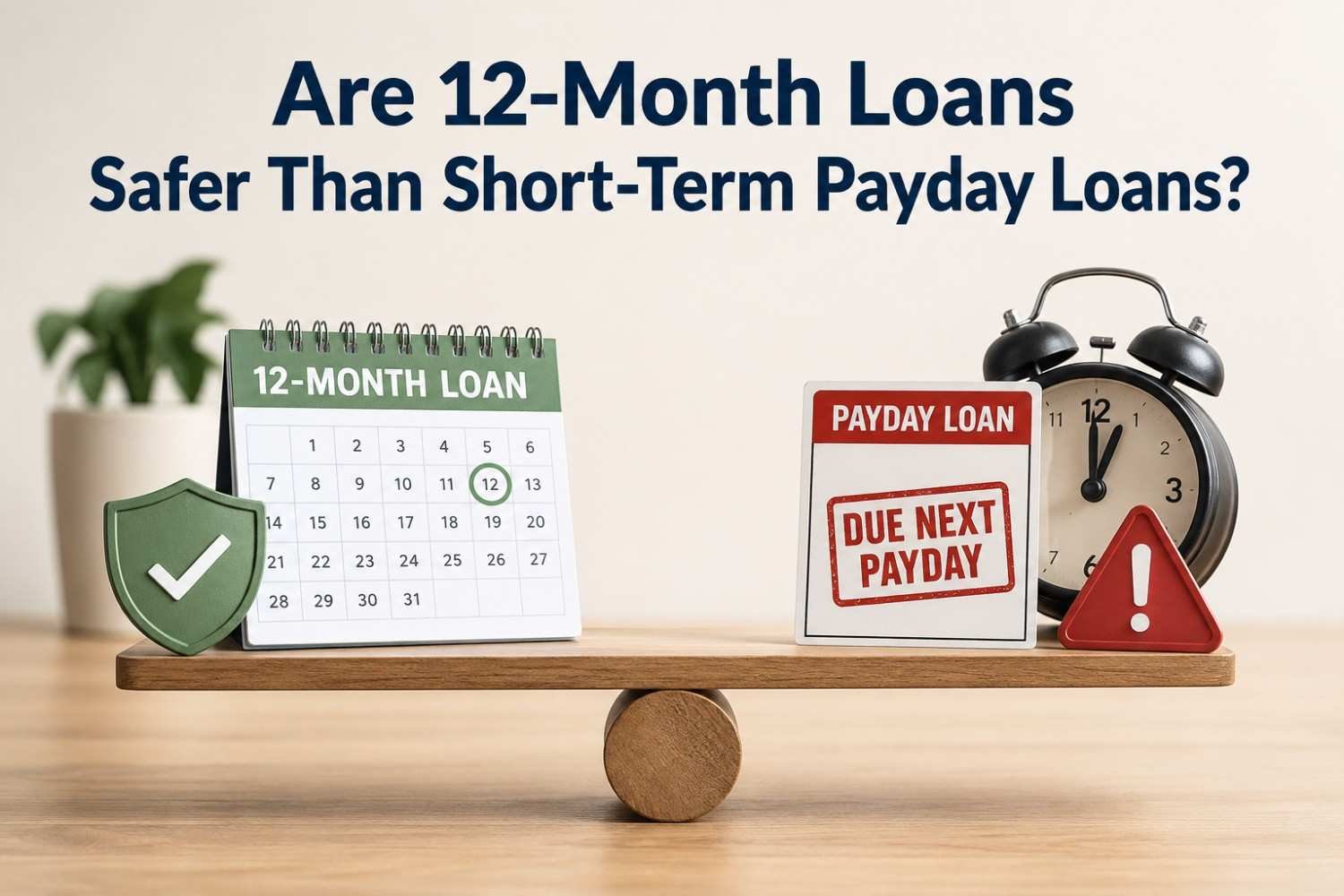
Undoubtedly, 12-month loans should be considered safer than payday loans as they spread the cost of the debt across months, but there is more to it than meets the eye.
While being caught unawares by financial emergencies, borrowers can choose between multiple types of financing. However, the most common among them are payday loans and 12-month instalments.
It is vital to note that both types of loans are not substitutes. In other words, if you think a 12-month loan is an alternative to a payday loan, you are holding a fallacious view.
Payday loans vs 12-month instalment loans – the basics explained
Payday loans
- Payday loans are small loans that become due for payment on your next payday. It means the maximum repayment term of these loans cannot last more than a month.
- These loans are aimed at small unexpected expenses, and hence the loan size ranges between £100 and £500.
- The lending decision is made based on your overall financial capacity. Payday lenders do not check your credit score. They only take into account your repayment capacity.
- The whole debt is paid back in one fell swoop.
- Interest rates are high, which are capped at 0.8% per day, but annual percentage rates reach up to 1200% a s they include additional fees and charges on top of interest rates.
12-month loans
- 12-month loans from a direct lender are also small loans that can be used for unexpected and planned expenses. They are also known as personal loans or instalment loans.
- These loans range from £1,000 to thousands of pounds.
- The repayment structure is more flexible than that of payday loans. Depending on the loan size, the repayment duration will be between 3 months and a year.
- The lending decision will be made after a perusal of your credit score. Your credit rating must be stellar to qualify for lower interest rates.
- Subprime borrowers are also eligible for these loans, but high interest rates are levied.
- Monthly payments are decided based on your current financial standing. The size of monthly instalments remains unchanged.
Aspects | Payday loans | 12-month loans |
| Default risk | High because of a lump sum payment | Lower due to manageable monthly instalments |
| Impact on credit | On-time payments are not reported to credit bureaus | On-time payments are reported to help build credit |
| Cycle of debt | A higher risk of repeated borrowing | A lower risk if payments are managed well |
Why are payday loans riskier?
Here are the reasons why payday loans are considered riskier:
Debt trap
Payday loans have earned a negative reputation because they trap borrowers in cycles of debt. Not only do they levy exorbitant interest rates, but they are also expected to be paid back in one fell swoop within a short space of time.
Most of the borrowers find themselves cash-strapped to meet regular expenses after paying off the debt, which forces them to reborrow. As a result, they get trapped in an ongoing cycle of debt.
Outrageously high interest rates
The FCA has capped interest rates at 0.8% per day for payday loans and default charges at £15. Yet, the total cost of the debt cannot exceed 100% of the originally borrowed amount.
Despite strict regulations, payday lenders charge a lot of money by imposing various kinds of fees. If you roll over the loan a few times, you see it snowballing into a larger amount. Eventually, you realise that you have fallen into an abyss of debt.
No credit building
Payday loan lenders do not report on-time payments to credit reference agencies. It means you cannot see any improvement in your credit after on-time payments.
The biggest reason why these loans do not help with credit building is that they fail to provide a clear picture of your financial behaviour during times of financial hardship.
Why are 12-month loans considered safer?
Here are the reasons why they are assumed to be safer:
Manageable payments
12-month loans are paid back over a period of a year. Despite a larger sum of money, payments are more manageable. They are predictable. You can easily budget around those payments.
Interest rates are low
APRs of these loans are lower than those of payday loans. They range between 49% and 99%, depending on a lender’s policy and your overall credit profile. Of course, you will be charged lower interest rates if your credit score is perfect.
They help with credit building
Instalment loan providers inform credit bureaus of your payments. If you manage to discharge the debt on time, this will help build your credit score.
Though 12-month loans are safer than payday loans, they do not insinuate that they are not subject to drawbacks:
- You will be tied to monthly payments for a year. You may find it a bit challenging, especially if you lose your job or any unexpected expenditure comes up.
- While monthly payments are manageable, you will end up paying a lot more on interest. The longer the repayment period, the higher the total interest will be.
- Missed payments can affect your credit score. They also charge late payment fees and interest penalties, which quickly snowball the debt.
Which loan is to choose?
Having said that, both payday loans and 12-month loans are not alternatives to each other; they are aimed at borrowers with different needs and purposes.
- Payday loans are ideal for funding small unexpected expenses, only if you are certain about your repayment capacity.
- 12-month loans are ideal for funding large expenses, whether they are planned or urgent.
If you do not find payday loans affordable, consider credit union loans, budgeting loans and borrowing from friends and family.
The final word
12-month loans are safer than payday loans as they spread the cost of the debt over time. Payday loans, on the other hand, put a lot of pressure on your pocket as they are discharged at one shot. But you cannot use 12-month loans as an alternative to payday loans. They both have been designed to serve different needs.
Consider credit union loans, budgeting loans and loans from friends and family if you find payday loans very expensive.