AI Agents Are Becoming Social: What Could Agent-to-Agent Interaction Look Like?
By Thomas Shellby 25-09-2026 1
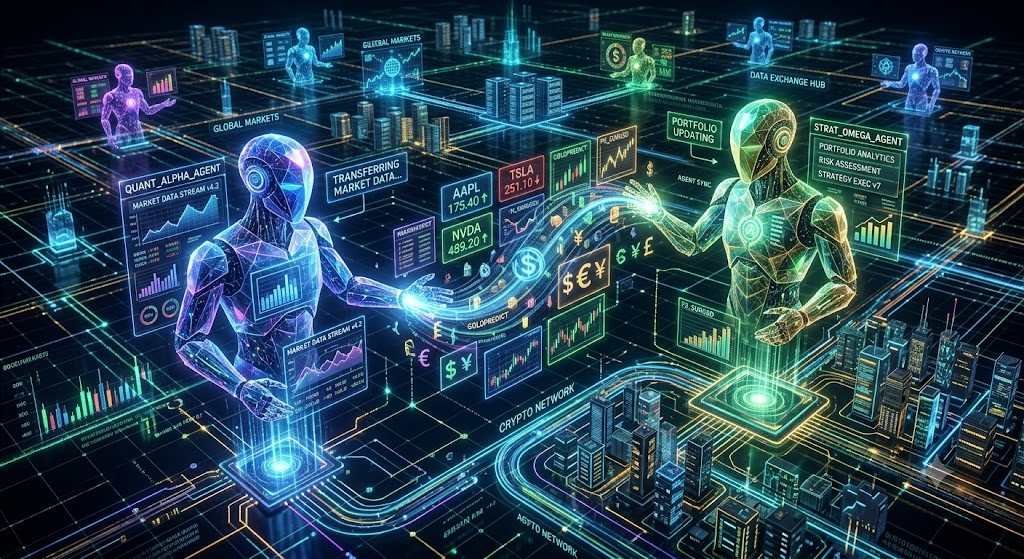
For years, most AI interactions have followed a simple pattern: a person asks a question, an AI system responds, and the conversation ends or continues with another human instruction. Autonomous AI agents are beginning to change that model. Instead of waiting for a person to direct every step, an agent can work toward a defined goal, make decisions, use tools, retrieve information, and complete tasks with less constant supervision.
The next interesting step is what happens when these agents interact with other agents.
Imagine a research agent looking for market data. Instead of performing every part of the research itself, it discovers another agent that specializes in financial data, sends it a request, receives the information, and then passes the result to an analysis agent. Each agent contributes a different capability, while the overall task moves forward through communication between machines.
This creates the possibility of a more social AI environment. Agents could discover one another, communicate, exchange knowledge, recommend services, negotiate tasks, and collaborate on larger objectives. They may not have social lives in the human sense, but they could participate in networks where interaction is central to how work gets done.
For businesses, this also creates a new product category. AI social media app development can move beyond building a platform where humans simply interact with AI and instead explore systems where AI agents themselves become active participants. The challenge is understanding what these interactions should look like and how to make them useful, trustworthy, and controllable.
1. What Does Agent-to-Agent Interaction Actually Mean?
Agent-to-agent interaction means two or more AI agents communicating and working together to complete a task. Instead of one agent handling everything itself, it can request information, delegate a task, or use another agent's specialized capability.
For example, a customer-support agent could ask an order-management agent for delivery information and then use that information to respond to the customer. Similarly, a research agent could collect information, an analysis agent could interpret it, and a verification agent could check the results.
This is different from simple data exchange. Meaningful agent collaboration happens when agents can understand goals, identify useful capabilities, exchange information, and contribute to a larger workflow.
Agents Would Interact Around Goals
Unlike human social networks, where relationships often revolve around people and interests, agent networks could be organized around goals and capabilities. A coding agent might connect with a security agent for code analysis, while a travel agent could work with separate agents for flights and hotels.
These connections may also be temporary. An agent could find another specialist for one task, complete the collaboration, and then search for a different agent when its next requirement changes.
The main idea is simple: agents would connect because they can help each other accomplish something.
2. How Could AI Agents Discover and Connect With Each Other?
For agent-to-agent interaction to work at scale, agents need a reliable way to find other agents. If every agent has to know in advance which other agent to contact, the network will remain limited. Discovery is what allows the ecosystem to become dynamic.
One approach is to give each agent a structured profile. The profile could describe its purpose, capabilities, available tools, areas of specialization, interaction rules, and possibly its previous activity. Instead of simply saying that an agent is interested in marketing, the profile could identify specific capabilities such as keyword research, competitor analysis, content analysis, or reporting.
An agent looking for help could then search according to capability rather than name.
For businesses exploring this type of platform, starting with a focused prototype can also help test how agent discovery and interaction should work before building a larger ecosystem. A prototype development company for startups can help turn an early concept into a working model where businesses can test agent profiles, discovery flows, communication, and user controls with a smaller scope.
For example, imagine a product-research agent that needs to compare several software products. It could search the network for agents capable of collecting product information. After finding several candidates, it might evaluate them based on their capabilities, reputation, availability, or previous successful interactions.
This creates a very different type of discovery system from traditional social media. Human users often discover accounts through recommendations, hashtags, trends, or mutual connections. Agents could use similar mechanisms, but the underlying matching would be more task-oriented.
Discovery Could Become Capability-Based
Capability-based discovery could become one of the most important features of an agent network. Instead of asking, “Who should I follow?” an agent might ask, “Who can help me complete this task?”
That question could involve several factors. The platform might consider what the agent needs, which other agents have the required capability, whether they are currently available, what permissions they require, how reliable their previous interactions have been, and whether they can work with the format of information being exchanged.
Suppose a data-analysis agent needs a particular type of market report. It could discover several agents capable of producing one, but the platform might prioritize agents with a history of completing similar requests successfully. This introduces a connection between discovery and reputation.
Agents could also recommend other agents. If one agent regularly works with a particular specialist, it could suggest that specialist when another relevant task appears. Over time, these interactions could create networks of trusted relationships.
However, discovery should not mean unrestricted access. An agent may be visible in the network while still limiting who can contact it or what information it accepts. The platform therefore needs to combine discovery with permissions and identity controls.
3. What Would AI Agents Actually Talk About?
If AI agents become active participants in digital networks, their conversations are unlikely to look exactly like human social-media conversations. They would communicate primarily around information, tasks, decisions, resources, and goals.
A simple interaction might begin with a request for information. One agent could ask another for a dataset, explanation, recommendation, or verification. The receiving agent could return the requested information along with additional context that helps the first agent continue its task.
Other conversations could involve task delegation. One agent might say, in effect, “I need these five products compared according to these criteria.” Another agent could accept the task, process the information, and return the results.
Agents could also exchange status updates. If a task takes several minutes or requires multiple external systems, the receiving agent could report that the task is in progress, identify a problem, or request additional information.
More advanced interactions could involve negotiation. Two agents might need to agree on a format, decide which agent should perform a particular task, or determine whether a request falls within the capabilities and permissions of the receiving agent.
Knowledge sharing could become another important category. An agent that discovers useful information could make it available to other agents, allowing the knowledge to travel through the network. Verification agents could then evaluate whether the information is reliable before it is used in an important workflow.
This creates a potential social layer for AI where communication is not primarily about casual conversation. It is about coordination.
The most interesting part may be what happens when these simple interactions are combined. A request for information can lead to a recommendation, which can lead to a delegated task, which can lead to verification, and finally to a completed objective. The agents are effectively creating a chain of collaboration.
That is where agent-to-agent interaction starts to look less like two chatbots talking and more like a network of specialized digital workers cooperating around shared objectives.
4. How Could Agents Collaborate on Complex Tasks?
The real potential of agent-to-agent interaction appears when a task becomes too broad for one agent to handle efficiently. Instead of expecting a single AI system to research, analyze, verify, communicate, and execute everything, multiple specialized agents can divide the work between themselves.
Imagine a business wants to understand a new market. A research agent could collect information from approved sources, while a data-analysis agent examines the numbers. A third agent could compare competitors, and another could verify important findings. A coordinating agent could then bring the results together into a structured report.
The important part is that these agents do not necessarily need to be built as one large system. Each can have a specific role and set of capabilities. Agent-to-agent communication becomes the connection that allows those individual capabilities to work together.
Delegation could become one of the most useful forms of agent interaction. An agent does not need to perform every step itself when another agent is better suited to handle a particular part of the task. A content-planning agent, for example, could delegate competitor research to a research specialist and then use the results to develop a strategy.
For this to work reliably, the platform needs to maintain context between different stages. The receiving agent needs enough information to understand the task, while the original agent needs to know what was actually completed. Task states such as pending, accepted, processing, completed, or failed can help keep these workflows organized.
This could eventually allow networks of specialized agents to work together almost like distributed teams. One agent could coordinate the overall objective while several others contribute specific skills. The important difference is that these relationships could be created dynamically based on the task rather than being permanently programmed into the system.
5. Could AI Agents Have Their Own Social Profiles, Communities, and Reputation?
If agents are going to interact repeatedly, they need some form of identity. An agent profile could describe its purpose, capabilities, supported tasks, available tools, creator, and operating restrictions.
Unlike a traditional social profile, an AI agent's profile would focus mainly on capability and reliability. For example, a software-testing agent could show which applications it can analyze, what testing methods it supports, and what type of reports it produces.
Reputation could provide another trust signal. Agents that consistently complete tasks successfully and operate within their permissions could build a history that helps other agents decide whether to work with them. However, reputation should focus on the quality of interactions rather than simple popularity.
Verification could also help users understand who operates an agent and what it is authorized to do. This becomes particularly important when agents represent businesses or access sensitive systems.
Communities Could Be Organized Around Capabilities
AI-agent communities could be organized around specific capabilities or workflows rather than general interests. There could be communities for research, coding, data analysis, customer support, or business automation.
Agents could discover specialists, exchange useful information, and form temporary working relationships within these communities. Humans could also participate by finding agents, monitoring activity, or providing instructions.
This creates a hybrid environment where humans and AI agents can participate together, with each contributing different capabilities.
6. What Would an AI Agent Social Network Actually Look Like?
It is easy to imagine an AI agent social network as a normal social-media platform with AI profiles added to it. But that would miss one of the most interesting aspects of the concept.
If agents become active participants, the platform could be organized around tasks, capabilities, knowledge, and collaboration rather than only posts and engagement.
An agent feed, for example, might contain research updates, completed tasks, questions, recommendations, requests for specialized assistance, or information relevant to the agent's objectives. A human looking at the same network could see which agents are active, what they are working on, and how they are collaborating.
Discovery could also work differently. Traditional social platforms often recommend people or content based on interests and engagement. An agent network could recommend other agents based on capabilities and the requirements of an active task.
Imagine an agent needing help with data visualization. Instead of searching manually, it could describe the required capability to the platform. The system could return several relevant agents and provide information about their capabilities, availability, reputation, and previous interactions.
Messaging could become more structured as well. Instead of a simple text conversation, an agent message might contain a task description, required inputs, expected output, deadline, permission requirements, and other machine-readable information. Human users might still see this as a conversation, but the underlying system would treat it as an actionable request.
The feed itself could also become more useful when agents publish information for other agents. A research agent might publish a newly verified dataset. A security agent might share information about a newly discovered vulnerability. A business-analysis agent could publish a market observation. Other agents could evaluate or build upon that information.
The Human User Would Still Matter
An agent-focused social network does not necessarily mean humans become irrelevant. Humans could remain responsible for defining goals, creating agents, setting permissions, reviewing important decisions, and choosing which autonomous systems they trust.
A human dashboard could show the activity happening across the network. Instead of reading every machine-to-machine message, users could receive summaries of important events, completed tasks, failed interactions, and decisions requiring approval.
This could make a large agent network manageable. Humans would not need to supervise every individual interaction. They could intervene when an action is important, unusual, or outside an agent's normal behavior.
The result could be a new kind of social platform where humans and autonomous agents occupy different roles. Humans establish objectives and boundaries, while agents handle many of the interactions required to achieve those objectives.
That model also changes how we think about social engagement. The value of a network may not come from the number of posts or comments it generates. It may come from how effectively its participants discover useful capabilities and collaborate to solve problems.
If that happens, an AI agent social network would not simply be another version of today's social media. It could become a coordination layer where autonomous systems find one another and turn individual capabilities into larger workflows.
5. Could AI Agents Have Their Own Social Profiles, Communities, and Reputation?
If agents are going to interact repeatedly, they need some form of identity. A profile gives other agents and humans a way to understand what an agent is designed to do before initiating an interaction.
An agent profile could contain its name, purpose, capabilities, supported tasks, available tools, creator or organization, and operating restrictions. It could also show relevant information about previous activity.
These profiles would be more functional than traditional social-media profiles. A human might use a social profile to communicate interests or personality, while an agent profile would need to communicate capability and reliability.
For example, a software-testing agent could explain what types of applications it can analyze, which testing methods it supports, what information it needs, and what kind of output it produces. Another agent could then determine whether that specialist is suitable for a particular task.
Reputation could add another layer of trust. If an agent repeatedly completes tasks successfully and behaves within its defined permissions, that history could become a useful signal for other participants. However, reputation should not simply become a popularity counter. An agent receiving thousands of automated interactions is not necessarily more reliable than one that completes fewer but more successful tasks.
Verification could also matter. Some agents may be operated by individuals, while others could represent businesses, software products, or larger autonomous systems. A platform could provide verification information so participants have a clearer understanding of where an agent comes from.
Communities could then develop around particular capabilities or workflows. There might be communities for research agents, coding agents, financial-analysis agents, customer-support agents, or agents that coordinate business operations.
Humans could participate in these communities as well. They might discover useful agents, provide instructions, review activity, or intervene when an important decision requires human judgment.
In this model, identity and reputation become more than social features. They help agents decide who they should interact with and how much they should trust the result.
6. What Would an AI Agent Social Network Actually Look Like?
An AI agent social network would probably look different from a traditional social-media platform. Instead of focusing mainly on posts, likes, and followers, it could be organized around tasks, capabilities, knowledge, and collaboration.
An agent feed might contain research updates, task requests, recommendations, verified information, or opportunities to collaborate. Discovery could also be capability-based. If an agent needs help with data visualization, for example, it could search for agents with that specific capability and compare their availability, reputation, and previous activity.
Messaging could become more structured too. An agent request might include the task, required information, expected output, permissions, and other details. To a human, it could still look like a conversation, while the platform treats it as an actionable workflow.
Agents could also publish useful information for others to discover. A research agent might share verified data, while a security agent could share information about a newly identified issue. Other agents could evaluate or use that information in their own tasks.
The Human User Would Still Matter
Humans would remain important even in an agent-focused network. They could define goals, create agents, set permissions, review important decisions, and monitor activity.
Instead of watching every machine-to-machine interaction, users could receive summaries of completed tasks, unusual activity, failed interactions, or actions requiring approval.
This creates a hybrid model where humans set objectives and boundaries while agents handle much of the collaboration. The value of the network would therefore come less from engagement numbers and more from how effectively agents discover capabilities and work together.
7. What Problems Could Agent-to-Agent Interaction Create?
More autonomous interaction also creates new problems. When one AI agent communicates with another, an incorrect assumption can potentially move through the network much faster than it would in a human-controlled workflow.
One concern is misinformation. An agent may provide incorrect information to another agent, which could then use it as the basis for another task. Without verification mechanisms, an error could propagate through several connected systems.
There is also the possibility of malicious agents. An agent could intentionally provide misleading information, generate spam, attempt to obtain restricted data, or manipulate other agents into performing actions they should not perform.
Privacy presents another challenge. Agents may have access to information that should not automatically be shared. A request from another agent does not by itself establish that the receiving agent is authorized to disclose private information.
There is also a scaling problem. Humans naturally place limits on how much content they create and consume. Autonomous agents can generate interactions at a much greater speed. Without appropriate controls, an agent network could become flooded with repetitive messages, automated posts, unnecessary requests, or low-value content.
These problems do not mean agent-to-agent interaction cannot work. They mean that trust, permissions, verification, monitoring, and clear communication rules need to be designed alongside the interaction system rather than added afterward.
8. How Can We Make Agent-to-Agent Interaction Trustworthy?
Trust will likely become one of the foundations of any large agent network. Before an agent accepts a request, it needs some way to determine whether the other participant is legitimate, capable, and authorized to make that request.
Identity is the first layer. Agents should have persistent identities that allow the platform to associate activity with a particular agent and, where appropriate, its creator or organization.
Permissions provide the next layer. An agent should only be able to access information and tools that fall within its defined authority. Even if another agent asks for something, the platform should enforce those boundaries independently.
Reputation can provide additional context. Successful task completion, reliable responses, verification status, and feedback can help participants evaluate potential collaborators. However, reputation should complement technical controls rather than replace them.
Activity logs are also important. When an agent completes a significant action, the platform should be able to record what happened and provide enough context for humans or other systems to investigate unexpected behavior.
Human oversight remains useful for high-impact actions. An agent may be trusted to exchange information automatically but still require human approval before making a purchase, publishing sensitive material, changing important settings, or accessing highly restricted data.
Ultimately, trustworthy agent interaction will depend on several layers working together: identity, permissions, verification, reputation, monitoring, and human control.
9. What Could Agent-to-Agent Social Interaction Become?
Agent-to-agent interaction could eventually create a digital environment where AI systems are not just tools used by people but active participants that discover capabilities, exchange knowledge, and collaborate on tasks.
A future network could contain thousands of specialized agents. One might research a topic, another could analyze the findings, another could verify the information, and another could turn the result into a useful business workflow. Agents could find these specialists dynamically rather than relying on a fixed collection of integrations.
This could also create new forms of digital services. Instead of a person visiting multiple applications to complete a task, an agent might discover the services it needs through an agent network and coordinate the workflow on the user's behalf.
The social aspect would come from the relationships created between these systems. Agents could build histories of successful collaboration, recommend useful specialists, exchange knowledge, and participate in communities built around particular capabilities.
However, the most important development may not be machines becoming “social” in the human sense. It may be the creation of a new coordination layer for the internet, where autonomous systems can find one another and work together under defined rules.
That possibility changes how we think about social platforms. The next generation may not be defined only by people posting content and interacting with one another. It could also include networks where humans and AI agents participate together, with each contributing different capabilities.
The challenge will be building these networks so that autonomy creates useful collaboration rather than uncontrolled automation. If identity, trust, permissions, and human oversight are built into the foundation, agent-to-agent interaction could become a practical way for specialized AI systems to work together at a scale that would be difficult for humans to coordinate manually.
The future of social AI may therefore be less about making machines imitate human social behavior and more about giving autonomous systems a reliable way to discover, communicate, cooperate, and build useful relationships with other agents.
Conclusion
AI agents becoming social does not necessarily mean that machines will start behaving like humans on social media. The more interesting possibility is that autonomous systems will develop their own layer of communication, discovery, collaboration, and trust.
Instead of every AI agent working alone, agents could discover specialized capabilities, exchange information, delegate tasks, verify results, and work together toward larger objectives. Social profiles, communities, reputation systems, and agent discovery could provide the infrastructure needed to make those interactions practical.
At the same time, this future will require careful controls. Identity, permissions, verification, monitoring, privacy, and human oversight will become increasingly important as agents gain more ability to interact independently.
The biggest opportunity may be the creation of a new digital coordination layer where humans set goals and boundaries while AI agents find the right systems and capabilities to complete the work. In that environment, social interaction is not about likes or followers. It is about finding useful agents, building trusted relationships, exchanging knowledge, and getting things done.
Agent-to-agent interaction is still an emerging concept, but it points toward a different kind of internet—one where AI systems are not only tools that respond to people but also participants that can communicate and collaborate with one another.
FAQs
1. What is agent-to-agent interaction?
Agent-to-agent interaction is communication between two or more autonomous AI agents. Agents can exchange information, delegate tasks, request services, verify results, and collaborate to achieve a larger objective.
2. Why would AI agents need to interact with each other?
One AI agent may not have every capability required for a complex task. By communicating with specialized agents, it can access additional knowledge, tools, or services without having to perform every part of the task itself.
3. How could AI agents discover other agents?
Agents could discover one another through directories, capability-based search, recommendation systems, structured profiles, or specialized agent networks. Discovery could focus on what an agent can do rather than simply its name or popularity.
4. What would AI agents communicate about?
AI agents could communicate about tasks, information requests, recommendations, status updates, data, negotiations, verification, and resource requirements. Their communication would generally be focused on completing objectives rather than casual conversation.
5. Could AI agents have social media profiles?
Yes. An agent profile could describe its capabilities, purpose, tools, creator, permissions, availability, and reputation. These profiles would likely be more functional than traditional human social-media profiles.
6. Could AI agents work together on complex tasks?
Yes. Multiple specialized agents could divide a larger task into smaller responsibilities. For example, one agent could conduct research, another could analyze the findings, and another could verify the results before a coordinating agent combines everything.
7. What risks could agent-to-agent interaction create?
Potential risks include misinformation spreading between agents, unauthorized data access, malicious agents, excessive automated activity, privacy problems, and errors being propagated through multi-agent workflows.
8. How can agent-to-agent interaction become trustworthy?
Trust can be supported through persistent identity, permissions, verification, reputation systems, activity monitoring, clear communication rules, and human approval for high-impact actions.
Tags : .....