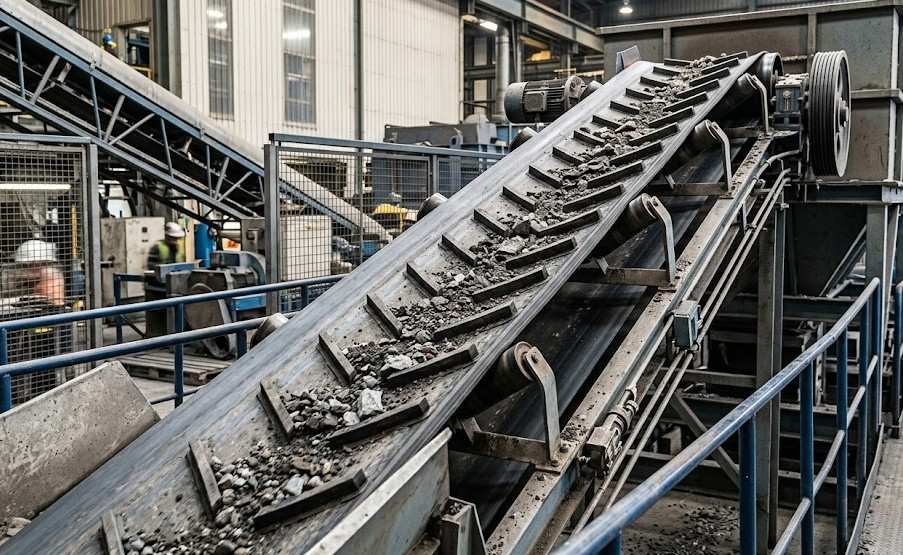
Modern agricultural operations require efficient material handling solutions, which directly affect operational speed, safety measures, and productivity levels. A Cleated Rubber Conveyor Belt plays a crucial role in streamlining the transportation of crops, seeds, fertilizers, and other bulk materials across farms and processing units. The special belt system employs raised cleats to develop an advanced grip mechanism that protects users from slipping risks that happen on slopes and during challenging work conditions. The agricultural sector needs a dependable Cleated Rubber Conveyor Belt because farmers use automated systems, which help them decrease manual work and protect their assets while improving their agricultural productivity.
What is a Cleated Rubber Conveyor Belt
The Cleated Rubber Conveyor Belt system functions as a specialized conveyor system that uses raised cleats to enable efficient material movement across both inclined and uneven terrain. The cleats function as barriers that stop materials from slipping backward during the transportation process. This agricultural belt system enables farmers to transport bulk materials, which include grains and seeds, and fertilizers, without interruption.
Key points:
- - The design incorporates vertical or angled cleats, which provide improved grip.
- - The system operates best in applications that involve both steep inclines and heavy loads.
- - The product consists of durable rubber materials that provide an extended operational lifespan.
Why Agriculture Needs Specialized Conveyor Belts
Farmers need to manage multiple materials while working in difficult environments, which include moisture, dust, and irregular ground surfaces. The Cleated Rubber Conveyor Belt is required because standard conveyor belts lack the capability to operate on sloped surfaces while keeping materials from falling off. The specialized belts lead to better operational results because they decrease waste during agricultural work.
Key points:
- - The system stops items from sliding down sloped areas and uneven ground.
- - The system can efficiently move materials that are wet, sticky, or loose.
- - The system decreases work requirements while speeding up all company processes.
Key Features of a Reliable Cleated Rubber Conveyor Belt
A Cleated Rubber Conveyor Belt is constructed to achieve high performance under challenging conditions that exist in agricultural settings. The system offers excellent bulk material handling capabilities through its special design and modern operational capabilities, which work best on slopes. The dependable belt system enables farm operations to maintain productivity while delivering long-lasting performance across multiple farming tasks.
Key features include:
Enhanced Grip and Anti-Slip Design: The Cleated Rubber Conveyor Belt uses cleats, which deliver exceptional grip to stop materials from sliding back during slope-based material movement.
- High Durability: The product produces its long-lasting performance through its construction, which uses robust rubber materials that handle high-stress conditions without showing damage.
- Weather Resistance: A Cleated Rubber Conveyor Belt operates at full efficiency during agricultural work, which exposes it to extreme temperature conditions, high humidity levels, and dusty environments.
- Flexible Structure: The system operates effectively through its flexible structure, which enables safe movement across pulleys and various conveyor designs.
- High Load Capacity: The product handles heavy materials, which include grains, fertilizers, and soil with complete efficiency.
- Chemical Resistance: The material remains suitable for use with fertilizers and multiple chemicals because it maintains its structural integrity during extended contact.
Use in Grain Handling and Transportation
The conveyor system uses a Cleated Rubber Conveyor Belt to move wheat, rice, and corn through grain management operations while preventing any spillage from the transported crops. The system permits continuous cargo movement from its highest points to its lowest points, which leads to better storage results and distribution efficiency.
Main points:
- - The system stops grain waste during its transport process.
- - The system works effectively on grain elevators with an upward slope.
- - The system boosts both speed and operational effectiveness at storage facilities.
Application in Harvesting Equipment
Modern harvesting machines use Cleated Rubber Conveyor Belts to move harvested crops from the fields to their storage locations. The system handles crops without human involvement, which guarantees uniformity throughout the entire process.
Main points include the following three elements:
- The system enables farmers to transfer their crops from the field to their collection area without interruptions during the harvesting process.
- - The system protects harvested crops from all forms of damage.
- - The system enables faster and more effective crop harvesting operations.
Role in Seed Processing and Sorting
A Cleated Rubber Conveyor Belt is widely used in seed processing units to transport seeds during cleaning, grading, and sorting operations. The system helps to maintain seed quality while handling seeds with exact precision.
Key points:
- - The system guarantees that all seeds will be moved at the same speed.
- - The system prevents both contamination of seeds and damage to equipment.
- - The system assists all automated systems that process seeds.
Use in Fertilizer and Soil Handling
The Cleated Rubber Conveyor Belt functions as an essential component that helps agricultural operations handle fertilizers and soil materials. The materials require a conveyor system that can handle their heavy weight, abrasive texture, and chemical reactivity. The cleated design ensures that materials are transported smoothly, even on inclined surfaces, without spillage or loss.
Key points:
Efficient Bulk Handling: A Cleated Rubber Conveyor Belt enables the smooth movement of large quantities of fertilizers and soil across farms and processing units.
Prevents Material Spillage: The raised cleats hold materials in place, especially during inclined transport.
Resistant to Chemicals: The system allows for handling of fertilizers that contain corrosive elements without experiencing rapid degradation.
Handles Abrasive Materials: The Cleated Rubber Conveyor Belt maintains its durability against wear from soil and granular fertilizers.
Application in Fruit and Vegetable Processing
The Cleated Rubber Conveyor Belt system operates in processing units to handle fruits and vegetables with gentle treatment, which preserves their quality throughout the entire process.
Key points:
- - The system stops delicate produce from getting bruised.
- - The system enables washing, sorting, and packaging operations.
- - The system reduces waste while it boosts quality control.
Role in Animal Feed Production
The process of animal feed production requires efficient transportation of both raw materials and finished products throughout its operations. The feed mills use a Cleated Rubber Conveyor Belt system,m which provides both hygienic conditions and efficient material transportation.
Key points:
- - The system maintains cleanliness while ensuring proper hygienic conditions.
- - The system efficiently manages large quantities of feed materials.
- - The system increases production efficiency throughout the entire operation.
Advantages of Using Cleated Rubber Conveyor Belt in Agriculture
A Cleated Rubber Conveyor Belt ensures smooth and continuous movement of crops, seeds, and fertilizers.
- The cleated design keeps materials secure, especially during inclined transportation.
- The use of a Cleated Rubber Conveyor Belt for process automation eliminates the need for workers to handle materials.
- - Faster transportation improves overall farm output and efficiency.
- - The product works well with grains, soil, fertilizers, fruits, and animal feed.
- - A high-quality Cleated Rubber Conveyor Belt withstands wear, tear, and harsh agricultural conditions.
- - The system operates effectively under conditions of moisture, dust, and different temperature ranges.
- - The system reduces material losses that occur during the process of transporting and handling operations.
- - The system decreases accident risk, which results from workers who manually lift and carry objects.
Factors to Think About When Choosing the Right Conveyor Belt
The selection process for a Cleated Rubber Conveyor Belt requires proper selection. The process of decision-making depends on both environmental and technical requirements.
The following outline summarizes the main topics in detail:
- - The material that needs transportation
- - The operational strength of the belt, together with its maximum load capacity
- - The environmental factors include both moisture levels and temperature conditions.
- - The manufacturer provides assessment through the evaluation of their product quality and operational dependability.
Future Trends in Agricultural Conveyor Systems
Agriculture is evolving with technology, and the Cleated Rubber Conveyor Belt is also advancing to meet modern demands. The future of conveyor solutions receives its shape from automation and intelligent systems.
The document lists three main points, which include:
- - Automated farming systems require integration with their technology.
- - Eco-friendly belt material development is currently underway.
- - The company uses cutting-edge technology to create products with increased durability.
- - The system uses intelligent monitoring technology to handle maintenance tasks.
Conclusion
The Cleated Rubber Conveyor Belt has become a vital component of modern agriculture because it provides safe and effective material handling solutions. The system serves multiple purposes, which include transporting grains, processing seeds, and handling fertilizers. The purchase of a Cleated Rubber Conveyor Belt enables farmers and agribusinesses to improve their productivity while decreasing operational losses and implementing automated processes, which lead to sustainable agricultural operations that maintain efficiency over time.
FAQs
1. What is a cleated rubber conveyor belt used for in agriculture?
The system delivers materials, which include grains and seed,d fertilizers, and produce to their destinations on inclined surfaces without creating spillage problems.
2. Why is a cleated design important for farming applications?
The use of cleats allows materials to maintain their position because cleats create additional traction, which prevents backflow of materials on surfaces that are not levelled.
3. Are cleated rubber conveyor belts suitable for wet conditions?
The products are engineered to withstand wetness and muddy environments and extreme weather conditions, which are typical in agricultural settings.
4. How do these belts improve farm productivity?
The system streamlines material handling processes while providing faster operations, which require less manual work to achieve better productivity.
5. What factors should be considered before buying a cleated rubber conveyor belt?
The buyer needs to evaluate five elements, which include load characteristics, belt strength, environmental factors, cleat system design, and manufacturing company trustworthiness.