A Practical Guide to Choosing Custom Food Boxes for Different Food Types
By Travis Head 13-08-2026 129
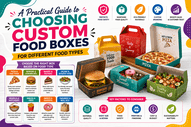
Every type of food has its own packaging needs. A box that works well for cookies may not be suitable for a burger, and packaging made for dry snacks may not protect a meal with sauce or moisture.
Choosing the right custom food box starts with understanding what your food needs during storage, handling, and delivery. The box should fit the food properly, keep it presentable, and make the customer's experience easier.
This guide explains how to choose suitable custom food boxes for different types of food.
Start With the Nature of Your Food
Before choosing a box design, look at the food itself.
Is it dry or wet? Hot or cold? Soft or crispy? Heavy or light? Does it contain oil, sauce, or a lot of moisture?
These simple details can help determine the type of packaging you need. Food that produces steam or contains liquids usually needs different packaging from dry products.
Understanding these characteristics first can prevent you from choosing a box based only on its appearance.
Boxes for Burgers and Sandwiches
Burgers and sandwiches need packaging that keeps them together while making them easy to handle.
The box should have enough room for the food without allowing too much movement. A very loose box can make the product shift during delivery, while a tight box can damage the food.
For takeaway businesses, consider how the box will hold up when placed inside a delivery bag. Easy opening is also useful because customers should not have to struggle with the packaging before eating.
Packaging for Pizza and Flat Foods
Pizza needs a wide and sturdy box that can support its weight and shape.
The size should match the pizza rather than leaving excessive empty space around it. The structure should also be strong enough to remain stable when several boxes are carried together.
Ventilation can be another consideration. If steam has nowhere to escape, the pizza may lose some of its crisp texture. The packaging design should therefore support the type of pizza and the way it is delivered.
A Better Fit for Fried Foods
Fried chicken, fries, nuggets, onion rings, and similar foods can release heat and steam after cooking.
If the packaging traps too much moisture, crispy food can become soft. For these products, the box should support airflow while still keeping the food secure.
The interior space also matters. Food should not be packed so tightly that its coating becomes damaged during transport.
Sweet Treats Need a Different Approach
Cakes, cupcakes, brownies, pastries, and other desserts often need packaging that focuses on appearance as well as protection.
A cake box, for example, needs enough height to prevent the top decoration from touching the lid. Cupcakes may need separate spaces to stop them from moving around.
For premium desserts, a clean printed design can also add to the presentation. A well-designed box can make a simple treat feel more special when the customer opens it.
Custom Boxes for Bakery Products
Bread, buns, cookies, and pastries have their own packaging concerns.
Cookies need protection from breaking, while soft pastries may need enough space to avoid being crushed. Bread packaging should also suit the product's size and texture.
If you sell several bakery items, it may be useful to have different box sizes instead of forcing every product into one standard package.
Packaging for Meals With Sauces
Foods such as pasta, curries, noodles, and saucy meals require extra attention.
The packaging needs to reduce the chance of leakage and should remain stable while being carried. The closure should also stay secure during transport.
The supplier should know exactly what type of food you plan to pack. Giving them this information can help them recommend a structure that better suits meals containing liquids.
Boxes for Takeaway Snacks
Small snacks such as sandwiches, wraps, chips, and finger foods often need compact packaging.
A smaller box can make the food easier to carry and may reduce unnecessary packaging material. It should still have enough room to protect the product without squeezing it.
For businesses selling several snack sizes, using a few carefully selected box dimensions can keep packaging organized.
Consider the Weight of the Product
Food weight is easy to overlook when choosing a box.
A lightweight pastry does not place the same demands on packaging as a large meal or a heavy combination platter. If the box is too weak, it may bend or lose its shape when lifted.
Think about both the weight of the food and any additional containers or inserts that will be placed inside.
Think About How Customers Will Carry It
Packaging should make sense beyond the restaurant counter.
Consider whether customers will carry the box by hand, put it into a shopping bag, or take it home in a car. If the box is awkward to hold or easily opens during movement, it can create a poor experience.
The shape and closure should match the way your customers normally transport the food.
Match the Box to Your Serving Size
Portion size should influence packaging dimensions.
If you sell regular, large, and family portions, using the same box size for everything may not be practical. Smaller food portions can move around in oversized packaging, while large portions may become crowded in a small box.
Measure the actual serving before finalizing the box dimensions.
Keep Temperature and Freshness in Mind
Some foods need to stay warm, while others need to remain fresh and crisp.
Think about how long the food will stay inside the box before it reaches the customer. A package that works for a five-minute trip may not perform the same way during a longer delivery.
Your supplier can help you consider the box structure and material based on your expected delivery conditions.
Make Room for Practical Extras
Sometimes the food is not the only thing going inside the package.
You may need space for sauce cups, napkins, cutlery, small promotional cards, or other items. If these extras are part of your normal order, include them when planning the box size.
This can prevent the packaging from becoming overloaded once everything is packed together.
Let Your Brand Fit Naturally
Once the practical side is solved, think about branding.
Your logo, colors, message, or other design elements should work with the shape of the box. Good packaging does not need to be covered in graphics. A simple design can often look cleaner and make important information easier to notice.
The goal is to create packaging that feels connected to your food business without making the box difficult to use.
Test Before Ordering in Bulk
One of the safest ways to choose packaging is to test it with your actual products.
Put the food inside the box and see how it looks and behaves. Carry it around, place it in a delivery bag, and check what happens after the food has been inside for the expected amount of time.
Testing can reveal issues with size, movement, closing, moisture, or presentation before you commit to a large production run.
Final Thoughts
There is no single custom food box that is perfect for every food product. Burgers, pizzas, desserts, bakery items, fried foods, and saucy meals can all require different packaging features.
The best choice starts with the food itself. Consider its size, weight, texture, moisture, temperature, serving style, and delivery conditions. Then choose a box that protects the product while also providing a simple and attractive customer experience.
When packaging is designed around the actual food, it becomes more than a container. It becomes a practical part of the way your business delivers its products to customers.
Visit Us: https://ibexpackaging.com/custom-food-packaging-boxes/