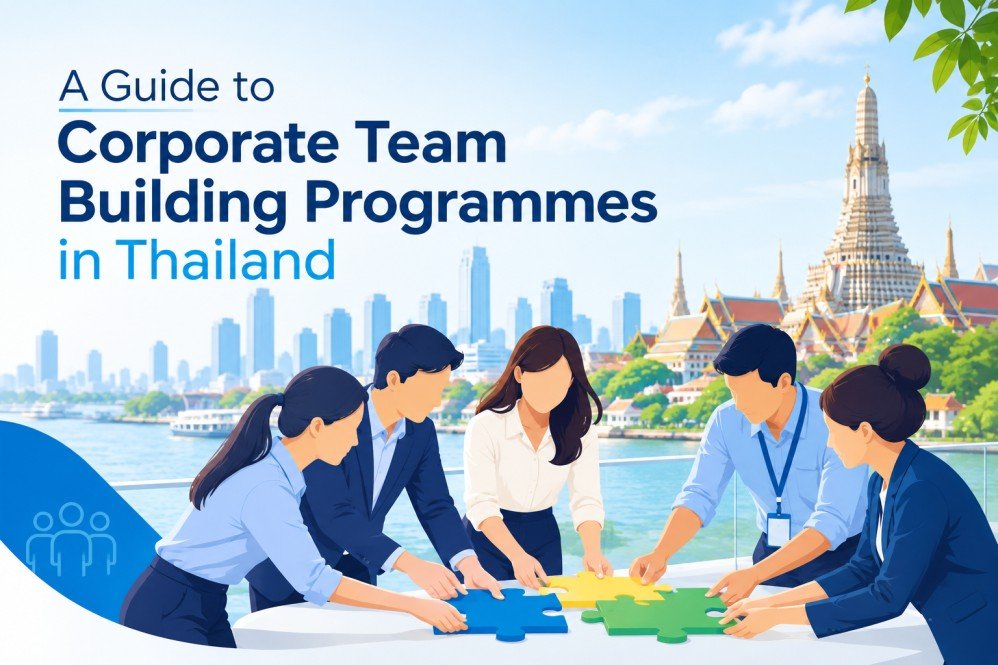
Team building has evolved from a fringe corporate activity to a core component of modern programme design. Companies now expect their team development sessions to deliver measurable outcomes for employee engagement, cross-functional collaboration, and workplace culture rather than serving as recreational filler. Thailand has become one of Asia’s leading destinations for this evolved approach, combining a mature event ecosystem with genuine range across activity formats and destination characters. This article looks at what modern corporate team building in Thailand actually involves, which activities work best for which team profiles, and how to evaluate providers for programmes that genuinely deliver.
The Modern Role of Corporate Team Building
The traditional view of team building as a fun day between meetings has weakened considerably. Modern corporate briefs now expect team development sessions to contribute directly to business outcomes, not just to delegate enjoyment. This shift has changed what companies ask for, how providers design programmes, and how the outcomes are measured.
The specific business outcomes that companies now expect team building to support include:
Improved cross-functional communication and reduced organisational silos
Stronger team trust and psychological safety across working relationships
Better collaboration under pressure and in high-stakes situations
Reinforcement of company values and cultural alignment
Employee engagement and retention through meaningful shared experience
Integration of new team members or reformed teams after restructuring
Programmes that deliver against these outcomes require deliberate design rather than off-the-shelf activity bookings. This is where the choice of destination and partner becomes strategically important.
The Range of Activity Formats Available
Thailand offers one of the widest ranges of Team Building Activities Thailand available anywhere in Asia. The range covers indoor formats suited to controlled environments, outdoor formats that use the natural setting, cultural formats that draw on Thai heritage, and hybrid formats that combine multiple modes. The activity choice should follow the team profile and the intended outcome rather than starting with the destination and working backwards.
The main activity categories commonly used for corporate groups in Thailand include:
Cooking challenges and culinary team competitions
Cultural workshops covering traditional crafts, lantern making, or heritage experiences
Adventure and outdoor formats including trekking, water sports, and structured challenges
Urban discovery programmes and city-based scavenger hunts
Facilitated indoor sessions such as escape rooms and strategy games
Wellness formats including group meditation and yoga sessions
Community impact and CSR programmes combining team building with social contribution
Each format suits different team profiles. Matching the activity to the specific team requires deliberate thought rather than defaulting to whichever activity is most popular in a given destination.
Matching Activity Format to Team Profile
The single most important design decision in corporate team building is matching the activity to the team. The same activity produces different outcomes for different teams, and the wrong match can undermine the programme regardless of how well the activity itself is delivered. The table below summarises the fit between common team profiles and suitable activity formats.
Team Profile | Best-Fit Activity Formats | Formats to Avoid |
Senior leadership team | Reflective retreats, cultural experiences, wellness programmes | High-energy competitive challenges |
Sales team celebrating a target | Adventure formats, coastal challenges, celebration events | Reflective or purely educational activities |
New team requiring initial rapport | Cooking challenges, structured icebreakers, urban discovery | Complex strategic simulations |
Cross-functional project team | Escape rooms, strategy games, community impact programmes | Individual-focused activities |
Team recovering after difficult period | Wellness formats, cultural workshops, low-pressure creative sessions | Competitive or high-stakes challenges |
Providers who ask about team profile during the briefing stage consistently design stronger programmes than those who present a standard activity menu upfront.
How to Evaluate a Team Building Partner
The choice of delivery partner shapes what a team building programme actually achieves. D2I Global and other established Thai providers with genuine in-house facilitation capability consistently produce stronger outcomes than coordinators who subcontract activity delivery to third parties. When evaluating potential partners, corporate buyers should look for specific signals of genuine capability rather than accepting sales presentations at face value.
Key evaluation criteria when shortlisting partners include:
Whether facilitation is delivered by in-house teams or subcontracted to third parties
Depth of experience across multiple activity formats rather than specialisation in one
Operational teams in the specific destinations your programme touches
Named lead accountability across the full programme scope
Specific case examples of programmes designed around team profile and desired outcome
Willingness to push back on briefs during shortlisting rather than accepting every requirement
Follow-up methodology that reinforces what happened during the programme
Common Mistakes When Planning Corporate Team Building
Even experienced corporate buyers make specific mistakes when planning team building programmes. The most common pitfalls include:
Choosing the activity first and hoping it fits the team, rather than starting with the team profile
Treating team building as recreation rather than as strategic programme design
Defaulting to whichever activity is famous in a destination without checking team fit
Skipping the reflection component that turns activity into learning
Neglecting follow-up that reinforces what happened during the programme
Under-investing in facilitation quality relative to venue and logistics
Booking too close to the programme date and losing partner and venue choice
The consistent thread across these mistakes is treating team building as a booking rather than as a designed intervention. Programmes that succeed are designed. Programmes that struggle are booked.
Another dimension worth flagging is the follow-up methodology that separates strong programmes from weak ones. Team building activities that produce lasting outcomes are almost always followed by structured reflection sessions, either immediately after the activity or within the days following the programme. Without this reflection layer, even the strongest activity fades from memory within weeks and produces limited lasting impact on the team. Corporate buyers who invest in follow-up methodology alongside the activity itself consistently produce measurable outcomes that persist months after the programme, while buyers who skip the follow-up frequently report positive delegate feedback but no observable change in team dynamics.
The integration of team building with wider programme design also matters more than most buyers assume. A team activity that connects to the meeting content and reinforces the trip narrative delivers materially different outcomes from an activity delivered in isolation, even when the underlying activity itself is identical. This integration is not automatic. It requires deliberate design at the briefing stage and coordination between the meeting content and team activity that goes beyond simply scheduling them within the same trip.
The Direction of Travel for Corporate Team Building in Thailand
The evolution of corporate team building in Thailand continues to accelerate rather than plateau. Company expectations of measurable outcomes are rising. Delegate expectations of meaningful experience are rising. And the strongest providers are building capability across activity design, facilitation, and follow-up methodology rather than specialising narrowly in activity delivery alone. For corporate buyers planning their next team building programme, the practical implication is that the partner selection and design conversation now matter more than the choice of activity itself. Well designed programmes with the right facilitation consistently outperform impressive activities delivered by weaker facilitators, and the gap between designed and booked programmes continues to widen as company expectations become more sophisticated.