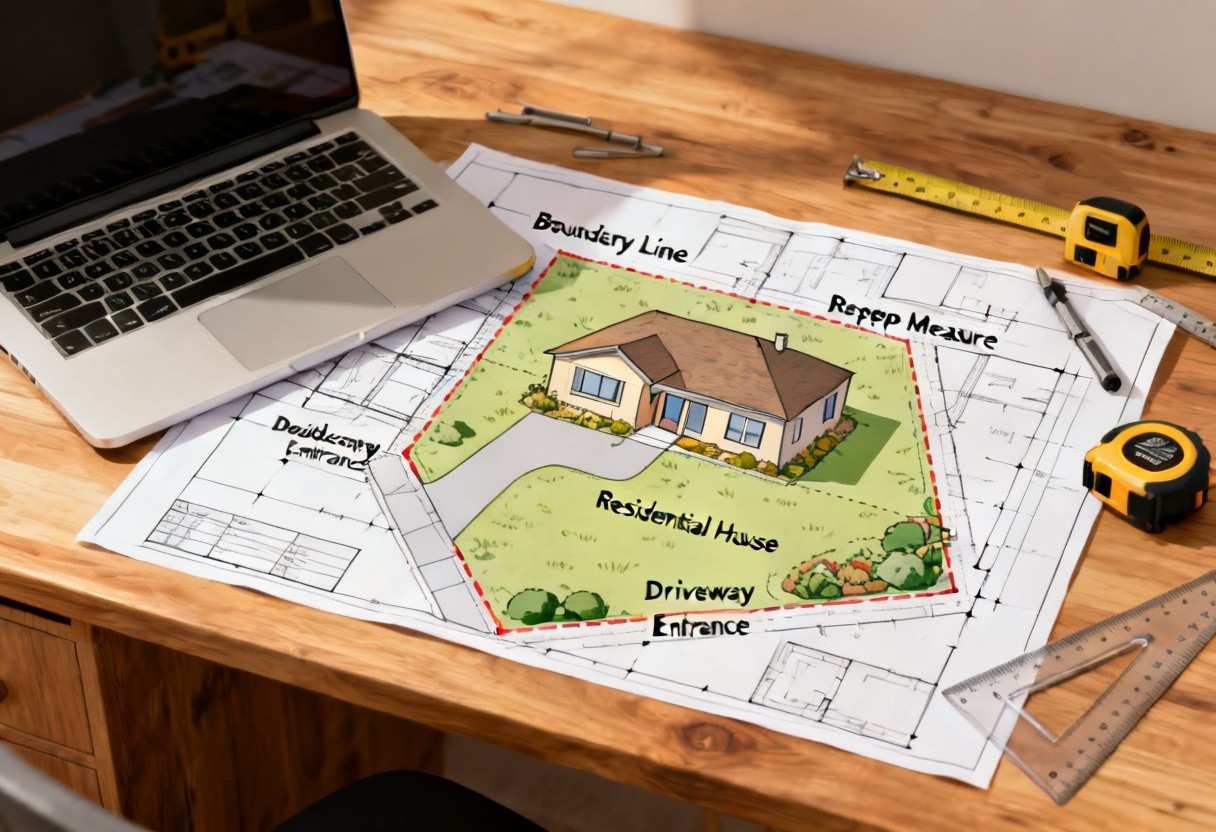
Starting a construction project can feel exciting, but before building begins, most cities require permit approval. One of the most important documents during this process is a site plan. Whether you are building a new house, adding a garage, creating a patio, or planning a pool installation, a clear site plan helps local departments review and approve your project faster.
Many property owners are unsure about how to get a site plan or what details are needed for permit applications. Some people also confuse a site plan with a plot plan. While both documents are related, they serve slightly different purposes.
This guide explains everything you need to know about site plans for permits, including the difference between a site plan vs plot plan, why these drawings matter, and how to get one quickly for your project.
What Is a Site Plan?
A site plan is a drawing that shows the full layout of a property. It displays property boundaries, structures, driveways, walkways, utility areas, and planned improvements. Local permit offices use this document to review how a building project fits within zoning and construction rules.
A standard site plan may include:
- Property lines
- Home placement
- Driveways and pathways
- Garages or storage buildings
- Fence locations
- Patio or pool areas
- Utility lines
- Landscaping details
- Setback measurements
- Planned construction areas
The main purpose of a site plan is to provide a clear view of the property and the planned work before construction begins.
Site Plan vs Plot Plan: Understanding the Difference
One common question during the permit process is the difference between a site plan vs plot plan. These terms are often used together, but there are important differences.
What Is a Plot Plan?
A plot plan is usually a simple drawing based on property survey details. It often includes:
- Property boundaries
- Home location
- Basic dimensions
- Easements
- Setback lines
Plot plans are commonly used for small residential permit requests.
What Is a Site Plan?
A site plan is more detailed and may include:
- New building layouts
- Parking areas
- Drainage details
- Landscaping features
- Utility placement
- Construction measurements
In many situations, cities ask for a detailed site plan instead of a basic plot plan, especially for larger projects or new construction.
When comparing a site plan vs plot plan, the biggest difference is the amount of information shown on the drawing.
Why Site Plans for Permits Are Important
Permit departments require accurate site plans for permits because they help confirm that construction follows local rules and safety guidelines.
Property Setbacks
Cities require buildings to remain a certain distance from property boundaries. A site plan clearly shows these measurements.
Zoning Compliance
Every property follows zoning regulations related to structure size, building height, and placement.
Utility and Drainage Review
Permit officials may review water flow, utility placement, and drainage areas to reduce future problems.
Project Safety
A complete site plan helps verify that pathways, parking areas, and structures are arranged safely.
Without a proper site plan, permit approval may take longer or require revisions.
How to Get a Site Plan for Your Property
If you need to get a site plan, there are several simple ways to begin the process.
Review Your Property Records
Start by checking documents you already have. Helpful records may include:
- Property surveys
- Closing paperwork
- Builder drawings
- Previous permit files
- Mortgage records
Some of these documents may already contain information needed for a site plan.
Contact Your Local Permit Office
Your city or county building department may provide guidance about permit requirements and drawing standards. They may also offer property maps or zoning information that can help prepare your plan.
Before submitting documents, confirm:
- Permit drawing requirements
- Required measurements
- Digital or printed submission rules
- Local setback regulations
This helps avoid delays later.
Use a Professional Site Plan Service
Many homeowners choose professional drafting services to create permit-ready plans. Professional providers can prepare detailed drawings using:
- Property surveys
- Satellite mapping
- GIS information
- Builder sketches
- Municipal standards
This option is often the fastest and most reliable solution for site plans for permits.
Professional site plans are commonly used for:
- New home construction
- Room additions
- Garage projects
- Deck permits
- Pool permits
- Fence permits
- Outdoor structures
Information Needed for a Site Plan
To create a detailed site plan, several important details are usually required.
Property Address
The project address helps identify zoning rules and property boundaries.
Project Description
You should explain the planned work clearly. Examples include:
- Building a new house
- Adding a garage
- Installing a pool
- Expanding a patio
- Building a deck
Property Measurements
Basic dimensions help create accurate layouts and structure placement.
Survey Documents
If available, surveys improve accuracy and reduce preparation time.
Providing complete information helps speed up the drawing process.
Common Site Plan Mistakes to Avoid
Many permit problems happen because of simple mistakes on property drawings. Avoiding these issues can save both time and money.
Incorrect Measurements
Even small errors can create permit delays or failed inspections.
Missing Structures
All important structures should appear on the drawing, including sheds, fences, and patios.
Poor Drawing Quality
Unreadable sketches or incomplete layouts are often rejected.
Ignoring Local Building Rules
Every city has different permit standards. Always check local requirements before submission.
Using Old Property Information
Outdated records may not match current property conditions.
A professional and accurate site plan improves the chances of faster permit approval.
How Long Does It Take to Get a Site Plan?
The time needed depends on the project size and available property details.
Typical timelines include:
- Basic residential plans: 1 to 3 business days
- Medium construction projects: 3 to 7 business days
- Large commercial projects: 1 to 2 weeks
Online drafting services can often complete residential site plans much faster than traditional firms.
Planning early is the best way to avoid permit delays during busy construction seasons.
Final Thoughts
A detailed site plan is one of the most important documents required for construction permits and property improvements. Whether you are planning a new home, building an addition, or upgrading outdoor areas, having accurate site plans for permits helps your project move forward smoothly.
Understanding the difference between a site plan vs plot plan can also help you choose the right type of drawing for your needs. While plot plans may work for smaller projects, larger developments usually require a more complete site plan.
If you want to get a site plan quickly and avoid permit problems, using a reliable site planning service can make the process easier, faster, and more accurate.
Tags : .....