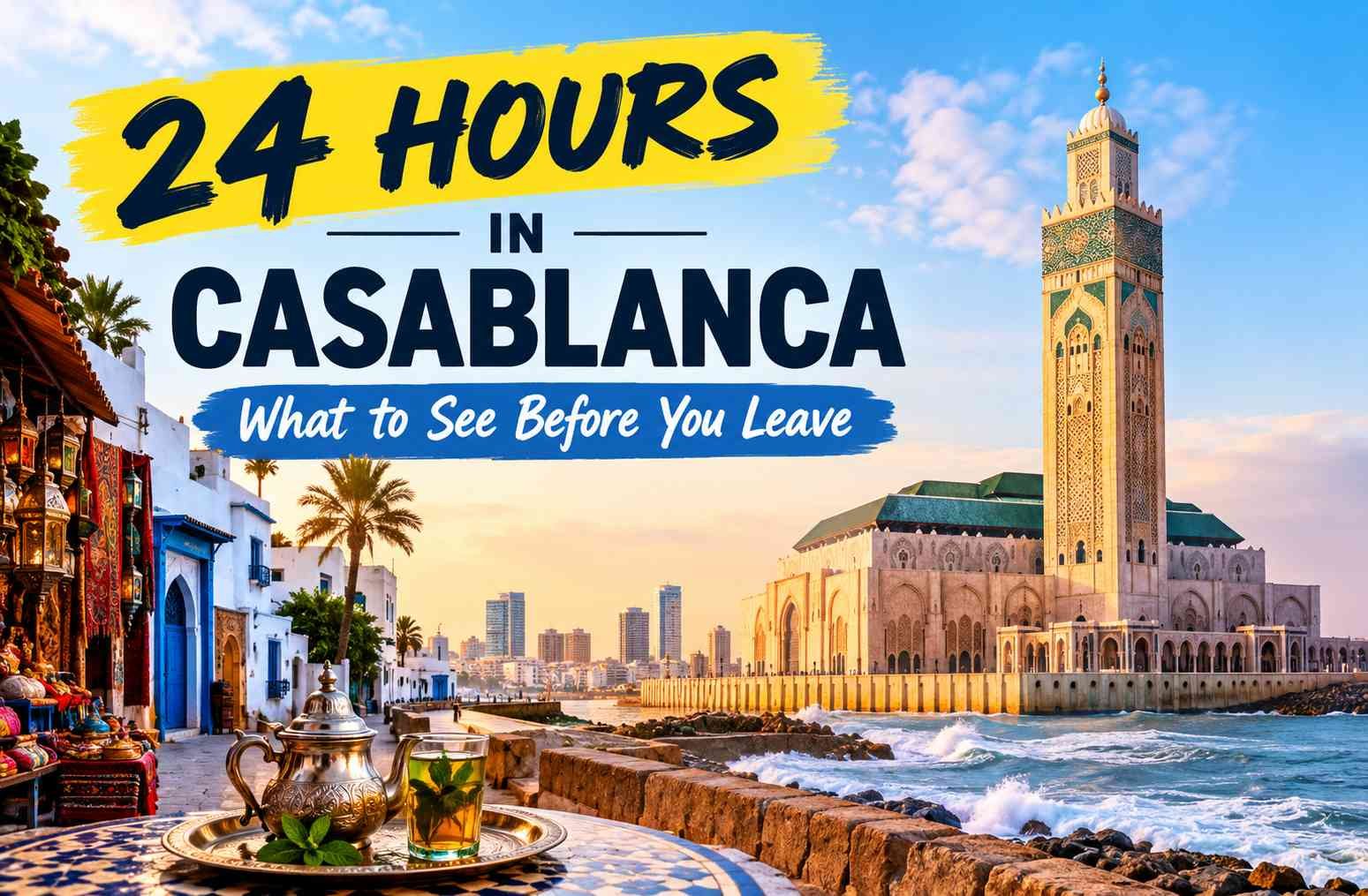
Casablanca is often introduced to travellers as Morocco's commercial capital, but spending just one day here can reveal far more than its modern reputation suggests. The city combines Art Deco architecture, bustling markets, oceanfront promenades and one of Morocco's most impressive religious landmarks.
A 24-hour visit requires some planning, especially if you want to experience both the historic side of the city and its contemporary character. The good news is that several of Casablanca's highlights can be linked together without spending the entire day in transit.
Begin With the Hassan II Mosque
Start early at the Hassan II Mosque, one of Casablanca's most spectacular landmarks. Standing beside the Atlantic Ocean, the mosque is remarkable for both its scale and its setting. Its enormous prayer hall, intricate tilework, carved details and soaring minaret demonstrate the craftsmanship involved in its construction. Part of the complex extends over the water, creating a striking relationship between architecture and the sea. Non-Muslim visitors can enter on organised tours at designated times, while access arrangements should be checked before your visit. Even when you are admiring the building from outside, leave enough time to appreciate its surroundings.
Take a Seafront Walk
Once you've explored the mosque, continue along the Atlantic waterfront. The coastline provides a refreshing contrast to Casablanca's busy streets. Waves break against the shore, cafés and restaurants offer places to stop, and the open horizon creates a sense of space that can be surprisingly calming in such a large city. A morning walk also helps you get your bearings before moving towards the central districts.
Explore the Old Medina
Casablanca's Old Medina has a different atmosphere from the grand imperial medinas of cities such as Fez or Marrakech, but that is precisely what makes it interesting. Its narrow streets contain small shops, food stalls, cafés and everyday businesses. Rather than expecting a carefully preserved historical district, look for the details of contemporary Moroccan life taking place within an older urban setting. Take your time browsing, but keep track of your route if you have limited hours.
Pause for Moroccan Breakfast
A one-day itinerary should include time for food rather than treating meals as an inconvenience. Look for a traditional breakfast featuring Moroccan bread, msemen, olives, eggs, honey, cheese or mint tea. Local cafés provide a simple way to experience the city's morning rhythm. A leisurely breakfast also gives you a chance to recharge before continuing the sightseeing route.
Head Towards the Habous Quarter
The Habous Quarter offers a different architectural experience. Developed during the French colonial period, the neighbourhood combines Moroccan-inspired details with more orderly European planning. Arched doorways, small squares, tiled façades and traditional shops give the district its distinctive appearance. The area is especially enjoyable for travellers looking for souvenirs. Leather goods, ceramics, textiles, spices and other crafts can be found among the local businesses.
Shop Without Rushing
Casablanca's shopping experience is less about visiting one enormous attraction and more about exploring individual stores and market streets. If you are looking for gifts, compare several shops before making a purchase. Handmade products vary in quality and price, and taking your time makes the experience more enjoyable. Remember that bargaining may be part of the shopping culture in some traditional markets, but it should remain friendly and respectful.
See Casablanca's Art Deco Heritage
Architecture enthusiasts should reserve part of the afternoon for Casablanca's Art Deco buildings. The city experienced extensive development during the 20th century, leaving behind façades decorated with geometric patterns, curved balconies, ornamental details and striking entrances. The central districts are particularly rewarding for an architectural walk. Look above street level because many of the most interesting features appear around windows, balconies and rooftops. This side of Casablanca can easily be missed when visitors focus exclusively on the historic attractions.
Visit Mohammed V Square
Mohammed V Square is another useful stop for understanding the city's architectural identity. Several important public buildings surround the square, combining Moroccan decorative traditions with European influences. The broad open space provides a useful contrast to the compact streets of the medina and Habous Quarter.
From here, you can continue exploring the central city on foot.
Discover the Cathedral of the Sacred Heart
The former Cathedral of the Sacred Heart is one of Casablanca's most unusual architectural landmarks. Although it is no longer a functioning church, its distinctive white structure and imposing design reflect the city's multicultural architectural history. Depending on current access arrangements, visitors may be able to view the building or surrounding area. Check opening information before planning your route around an interior visit.
Enjoy a Long Moroccan Lunch
By midday, Casablanca's food scene deserves your attention. A traditional restaurant can provide an opportunity to try tagine, couscous, harira or freshly prepared salads. Seafood is another obvious choice in a coastal city. Do not feel obliged to eat quickly. A long lunch can become one of the most enjoyable parts of a Casablanca day, particularly when the afternoon schedule remains flexible.
Try Fresh Seafood
The Atlantic location means seafood has an important place in Casablanca's culinary scene. Grilled fish, prawns and other seafood dishes can make a satisfying alternative to heavier Moroccan specialities. Ask local staff for recommendations and consider choosing something fresh rather than automatically ordering familiar dishes.
Walk Through the Central Streets
After lunch, use the cooler part of the afternoon for an unhurried city walk. Casablanca's central streets reveal a mixture of cafés, offices, shops and historic buildings. This is where the city's identity as Morocco's economic centre becomes most apparent. The contrast with the medina is significant. Instead of feeling like a city preserved in the past, Casablanca presents a continuously evolving urban environment.
Find a Rooftop View
A rooftop café or restaurant can offer a completely different perspective. Looking across Casablanca from above makes the city's scale easier to appreciate. Historic buildings, modern developments and busy streets form a constantly changing urban landscape. Late afternoon is an especially pleasant time for this, when the light becomes softer and temperatures begin to fall.
Spend Time by the Corniche
As evening approaches, make your way back towards the Corniche. The coastal district becomes livelier as residents head out for dinner and socialising. Restaurants, cafés and seaside venues provide plenty of choices for an evening meal. You do not need an elaborate plan. A walk beside the ocean followed by dinner is an easy way to finish a busy day.
Consider a Day's Rail Connection
Casablanca often forms part of a larger Moroccan itinerary rather than being the final destination. Travellers arriving from the south can make the journey from Marrakech relatively straightforward by rail. The Marrakech to Casablanca train is useful for visitors connecting two major cities without relying on a private vehicle. If Casablanca is only a short stop between destinations, check the latest departure times and allow enough margin around your accommodation and onward travel.
Keep the Evening Flexible
One advantage of spending only 24 hours in Casablanca is that you do not need to schedule every minute. After dinner, take a final walk, enjoy Moroccan tea or return to your accommodation to rest before an early departure. Casablanca is best experienced with some room for spontaneity. A restaurant recommendation or an interesting street can easily become a memorable part of the evening.
Practical Tips for a Short Visit
With only one day, staying somewhere reasonably central can save valuable time. Comfortable shoes are essential because walking is one of the easiest ways to experience the city. Keep valuables secure in busy areas and use reputable transport services when travelling farther afield. It is also worth checking opening times for attractions before leaving your accommodation. A small amount of preparation can prevent an important stop from being closed when you arrive.
What to Skip
Trying to visit every Casablanca attraction in 24 hours can make the experience unnecessarily stressful. Prioritise the Hassan II Mosque, Old Medina, Habous Quarter, Art Deco centre and Corniche. Add museums or additional architectural sites only if they fit naturally into your route. The goal is to experience the city's character rather than collect a list of landmarks.
A Suggested 24-Hour Schedule
A practical day could begin with the Hassan II Mosque and a coastal walk, followed by breakfast and time in the Old Medina. Move on to Habous Quarter and enjoy lunch before exploring the central Art Deco streets and Mohammed V Square. Later, visit another architectural highlight or relax at a rooftop café. Finish along the Corniche with dinner beside the Atlantic. This structure leaves enough flexibility for unexpected discoveries.
Casablanca Beyond the Quick Stop
Even after 24 hours, Casablanca may leave you feeling that there is more to discover. That is not necessarily a problem. The city works particularly well as an introduction to modern Morocco, complementing the historic atmosphere found elsewhere in the country. Its architecture, food, coastline and everyday urban life offer a perspective that can be missed when travellers concentrate exclusively on traditional tourist destinations.
Conclusion
Casablanca may not have the same immediate visual impact as Marrakech or Fez, but its appeal becomes clearer when you give the city time. In just 24 hours, you can visit the extraordinary Hassan II Mosque, wander through the Old Medina, discover the Habous Quarter, admire Art Deco architecture and finish with a meal beside the Atlantic. Keep the schedule realistic, allow time for food and simply observe the city's rhythm between major stops. That balance transforms a brief stopover into a rewarding introduction to one of Morocco's most fascinating cities.
Tags : .....