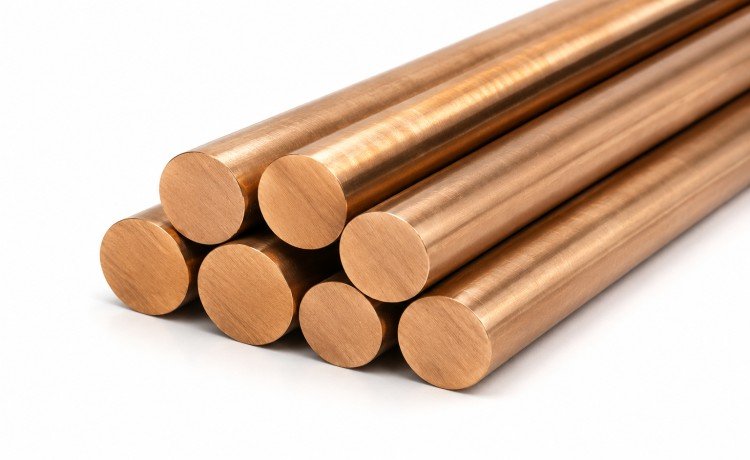
Industrial buyers often select these materials for tough environments. You need reliability in marine operations and heavy industry. A copper nickel 70/30 round bar gives good corrosion resistance and strength where basic steel fails. The 70/30 composition handles seawater and aggressive chemicals well. You have to check the exact grade, applicable standards, exact dimensions, mechanical limits, surface finish, and testing documents. You also need to assess your copper nickel round bar supplier carefully before finalizing any order.
1. Confirm the Exact Grade and UNS Designation
Always verify the exact material grade before you place a purchase order. You will mostly see this specified as a Cu-Ni 70/30 alloy. In standard engineering terms, it is designated as a UNS C71500 round bar. Grade verification matters heavily for industrial applications. Proper material identification stops this problem early. Check your engineering drawings. Procurement teams should cross-check the material grade against the project specifications. Make sure the procurement request explicitly lists the UNS number alongside the generic name. This leaves no room for supplier errors.
2. Check the Copper-to-Nickel Composition
The chemistry dictates how the material performs. The copper-nickel 70/30 composition uses copper as the base element with approximately 30 percent nickel. Small amounts of iron and manganese are intentionally added to the mix. These additions improve the overall strength and prevent localized pitting. The chemical composition directly affects fabrication and service life. You should always demand mill test certificates to verify this composition. A slight drop in nickel or missing iron additions will compromise the corrosion resistance of the 70/30 copper nickel alloy.
3. Understand Corrosion Resistance Before Buying
Engineers specify this material for exposure to seawater and aggressive environments. The material handles marine service and chemical process environments effectively. It resists general corrosion and limits biofouling in submerged conditions. You must match the material resistance to your actual service conditions. Keep in mind that no metal is entirely corrosion-proof. Stagnant polluted water or specific chemical concentrations can still cause damage. Evaluate your operating temperatures and fluid velocities to ensure this copper nickel alloy bar fits the exact service requirements.
4. Compare Mechanical Properties With Your Application
You need to match the copper nickel 70/30 mechanical properties to your design requirements. Evaluate the tensile strength and yield strength based on the loads the component will face. Check the elongation and hardness values as well. These mechanical requirements change based on the product specification and the heat treatment condition. The manufacturing method also alters the final strength. Hot rolled bars differ from cold drawn ones. Confirm the applicable standard dictates the correct mechanical limits for your specific application.
5. Verify Dimensions and Size Availability
Accurate measurements prevent machining issues later. You need specific copper nickel bar sizes for fabricating shafts, heavy components, and industrial parts. Check the exact diameter and length required for your production run. Pay attention to dimensional tolerances. Tighter tolerances usually cost more but save machining time. Check if the mill provides standard lengths or if you need cut-to-length services depending on your facility's capabilities. Some projects require custom sizes that mills do not keep in stock. Verify copper nickel round bar sizes early in your purchasing process.
6. Check the Applicable ASTM or Industry Standard
Do not purchase based only on the material name. You must specify the required standard on your purchase order. ASTM and ASME requirements define the product form specifications. These standards control the dimensional requirements, chemical limits, and mechanical testing procedures. They also dictate what inspection documentation the mill must provide. Confirm the exact applicable standard with your engineering or procurement team before ordering anything. The standard ensures the material meets the baseline industrial requirements for safety and performance.
7. Evaluate Surface Finish and Manufacturing Quality
Surface condition impacts how you machine and inspect the final component. The bars often come with different finish options. You might need bright surfaces or machined surfaces depending on the application. Inspect for surface defects and check the straightness of long bars. Visual inspection catches manufacturing consistency issues early. A good supplier will clearly state the supplied condition and surface finish on their quotation. This prevents surprises when the material arrives at your receiving dock.
8. Ask for Material Testing and Certification
Proper documentation proves you received the correct industrial material. Ask for full copper nickel round bar testing and certification with every delivery. The Mill Test Certificate must show the chemical analysis and the mechanical test results. You need the heat number for complete material traceability. Some jobs require specific inspection certificates. Critical projects often demand third-party inspection before the material leaves the facility. Do not accept materials without proper paperwork. Missing certificates create major compliance issues during final assembly.
9. Consider the Application and Fabrication Requirements
The correct bar choice depends entirely on how the material is used and fabricated.
Marine components need exact tolerances to survive constant salt exposure and prevent mechanical failure. copper nickel 70/30 marine applications dominate this category.
Pumps and valves require high yield strength to handle pressure changes without deforming under heavy industrial loads in continuous operation.
Heat exchangers rely on the material to transfer temperature efficiently while resisting chemical attack from aggressive process fluids inside the tubes.
Condensers use these bars for structural supports and tube sheets where longevity in high-flow cooling water systems is absolutely necessary.
Desalination equipment demands absolute resistance to concentrated brine solutions passing through the piping system at elevated temperatures and high pressures.
Shipbuilding components incorporate this alloy for propeller shafts and heavy structural fittings constantly exposed to raw seawater and marine atmospheres.
Chemical processing equipment needs specific copper nickel 70/30 properties to withstand corrosive acids and industrial solvents safely during daily plant operations.
You must also review the machining, welding, and forming requirements for your copper nickel round bar applications.
10. Compare Supplier Quality, Lead Time, and Total Cost
The lowest quoted copper nickel 70/30 price is rarely the best purchasing decision. You have to compare material certification and overall product quality. Check the manufacturing capability and size availability of different vendors. Ask about their inspection options and export experience. Compare the delivery schedule against your project deadlines. Evaluate the packaging methods used for transport. Factor in freight costs and import duties if buying internationally. Calculate the overall landed cost. Check whether the quoted price covers cutting, testing, specialized packaging, and any other additional requirements you specified.
Conclusion
Buying industrial metals requires strict attention to technical details. You must verify the correct grade, composition, and applicable standards. Take the time to evaluate every technical parameter. Check the dimensions, mechanical properties, and corrosion resistance against your design needs. Always secure proper testing documents and certification. Work with a supplier that demonstrates clear reliability. Confirm all technical specifications and documentation requirements before you place your order. Doing this ensures the copper nickel 70/30 round bar will perform exactly as expected in your specific industrial application.