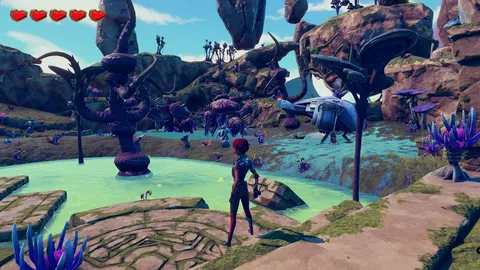
The gaming industry has evolved rapidly, with players expecting immersive visuals, responsive gameplay, realistic environments, and memorable experiences across multiple platforms. Behind every successful 3D game is a development team capable of combining creativity, technology, storytelling, and technical expertise. Choosing the right development partner can therefore have a significant impact on a game's quality, performance, and commercial potential.
A professional 3d game development company does more than create visually impressive characters and environments. It understands game mechanics, player behavior, performance optimization, development pipelines, and the technical requirements of different platforms. Whether you are planning a mobile game, PC title, console experience, virtual reality project, or metaverse application, the right development partner should have a well-rounded set of capabilities.
Here are ten essential features to look for when selecting a professional 3D game development partner.
1. Strong Technical Expertise
Technical expertise is one of the most important qualities of a reliable game development team. Creating a modern 3D game involves much more than modeling objects and adding animations. Developers need to understand rendering, physics, artificial intelligence, networking, optimization, lighting, audio integration, and platform-specific requirements.
An experienced team should be comfortable working with established game engines such as Unity or Unreal Engine, depending on the project's goals. It should also understand programming languages, development frameworks, APIs, and supporting technologies required to build stable games.
Strong technical skills allow developers to turn creative concepts into functional gameplay. They also help reduce technical problems during later stages of production, when fixing fundamental architectural issues can become expensive and time-consuming.
2. An Experienced and Diverse Team
A successful game is rarely created by one type of specialist. Professional development requires collaboration between programmers, 3D artists, animators, game designers, UI/UX specialists, sound professionals, testers, project managers, and other experts.
When evaluating a development company, consider whether its team has experience across different aspects of game production. A diverse team can approach a project from multiple perspectives and identify potential problems earlier.
For example, a game designer may focus on player engagement while a programmer considers performance and an artist focuses on visual consistency. When these specialists work together effectively, the final product is more cohesive.
3. High-Quality 3D Art and Animation
Visual quality plays a major role in the player's first impression. Characters, environments, objects, effects, textures, and animations should work together to create a convincing game world.
A professional team should have strong 3D modeling and animation capabilities. This includes creating optimized assets, realistic or stylized characters, environmental elements, rigging, skeletal animation, particle effects, and cinematic sequences.
However, visual quality should not come at the expense of performance. High-resolution assets that are poorly optimized can cause frame-rate problems, particularly on mobile devices and lower-end hardware. Experienced artists understand how to balance visual detail with technical limitations.
A portfolio can provide valuable insight into a company's artistic capabilities. Look for projects that demonstrate consistency, attention to detail, animation quality, and an understanding of different visual styles.
4. Clear Game Design and Development Process
A professional company should have a structured development process rather than simply starting production without a clear roadmap.
The process commonly begins with concept development and planning. This may be followed by game design documentation, prototypes, production, testing, optimization, and deployment. Depending on the project, developers may use Agile or other iterative methodologies to review progress regularly.
A clear process makes responsibilities and milestones easier to understand. It also provides opportunities for clients to provide feedback before significant resources are invested in the wrong direction.
Before hiring a company, ask how it handles requirements, prototypes, revisions, milestones, testing, and final delivery. A transparent workflow is often an indicator of professional project management.
5. Cross-Platform Development Capabilities
Players access games through a wide variety of devices, including smartphones, tablets, computers, consoles, and VR hardware. A development company with cross-platform experience can help businesses reach a broader audience without compromising the experience on individual devices.
Cross-platform development requires careful consideration of controls, screen sizes, hardware capabilities, graphics settings, input systems, and performance. A game designed for a high-end PC may require substantial adjustments before it can run effectively on a mobile device.
A capable development partner should understand these differences and plan the technical architecture accordingly. It should also be familiar with platform-specific testing and publishing requirements.
6. Focus on Performance and Optimization
A visually impressive game can still fail if it performs poorly. Slow loading, frame-rate drops, memory problems, crashes, and excessive battery consumption can quickly damage the player experience.
Optimization should therefore be considered throughout development rather than left until the final stage.
Professional developers use techniques such as level-of-detail systems, efficient asset management, texture optimization, appropriate lighting techniques, memory management, object pooling, and efficient code architecture. They also conduct performance testing on representative hardware.
For online games, optimization may additionally involve network latency, server performance, bandwidth usage, synchronization, and scalability.
A development company that prioritizes performance can help ensure that the finished game remains responsive and stable as its complexity grows.
7. Rigorous Quality Assurance and Testing
Testing is essential for identifying problems before players encounter them. Games contain numerous interconnected systems, making quality assurance particularly challenging.
A professional team should have a systematic testing process covering gameplay, graphics, controls, audio, user interfaces, performance, compatibility, security, and connectivity where applicable.
Testing should occur throughout development rather than only immediately before launch. Early testing allows developers to identify problems while they are still relatively easy to fix.
Compatibility testing is also important when a game targets multiple devices. Differences in hardware, operating systems, screen resolutions, controllers, and graphics capabilities can produce unexpected issues.
A strong QA process ultimately helps deliver a more stable and polished product.
8. Effective Communication and Project Management
Even a highly talented development team can struggle without effective communication. Clients need regular updates about progress, challenges, decisions, and upcoming milestones.
A professional company should establish clear communication channels and identify the people responsible for project coordination. Project managers can help organize tasks, monitor deadlines, manage resources, and communicate important changes.
Regular demonstrations and progress reports are particularly valuable for long-term projects. They give stakeholders an opportunity to review the product and provide feedback before development moves too far ahead.
Transparency is equally important when unexpected challenges arise. A trustworthy partner will explain the issue, discuss possible solutions, and communicate the potential effect on the timeline or budget.
9. Customized Solutions and Scalability
Every game has different requirements. A professional development partner should be able to adapt its approach rather than forcing every project into the same template.
Customization may involve game mechanics, visual style, multiplayer architecture, monetization systems, user interfaces, backend infrastructure, or platform support.
Scalability is another important consideration. A project may begin as a small prototype but eventually grow into a large commercial product with thousands or millions of users. The technical foundation should be capable of supporting that growth where appropriate.
For multiplayer titles, scalability can be especially important because servers and backend systems need to accommodate changing numbers of players. Discussing future expansion during the planning stage can prevent expensive technical limitations later.
10. Post-Launch Support and Maintenance
Game development does not necessarily end when a title is published. Players may discover bugs, compatibility issues, or balancing problems after launch. Operating systems and hardware can also change over time.
A professional development company should offer, or at least clearly define, its approach to post-launch maintenance. Support may include bug fixes, performance improvements, updates, content additions, compatibility changes, and technical monitoring.
For live-service games, ongoing support can be even more significant. Developers may need to introduce new content, manage events, improve gameplay systems, monitor player feedback, and maintain backend infrastructure.
Choosing a partner that can support the game beyond its initial release can make long-term management considerably easier.
Why These Features Matter
Selecting a development company based solely on price can be risky. Game development involves many interconnected disciplines, and weaknesses in one area can affect the entire project.
For example, excellent artwork cannot compensate for poor optimization, while strong programming may not produce an engaging game without thoughtful design. Similarly, a technically successful project can face difficulties if communication and project management are weak.
The best development partners combine technical knowledge with creative thinking and reliable business processes. They understand that a successful game needs to be enjoyable, stable, visually appealing, scalable, and appropriate for its target audience.
When comparing potential companies, review their portfolios, technical capabilities, development methodology, client communication practices, testing procedures, and post-launch services. It is also useful to discuss your concept in detail and ask how the team would approach its specific challenges.
Conclusion
A professional 3d game development company should offer far more than basic 3D modeling or programming services. Technical expertise, experienced specialists, quality art and animation, structured development, cross-platform knowledge, optimization, testing, communication, customization, and post-launch support all contribute to a successful project.
The right partner can transform an initial game concept into an engaging and technically reliable experience while helping control development risks along the way. Before making a decision, businesses should look beyond portfolios and pricing to evaluate the complete development process.
Ultimately, the strongest partnership is one in which the development team understands the creative vision, communicates transparently, applies modern technology effectively, and remains focused on delivering a high-quality experience for players.