Full Height Turnstile Gate for Industrial Security: 7 Things to Check Before Buying
By Houston System 17-10-2026 8
Industrial security begins at the entrance. Whether a facility manages hundreds of employees, contractors, visitors or delivery personnel, every entry point needs a clear process for controlling pedestrian movement.
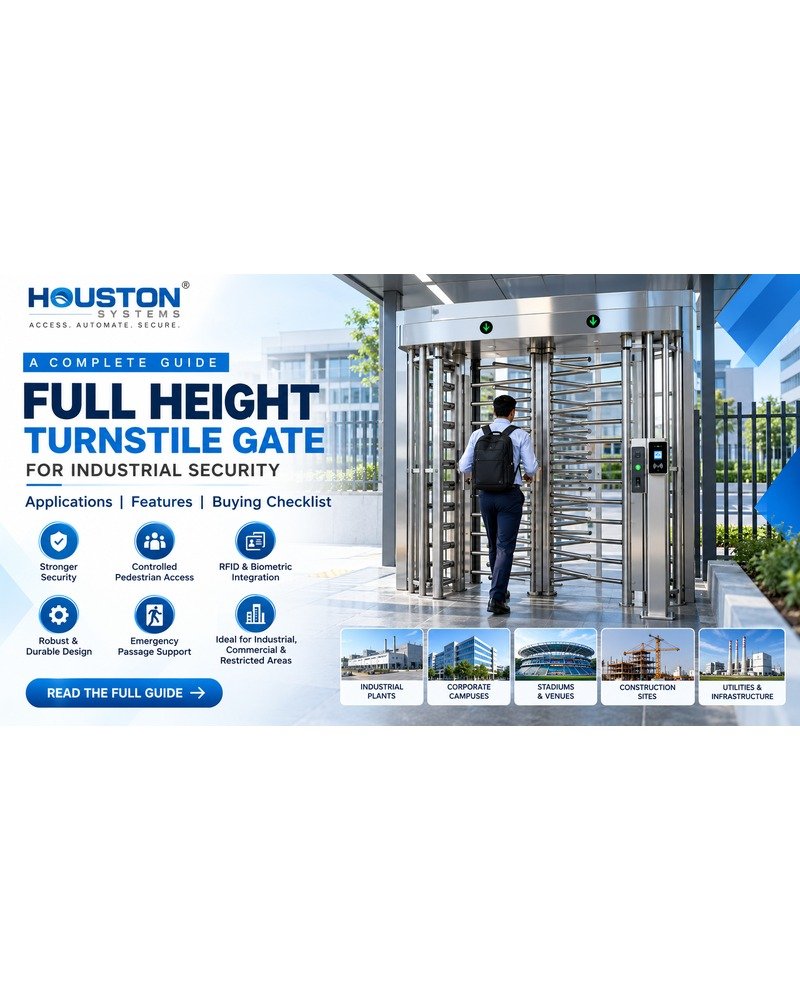
A Full Height Turnstile Gate can help organizations manage access through a designated pedestrian passage. Its tall rotating barrier creates a more enclosed entry point than conventional waist-high turnstiles, making it suitable for selected industrial and restricted-access environments.
However, the right solution depends on more than the physical gate. Pedestrian traffic, site conditions, access-control technology, emergency procedures and long-term maintenance all influence the final selection.
This guide explains seven practical considerations businesses should review before investing in a full height turnstile system.
1. Understand Your Site's Security Requirements
The first step is to identify what the entrance needs to accomplish.
A manufacturing plant may need to manage employee entry during shift changes. A warehouse may need to separate authorized personnel from restricted operational areas. A utility facility may require controlled access at an external perimeter.
Each application has different operational requirements.
Before selecting a system, consider:
- Which people need authorized access?
- Is the entrance attended or unattended?
- Does the facility require controlled entry, exit or both?
- Are visitors and contractors managed separately?
- Does the turnstile need to connect with an existing security system?
Answering these questions helps establish the appropriate configuration before procurement begins.
2. Choose the Right Lane Configuration
Full height turnstiles may be available in different lane configurations, depending on the manufacturer and model.
A single-lane arrangement can suit a designated pedestrian access point where traffic volumes are manageable. A dual-lane configuration may be worth considering when separate movement paths or greater access capacity are required.
Do not select a configuration based only on the number of employees. Estimate pedestrian movement during the busiest periods, particularly when workers arrive or leave together.
A useful planning exercise is to observe the entrance during a shift change and record the approximate number of people arriving within 15 minutes. This information can help the project team assess whether one lane is sufficient or whether additional lanes are needed.
Actual throughput varies by model, credential verification time and user behaviour. Request the manufacturer's rated performance and consider a site-specific assessment.
3. Evaluate Material and Installation Conditions
A turnstile installed under a covered entrance may face different environmental conditions from one exposed to rain, dust or direct sunlight.
When evaluating construction, review the material grade, surface finish, corrosion resistance and manufacturer's stated operating conditions.
For outdoor applications, ask whether the selected model is suitable for the site's exposure and whether additional protection for readers or electronic components is required.
Installation conditions also matter. The mounting surface, foundation, drainage, cable routing and available clearance should be assessed before installation begins.
A technically suitable product can still experience operational problems if the site preparation does not meet the manufacturer's requirements.
4. Confirm Access-Control Compatibility
A full height turnstile can be part of a wider pedestrian access-control system. Depending on the configuration, it may work with RFID cards, biometric readers or other compatible authentication technologies.
The choice should reflect the organization's access policy and existing infrastructure.
RFID access cards: Useful for employee credentials and controlled entry permissions.
Biometric authentication: May be appropriate where identity verification is part of the organization's security process, subject to privacy and applicable legal requirements.
Visitor management integration: Can help coordinate visitor authorization when supported by the selected turnstile and software platform.
Access-control software: Can provide centralized permission management and event records when compatible equipment and software are configured accordingly.
Before purchase, confirm the supported interfaces, controller compatibility, software requirements and any additional integration costs. Do not assume that every turnstile supports every reader or access-control platform.
5. Plan for Emergency Access and Safe Evacuation
Security equipment must work within the facility's broader safety arrangements.
A full height turnstile should not obstruct required emergency exits, accessible routes or evacuation paths. Buyers should understand how the selected model behaves during a power failure, emergency signal or other abnormal operating condition.
Emergency release functions differ between models and configurations. Confirm the intended behaviour with the manufacturer and ensure that it aligns with the building's approved evacuation procedures and applicable fire and life-safety requirements.
Where a turnstile cannot provide the required accessible passage for all users, an appropriately designed alternative access route may be necessary.
These considerations should be resolved during project planning rather than after installation.
6. Compare the Complete Cost, Not Just the Equipment Price
The purchase price is only one part of a pedestrian access-control project.
A complete quotation may include the turnstile, access-control readers, controller, software integration, installation, electrical work, commissioning and after-sales support.
Depending on the project, other costs may include civil work, weather protection, additional lanes, separate accessible gates and preventive maintenance.
When comparing suppliers, request quotations based on equivalent specifications. Confirm which components and services are included and which are charged separately.
A lower initial price does not necessarily represent the best long-term value if essential integration work, installation services or maintenance arrangements are excluded.
7. Check Warranty, Maintenance and Technical Support
A turnstile is a mechanical and, in some models, electromechanical system. Its long-term performance depends on correct installation, operating conditions and maintenance.
Before finalizing a purchase, ask the supplier about:
- Warranty coverage and exclusions
- Recommended preventive maintenance
- Availability of replacement parts
- Technical support arrangements
- Installation and commissioning responsibilities
- Service response commitments, where offered
- Availability of an Annual Maintenance Contract (AMC)
Request the product datasheet and maintenance guidance for the exact model being considered. This makes it easier to evaluate the equipment against the facility's operational requirements.
Full Height Turnstile vs Other Pedestrian Access Gates
Different pedestrian gates serve different purposes.
A full height turnstile creates a more enclosed physical passage and may suit perimeter entrances or selected restricted-access locations. A tripod turnstile uses waist-high rotating arms and may suit other employee or visitor entry points. Flap barriers are often considered where entrance appearance, rapid pedestrian movement and a different access layout are priorities.
The appropriate choice depends on the required level of physical restriction, available space, traffic patterns, accessibility and the site's security policy.
No single gate type is ideal for every application. A site assessment can help determine the most suitable option.
A Practical Checklist Before Requesting a Quote
Before contacting a supplier, prepare the following information:
- Installation location and environment.
- Expected pedestrian traffic, including peak periods.
- Required number of lanes.
- Entry, exit or bidirectional operation.
- Preferred access-control technology.
- Existing controller or software requirements.
- Mounting and electrical conditions.
- Emergency and accessibility requirements.
- Installation and commissioning scope.
- Warranty and maintenance expectations.
Providing these details helps suppliers recommend a configuration that fits the actual project rather than offering a generic product specification.
Explore Full Height Turnstile Solutions from Houston Systems
Houston Systems provides security and access-control solutions for commercial, industrial and institutional requirements.
Organizations planning a controlled pedestrian entrance should assess the site layout, access permissions, expected traffic and integration needs before selecting a full height turnstile.
To explore suitable options, visit the Houston Systems website or contact the team to discuss your project requirements.
A well-planned access-control installation combines suitable equipment, compatible technology, safe pedestrian routing and dependable maintenance support. Reviewing these factors before purchase can help organizations make a more informed decision.