DFMD for Security Screening: Applications, Working Principle and Buying Checklist
By Boom Barrier 17-10-2026 1
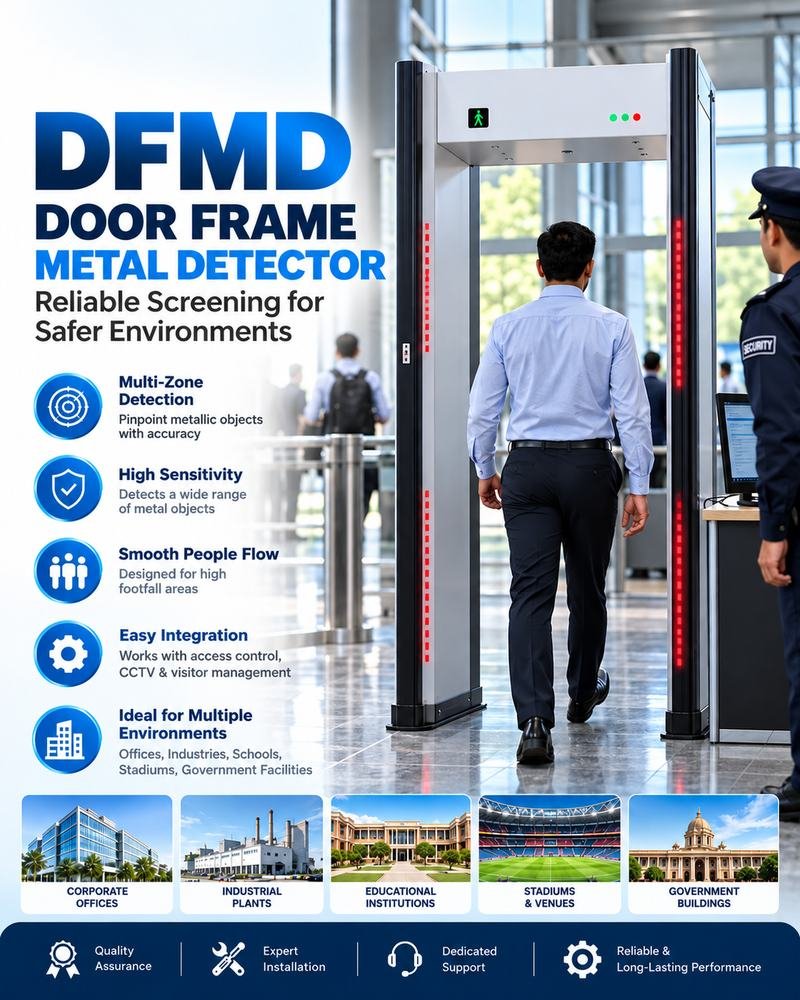
Security screening is an important part of protecting people, property and restricted areas. Factories, corporate offices, educational institutions, government buildings and public venues often need a reliable way to screen people entering their premises while maintaining an organized flow of visitors and employees.
A Door Frame Metal Detector (DFMD) is a walk-through security screening system designed to detect metallic objects carried by people passing through its detection area. When selected and configured appropriately, it can support security personnel in identifying potential concerns and carrying out further inspections.
However, choosing a suitable DFMD involves more than comparing product prices. The screening environment, expected footfall, detection requirements, installation conditions and operator procedures all influence the effectiveness of the overall system.
This guide explains the working principle of DFMD systems, their applications and the practical considerations businesses should evaluate before purchasing one.
What Is a DFMD?
DFMD stands for Door Frame Metal Detector. It is a walk-through metal detection gate typically installed at an entrance or security checkpoint.
The system generally consists of vertical detection panels, electronic control components and audible or visual alarm indicators. Depending on the model, it may also include multiple detection zones, adjustable sensitivity settings and people-counting functionality.
When a person walks through the detection area carrying metal, the system evaluates the resulting disturbance in its electromagnetic field. If the detected signal meets the configured alarm threshold, the device alerts the security operator.
A DFMD detects metallic objects; it does not independently identify whether an object is a weapon or determine the user's intentions. Security personnel must follow an appropriate screening procedure to investigate alarms.
How Does a Door Frame Metal Detector Work?
Most walk-through metal detectors operate using electromagnetic induction. Their basic working process can be understood in four stages.
1. Electromagnetic field generation
The detector's electronic circuitry drives coils within the frame to create an electromagnetic field across the passage.
2. Metal enters the detection area
As a person walks through, a metallic object carried on their body can disturb the expected electromagnetic signal.
3. Signal processing
The control unit evaluates the detected disturbance against the device's configured detection thresholds and operating settings.
4. Alarm and zone indication
If the signal meets the alarm criteria, the system activates an audible or visual alert. Multi-zone models may indicate the approximate height at which the metal was detected, helping personnel conduct a more focused secondary inspection.
The exact detection capabilities and available indicators vary by model. Buyers should verify these details in the manufacturer's documentation and through a practical demonstration.
Where Are DFMD Systems Used?
DFMD systems can support entrance screening in a variety of environments.
1. Industrial Plants and Manufacturing Facilities
Factories may use DFMD systems at employee entrances, controlled production areas or designated exit checkpoints. Their suitability depends on the facility's security policy, the nature of the work and the metallic objects employees routinely carry.
2. Corporate Offices and Business Campuses
Corporate facilities can incorporate walk-through screening into reception and visitor-management procedures, particularly where access to sensitive equipment, records or restricted departments must be controlled.
3. Educational Institutions
Schools, colleges and universities may consider DFMD screening for specific entrances or events following a site-specific security assessment. Screening procedures should be proportionate to the institution's needs and designed to minimize unnecessary disruption.
4. Government and Administrative Buildings
Government offices and other controlled facilities may use walk-through detectors as part of a broader security checkpoint that includes trained personnel, visitor verification and secondary inspection procedures.
5. Stadiums, Exhibition Centres and Public Venues
At high-footfall venues, screening arrangements must balance security requirements with pedestrian throughput. The number of screening lanes, queue layout, operator availability and procedures for handling alarms all influence the overall visitor experience.
Six Practical Checks Before Buying a DFMD
1. Match the System to Your Security Objective
Begin by identifying what the checkpoint needs to accomplish. Consider the type of facility, the risks identified by the security team, the objects that need to be detected and the process that follows an alarm.
A general-purpose entrance and a high-security checkpoint may require different detection configurations. The equipment should be selected against documented requirements rather than choosing a model simply because it has the highest advertised sensitivity.
2. Evaluate Detection Zones and Sensitivity
Detection zones indicate the approximate vertical area where metal has been detected. Depending on the model, zone configurations and indication capabilities can differ.
Before purchasing, ask the supplier:
- How many detection zones does the proposed model support?
- Can sensitivity settings be adjusted for the intended environment?
- How are audible and visual alarms presented?
- Can the system be demonstrated using an agreed test procedure?
- What provisions are available for reducing nuisance alarms without compromising required detection performance?
A higher zone count may help personnel localize an alarm more quickly, but it does not automatically guarantee better overall security. The complete system and operating procedure matter.
3. Check Footfall and Queue Requirements
A detector should suit the expected movement of people through the checkpoint.
Estimate the number of employees, visitors or event attendees arriving during peak periods. Then consider how many screening lanes are needed, whether queues can be managed safely and how secondary inspections will be handled.
For busy facilities, a well-planned entrance layout can be just as important as the detector itself. Avoid placing equipment where it blocks emergency routes or creates unnecessary congestion.
4. Review Installation and Site Conditions
Before finalizing an order, confirm the available installation space, power requirements and environmental conditions.
Ask the supplier to assess:
- Passage dimensions and available clearance.
- Power supply and earthing requirements.
- Nearby metal structures or equipment that could affect operation.
- Electrical interference and the spacing of adjacent detection units.
- Protection from dust, moisture and weather where relevant.
- Calibration, commissioning and operator training requirements.
For installations near industrial machinery or other sources of interference, an on-site assessment may help identify practical constraints before deployment.
5. Plan the Complete Screening Procedure
A DFMD is only one part of an entrance security process. The organization should establish clear instructions for responding to alarms, carrying out secondary inspections and allowing people to proceed when screening is complete.
Where appropriate, a handheld metal detector can support secondary screening. Separate baggage-screening equipment may also be required because a DFMD does not inspect the contents of bags.
Security staff should receive training on the equipment, alarm-handling procedures and escalation protocols. Sensitivity settings should be established according to the site's security requirements and reviewed by authorized personnel.
6. Compare Total Ownership Cost and After-Sales Support
The initial equipment price is only one part of the purchasing decision. Compare the complete scope of supply and the support available throughout the expected service life.
Request written clarification on:
- Equipment model and documented specifications.
- Installation, commissioning and training charges.
- Warranty coverage and exclusions.
- Preventive maintenance and repair arrangements.
- Availability of replacement components.
- Technical support response arrangements.
- Applicable taxes, delivery and other project costs.
Ask the supplier to identify which features are standard and which are optional. This makes quotations easier to compare and reduces the risk of unexpected costs during installation or operation.
DFMD Buying Checklist for Security Teams
Before approving a purchase, use the following checklist to organize the evaluation.
Evaluation area | What to confirm |
Security objective | Intended use and screening requirements |
Detection configuration | Zone count and available sensitivity settings |
Alarm indication | Audible, visual and zone indicators |
Site suitability | Space, power and environmental conditions |
Footfall | Expected peak traffic and lane requirements |
Installation | Commissioning, calibration and training |
Screening procedure | Alarm response and secondary inspection |
Maintenance | Warranty, service and spare-parts arrangements |
Documentation | Datasheet, user manual and applicable certifications |
Commercial terms | Complete quotation and scope of supply |
The checklist should be completed using the actual model specifications and the requirements of the facility. Do not assume that every DFMD includes the same features.
DFMD and HHMD: Understanding the Difference
A Door Frame Metal Detector is designed to screen people as they walk through an entrance. A Handheld Metal Detector (HHMD) is operated manually and can help personnel investigate a specific area after an alarm or conduct additional checks where required.
The two devices serve complementary roles. A DFMD can support primary screening, while an HHMD can assist with secondary inspection. The correct combination depends on the security policy, site layout and risk assessment.
Why Supplier Evaluation Matters
Selecting the right supplier involves evaluating both the equipment and the support behind it. Buyers should request a product demonstration, review the relevant technical datasheet and clarify installation responsibilities before placing an order.
It is also useful to share the intended application, expected footfall, site conditions and integration requirements with the supplier. This allows the proposed configuration to be assessed against the actual project rather than relying on generic product descriptions.
Organizations exploring a Door Frame Metal Detector (DFMD) can review Houston Systems' product information and contact the team to discuss their application and project requirements.