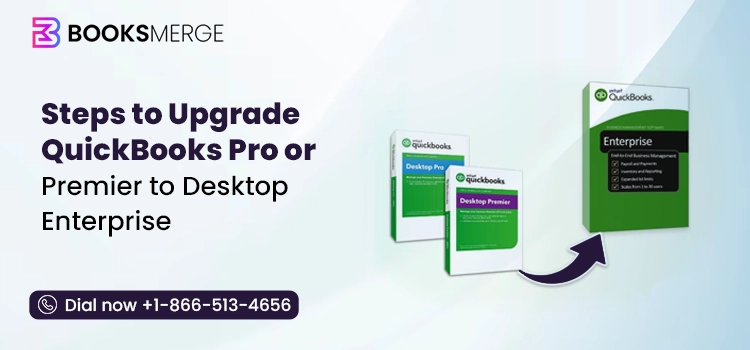
As a business grows, its accounting requirements often grow with it. QuickBooks Pro and Premier can work well for many small businesses, but companies with larger teams, more inventory, higher transaction volumes, or more complex workflows may eventually need additional capabilities.
An Upgrade QuickBooks Pro or Premier to Desktop Enterprise can be a practical option for businesses that want to continue using desktop accounting software while gaining access to expanded user capacity, advanced inventory features, enhanced reporting, and additional business-management tools.
If you are planning to move from Pro or Premier to Enterprise, it is important to prepare your company file before starting the conversion. A proper backup, compatible installation, careful file conversion, and post-upgrade verification can help make the transition smoother.
This guide explains how Pro and Premier users can prepare for and complete a QuickBooks Desktop Enterprise upgrade, what happens to existing company data, and what to check after the conversion.
Why Upgrade From QuickBooks Pro or Premier to Enterprise?
QuickBooks Pro and Premier are designed for smaller businesses, while Enterprise is intended for businesses with more demanding accounting and operational requirements.
You may want to consider Enterprise if your company:
- Needs access for more users
- Has complex inventory requirements
- Requires advanced reporting
- Manages multiple locations
- Needs more detailed user permissions
- Has grown beyond the practical limits of its current QuickBooks edition
- Wants additional automation and workflow capabilities
BooksMerge's existing Enterprise guide highlights expanded inventory, reporting, automation, and user capabilities as reasons businesses may consider moving to Enterprise.
QuickBooks Pro vs. Premier vs. Enterprise
Before starting the upgrade, understand how the editions differ.
The right choice depends on the size of your business and the features your accounting team actually needs.
When Should Pro Users Move to Enterprise?
A QuickBooks Pro to Enterprise upgrade may be appropriate when your business is reaching the limits of Pro.
For example, you may be ready for Enterprise if:
- Several employees need simultaneous access.
- Your inventory has become difficult to manage.
- You need more detailed financial reports.
- Your business operates from multiple locations.
- Your accounting team requires more granular permissions.
- Manual processes are taking too much time.
If your current QuickBooks installation also needs updating, you can review the existing BooksMerge guide on Update QuickBooks Desktop before beginning the Enterprise conversion.
When Should Premier Users Upgrade to Enterprise?
A QuickBooks Premier to Enterprise upgrade may make sense when Premier no longer meets your operational requirements.
Some common signs include:
- Increasing inventory complexity
- More employees using QuickBooks
- Growing transaction volume
- Need for advanced reporting
- More complex pricing requirements
- Multiple business locations
- Greater need for user controls
Rather than waiting until your accounting system becomes difficult to manage, evaluate Enterprise when you begin seeing these limitations.
QuickBooks Desktop Enterprise Upgrade: Step-by-Step Guide
Once you decide that Enterprise is the right option, follow a structured upgrade process.
Step 1: Review Your Existing QuickBooks Setup
Before installing Enterprise, document your current setup.
Check:
- Current QuickBooks edition
- QuickBooks version and release
- Company-file location
- Number of users
- Payroll configuration
- Inventory setup
- Third-party applications
- Bank connections
- Customized forms and reports
- Multi-user configuration
This information can help you identify areas that require additional configuration after the upgrade.
Step 2: Check Enterprise Requirements
Make sure the computer or server meets the requirements for the Enterprise version you intend to install.
Also check the operating system, available storage, network configuration, and permissions.
If Enterprise will be used by several employees, plan the server and workstation configuration before installation rather than setting up each computer separately without a network plan.
Step 3: Create a Company-File Backup
Do not skip this step.
Before converting your Pro or Premier company file, create a current backup.
In QuickBooks Desktop, open the company file and use the backup option under the File menu.
Save the backup to a secure location, preferably separate from your primary company-file location.
The backup provides a recovery point if you encounter a problem during the conversion.
Step 4: Finalize Important Transactions
Before upgrading, review unfinished accounting activities.
Where appropriate, complete or review:
- Open invoices
- Outstanding bills
- Purchase orders
- Quotes
- Unbilled expenses
- Pending payroll activities
- Bank-feed transactions
- Inventory adjustments
Also generate copies of important financial reports so you have a reference for comparison after the upgrade.
Step 5: Purchase QuickBooks Enterprise
Choose the Enterprise plan that matches your business requirements.
Enterprise is offered in different plans, so review the available features before selecting one. Consider not only what your company needs today but also what it may need as it grows.
Avoid selecting a plan based solely on user count or price. Features such as inventory, pricing, workflow, reporting, and user permissions can significantly affect which plan is appropriate.
Step 6: Download and Install Enterprise
After purchasing Enterprise, download the appropriate installation program.
Close QuickBooks and other unnecessary applications before starting the installation.
Follow the installation instructions and choose the installation type appropriate for your environment.
For a basic installation, an express installation can be suitable. Businesses setting up a network or server may need a customized installation.
BooksMerge's existing Enterprise upgrade guide also covers installation, company-file preparation, activation, and post-upgrade configuration.
Step 7: Open Your Existing Company File in Enterprise
After Enterprise is installed, open the existing company file.
QuickBooks Enterprise will recognize that the file was created using an earlier edition.
You may receive a message asking whether you want to update the company file for use with the newer version.
Before accepting the conversion, make sure you have already created your backup.
Step 8: Convert the Company File
After confirming the conversion:
- Open the company file in Enterprise.
- Sign in using the QuickBooks administrator credentials.
- Review the conversion message.
- Confirm that you want to update the company file.
- Allow QuickBooks to create another backup if prompted.
- Start the conversion.
- Wait for the process to finish.
Do not shut down the computer or interrupt QuickBooks while the company file is being converted.
Important Data Consideration
Once the company file has been updated for Enterprise, the converted file should not be treated as a file that can simply be opened in the older Pro or Premier installation.
That is why retaining your original backup is essential.
Step 9: Verify Your Company Data
After the conversion is complete, carefully review the company file.
Check:
- Customers
- Vendors
- Employees
- Chart of accounts
- Products and services
- Open invoices
- Bills
- Inventory
- Bank accounts
- Recent transactions
- Account balances
Run important reports such as:
- Profit and Loss
- Balance Sheet
- Accounts Receivable
- Accounts Payable
- Inventory valuation
Compare these reports with the copies you generated before the upgrade.
Step 10: Configure Users and Permissions
One of the benefits of Enterprise is its expanded user and permission capabilities.
Review existing users and determine which employees need access to specific accounting functions.
Create appropriate roles for areas such as:
- Accounting
- Sales
- Purchasing
- Inventory
- Payroll
- Management
- Administration
Only give employees the permissions necessary for their responsibilities.
Step 11: Set Up Multi-User Mode
If multiple employees need to work in the company file simultaneously, configure Enterprise for multi-user access.
On the server computer, open Enterprise and go to:
File → Utilities → Host Multi-User Access
Then configure each workstation to connect to the company file on the server.
Test each workstation individually before returning to normal business operations.
Step 12: Update Payroll and Connected Services
After the Enterprise conversion, review connected services.
Depending on your setup, check:
- Payroll
- Payroll tax tables
- Bank feeds
- Payment services
- Email settings
- Printer settings
- Third-party integrations
- Customized forms
If you use payroll, make sure the appropriate payroll update has been completed before processing your next payroll.
What Happens to Your Data After an Enterprise Upgrade?
One of the biggest concerns for Pro and Premier users is whether their accounting information will remain available.
When a compatible company file is converted, core accounting information can continue in Enterprise, including:
- Customer records
- Vendor records
- Employee information
- Chart of accounts
- Transactions
- Invoices
- Bills
- Items
- Historical financial information
However, conversion does not mean every setting or third-party integration should be assumed to work exactly as before.
Always verify the company file after the upgrade.
QuickBooks Pro to Enterprise Upgrade: What Should You Check?
After a QuickBooks Pro to Enterprise upgrade, compare your old and new environments.
Check at least the following:
Customer Data
Open several customer records and verify balances, transactions, contact details, and outstanding invoices.
Vendor Data
Review vendor balances, bills, payment history, and vendor information.
Inventory
If you rely on inventory, perform a detailed review of quantities, values, locations, and item records.
Financial Reports
Compare the Profit and Loss and Balance Sheet reports with your pre-upgrade copies.
User Access
Test every user account to make sure the employee can access the areas required for their job.
QuickBooks Premier to Enterprise Upgrade: Important Checks
For a QuickBooks Premier to Enterprise upgrade, pay particular attention to industry-specific workflows and customized reports.
Check:
- Custom reports
- Memorized reports
- Custom forms
- Pricing settings
- Inventory workflows
- User permissions
- Industry-specific transactions
Run several normal business transactions after the conversion to confirm that your workflow is functioning correctly.
Common QuickBooks Desktop Enterprise Upgrade Problems
Even when the conversion is planned carefully, problems can occasionally occur.
Enterprise Installation Will Not Start
If the installer fails to run, check your Windows permissions and system requirements.
Restart the computer and try the installation again.
If installation problems continue, QuickBooks Tool Hub may provide useful diagnostic options.
Company File Will Not Open
If the company file does not open after conversion:
- Confirm that you are using Enterprise.
- Make sure Enterprise is updated.
- Confirm that the file is a valid .QBW company file.
- Verify that the file is stored in an accessible location.
- Try opening a backup copy if necessary.
Do not overwrite your original backup while troubleshooting.
Data Appears to Be Missing
If information appears to be missing, compare the converted file with your original backup and pre-upgrade reports.
Use QuickBooks' Verify Data utility to check for potential data issues.
If QuickBooks reports data integrity problems, create a backup before attempting the Rebuild Data process.
Enterprise Activation Problem
Activation problems can occur because of incorrect license information, Windows configuration problems, or damaged QuickBooks installation components.
Check your license details and make sure your computer's date and time are correct.
Restart QuickBooks and attempt activation again.
What If You Are Also Moving to a New Computer?
An Enterprise upgrade and a computer migration are two different processes.
If you are moving QuickBooks to another computer at the same time as upgrading, plan both tasks carefully.
BooksMerge has an existing guide on the QuickBooks Migrator Tool that explains how QuickBooks Desktop and recent company files can be transferred to a new computer using the built-in Migrator Tool.
Do not confuse a computer-to-computer transfer with converting a Pro or Premier company file to Enterprise. They address different parts of the migration process.
QuickBooks Enterprise Upgrade Checklist
Before considering the upgrade complete, review this checklist:
- Check your current QuickBooks edition.
- Confirm Enterprise meets your business requirements.
- Verify system requirements.
- Create a company-file backup.
- Save important financial reports.
- Finalize pending transactions where appropriate.
- Install QuickBooks Enterprise.
- Activate Enterprise.
- Convert your company file.
- Verify customer and vendor information.
- Check inventory.
- Compare financial reports.
- Configure users and permissions.
- Set up multi-user mode.
- Check payroll and connected services.
- Test important accounting workflows.
- Keep the original backup in a secure location.
Final Thoughts
A QuickBooks Desktop Enterprise upgrade can be a practical next step for Pro and Premier users whose businesses have outgrown their existing accounting setup. Enterprise provides additional capabilities for larger teams, advanced inventory, reporting, permissions, and more complex workflows.
The safest approach is to prepare before making the change. Back up your company file, review important reports, install Enterprise correctly, convert the company file, and verify your accounting information afterward.
If you need help with a QuickBooks Pro to Enterprise upgrade, QuickBooks Premier to Enterprise upgrade, or company-file conversion, BooksMerge can help you review the upgrade requirements and migration process. You can contact BooksMerge at +1 (866) 513-4656 for assistance with your QuickBooks Enterprise upgrade.
Frequently Asked Questions
Can I upgrade QuickBooks Pro to Enterprise?
Yes. A compatible QuickBooks Pro company file can be converted for use with QuickBooks Desktop Enterprise. Create a backup before opening and updating the file in Enterprise.
Can I upgrade QuickBooks Premier to Enterprise?
Yes. You can convert a compatible Premier company file to Enterprise. The conversion should be performed after creating a reliable backup of the original file.
Will my QuickBooks data transfer to Enterprise?
Core company information such as customers, vendors, transactions, accounts, and financial records can carry over during the company-file conversion. Always verify important information after upgrading.
Should I back up my company file before upgrading?
Yes. Creating a backup is one of the most important preparation steps. Keep the original backup separate from the converted company file.
Can I use the old Pro or Premier file after upgrading?
The converted company file is updated for Enterprise, so you should not rely on it as an older-version file. Retain the original backup created before the conversion.
What should I check after upgrading to Enterprise?
Review your customer and vendor lists, inventory, transactions, account balances, financial reports, users, permissions, payroll, bank feeds, and other connected services.
Can I upgrade and move QuickBooks to a new computer at the same time?
Yes, but these are separate processes. If you're also replacing your computer, plan the Enterprise conversion and computer migration carefully. The QuickBooks Migrator Tool may help with transferring the program and recent company files.
Tags : .....