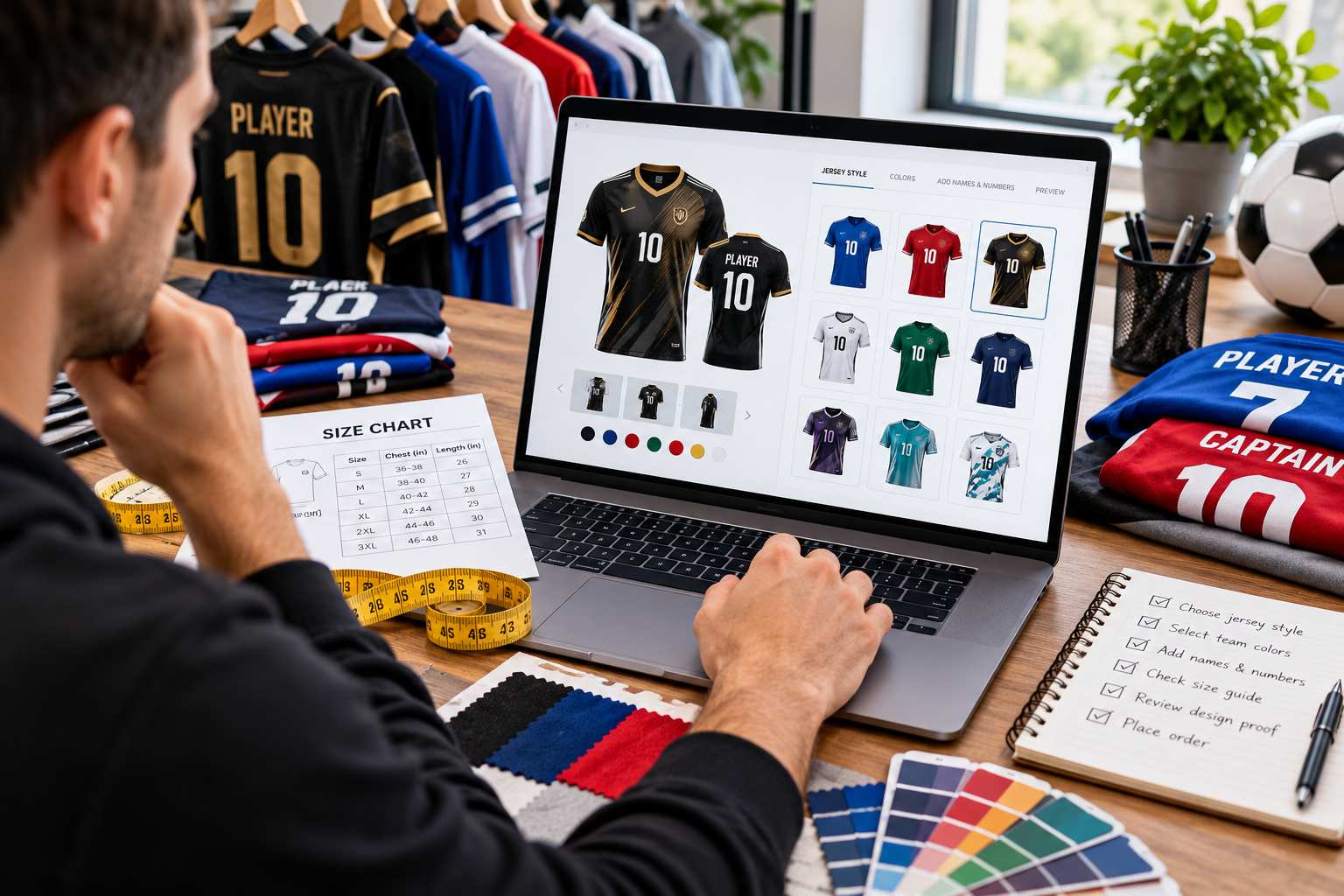
Ordering a jersey for yourself or an entire sports team involves more than choosing colours and adding a logo. Fabric quality, sizing, printing methods, personalisation and delivery timelines all influence how the finished jersey looks and feels.
With more options available for custom jerseys online, it's easier to explore different styles without visiting a physical store. However, a design that looks impressive on a screen may not always provide the comfort or fit you expect.
Whether you're buying for a school tournament, college team, sports academy or corporate event, understanding a few important details before placing your order can help you avoid unnecessary mistakes.
1. What Fabric Should You Choose for Your Sports Jersey?
The right fabric depends on the sport you play, the weather conditions and how frequently the jersey will be used.
Polyester is commonly used for sportswear because it is lightweight, durable and relatively easy to maintain. Moisture-wicking polyester fabrics are particularly useful for activities involving continuous movement and sweating.
When comparing materials, consider these factors:
- Breathability: Helps improve comfort during physical activity.
- Moisture management: Moves sweat away from the skin.
- Fabric weight: Lightweight materials are often preferred for active sports.
- Durability: Important for jerseys that require frequent washing.
- Stretch and flexibility: Allow comfortable movement during training and matches.
For example, football and basketball players may prefer lightweight fabrics that support quick movement, while cricket teams might prioritise comfort during long hours outdoors.
If possible, ask the supplier for fabric specifications or samples before finalising your order.
2. How Can You Design Sports Jerseys That Represent Your Team?
A team jersey should be visually appealing without making player identification difficult.
Before you design sports jerseys, decide on your team's primary colours, logo placement, number style and overall appearance. These decisions will help create a consistent look across all players.
Consider the following design elements:
- Choose two or three complementary colours.
- Keep team logos clearly visible.
- Use readable fonts for names and numbers.
- Avoid placing important details over busy patterns.
- Ensure sponsor logos do not interfere with player identification.
You can explore minimal designs, geometric patterns, gradients or bold colour combinations depending on your team's preferences.
Remember that a jersey is viewed from different distances during a match. A design with clear numbers and balanced colours may be more practical than one with excessive detailing.
3. Which Printing Method Is Best for Custom Sports Jerseys?
Printing techniques influence the appearance, texture and durability of the finished garment.
Sublimation printing is widely used for polyester jerseys because the ink is transferred into the fabric using heat. This allows detailed patterns and multiple colours without creating a thick printed layer.
Other techniques, including Direct-to-Film (DTF) printing and screen printing, may be suitable depending on the artwork, fabric and order requirements.
Before choosing a printing method, ask these questions:
- Will the design remain comfortable during physical activity?
- Is the method suitable for the selected material?
- Can it reproduce detailed graphics and colour gradients?
- How should the printed garment be washed?
Understanding these differences can help you select custom jersey printing methods that match your actual requirements rather than choosing based on appearance alone.
4. How Do You Choose the Correct Jersey Size?
Incorrect sizing is one of the most frustrating problems when ordering sportswear for a group.
Different suppliers may use different measurements for small, medium, large and extra-large sizes. Therefore, relying only on your usual clothing size can lead to fitting problems.
Check the supplier's measurement chart and compare it with a jersey that already fits comfortably.
Pay attention to chest measurements, garment length, shoulder width and sleeve length.
For custom team jerseys, collecting individual measurements in a spreadsheet is a practical approach. Include each player's name, size and preferred fit.
If your team includes children and adults, confirm that suitable sizes are available for everyone.
It's also worth asking whether the jerseys are regular-fit, slim-fit or relaxed-fit before placing the order.
5. Can You Add Individual Names and Numbers to Every Jersey?
Personalisation makes it easier to identify players and gives the entire squad a consistent appearance.
Many suppliers offer custom jerseys with name and number options, allowing each player to have their own details while keeping the team design unchanged.
Before submitting your personalisation list, double-check:
- Spelling of every player's name
- Correct jersey numbers
- Letter capitalisation
- Number placement and font style
- Any competition-specific numbering requirements
For larger teams, keep all personalisation details in a single document.
Requesting a design preview is also useful because it allows you to identify mistakes before production begins.
6. What Should You Know About Pricing and Minimum Orders?
The final amount you pay may depend on the fabric, printing technique, quantity, personalisation and delivery location.
When comparing custom jersey prices, ask suppliers for a complete quotation rather than looking only at the advertised starting price.
Confirm whether the price includes names, numbers, logos, taxes and shipping.
Minimum order quantities are another important consideration. Some suppliers require a fixed number of jerseys, while others accept individual orders.
For example, Yoode offers jersey personalisation without a minimum order requirement, making it possible to order for smaller groups as well as larger teams.
If you're planning to purchase bulk custom jerseys, ask whether different sizes and player names can be included within the same order.
7. How Can You Check a Jersey Design Before Production?
A digital preview helps you understand how the final garment is expected to look.
Review the front, back and sleeve designs carefully before approving the artwork.
Check whether the colours match your requirements, logos are positioned correctly and player details are accurate.
Also remember that colours displayed on a mobile or computer screen can differ slightly from printed fabric.
If colour accuracy is important, ask whether a physical sample or colour reference is available.
For large orders, consider reviewing a sample garment when practical. This provides a better understanding of the material, stitching, printing and overall fit.
8. How Long Does It Take to Receive Your Order?
Production and delivery timelines vary depending on the order quantity, design complexity, personalisation requirements and delivery destination.
Before completing your purchase, confirm when production begins, how long manufacturing usually takes and whether shipping time is included in the estimate.
If the jerseys are required for a tournament or event, avoid ordering too close to the scheduled date.
Allow additional time for design corrections, size confirmation and unexpected delivery delays.
When you order custom jerseys online, keeping all approved designs, invoices and communication records in one place can make it easier to resolve questions later.
9. What Should You Check Before Confirming Your Order?
Before making the final payment, review the important details one last time.
Make sure the selected fabric, colours, jersey style, sizes, player information and quantity are correct.
Read the supplier's policies regarding design revisions, cancellations and returns. Personalised products may have different return conditions from regular clothing.
Also check available customer support options in case you need clarification during production.
A reliable supplier should be able to explain its ordering process, provide clear specifications and communicate important changes.
Conclusion
Buying personalised sportswear becomes much easier when you understand what to check before placing an order. Fabric selection, printing quality, accurate measurements, design approval, transparent pricing and delivery planning are all important considerations.
Rather than choosing a jersey based only on its appearance, think about how it will perform during actual games and how comfortably it will fit each player.
A little preparation can help your team receive jerseys that look consistent, feel comfortable and meet the requirements of your upcoming sports event.
Tags : .....