Select Electrical Insights: 7 Questions to Ask Before Investing in Home Solar
By Jane Rochstad 27-10-2026 1
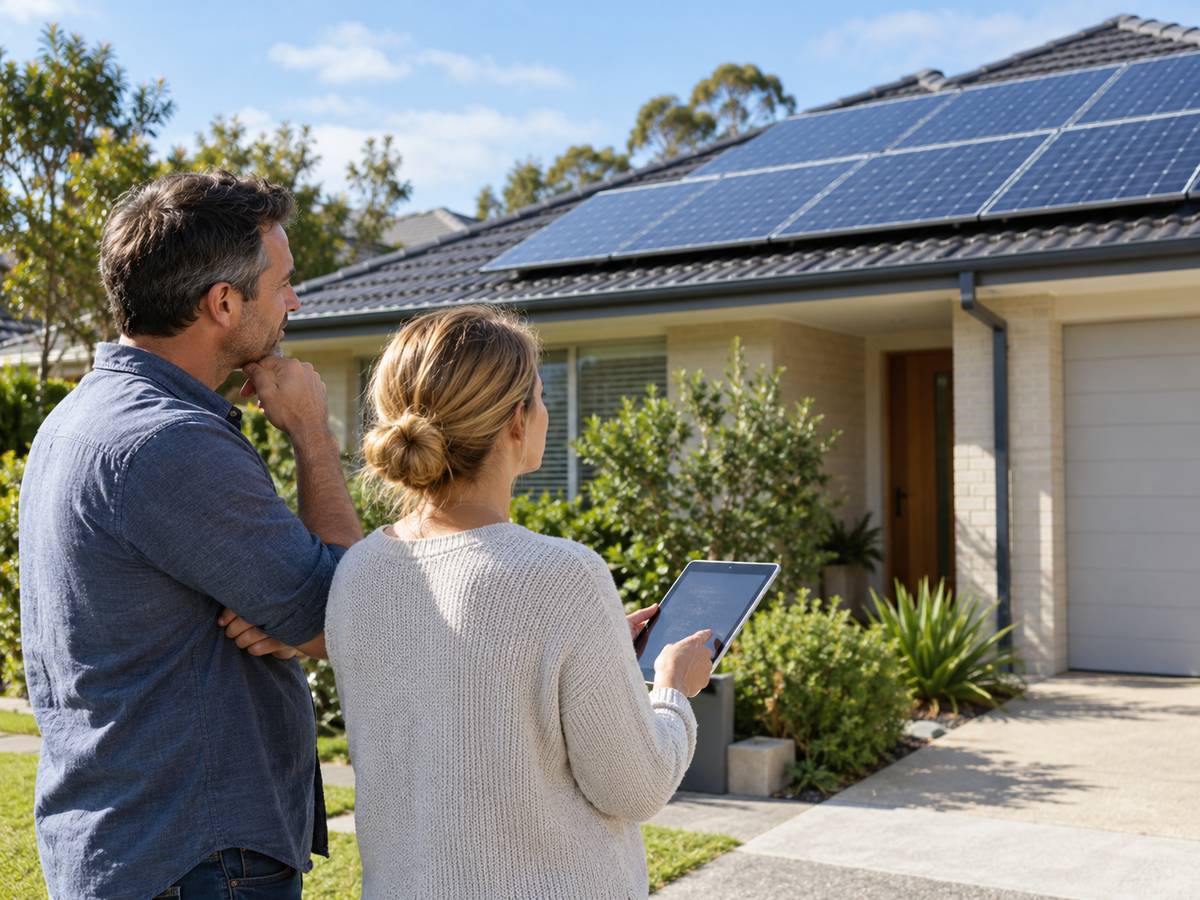
With rising household electricity costs and growing interest in renewable energy, more Australians are considering solar panels as a long-term investment. However, choosing the right solar system involves much more than comparing prices. From understanding electricity consumption to evaluating installation quality, warranties and potential savings, homeowners need reliable information before making a decision.
According to the Clean Energy Council, more than 4.5 million Australian homes and small businesses had installed rooftop solar systems by mid-2026. This widespread adoption reflects growing interest in managing energy costs and reducing reliance on traditional electricity sources.
Yet not every solar installation delivers the same results. Differences in equipment quality, household energy habits and property conditions may significantly affect long-term performance.
For homeowners researching solar providers such as Select Electrical, asking the right questions before signing a contract may help avoid unnecessary expenses and ensure the system matches their actual needs.
Here are seven important questions every homeowner should consider before investing in solar energy.
1. How Much Electricity Does Your Household Actually Use?
Before choosing solar panels, it is essential to understand how much electricity your household consumes and when that electricity is used.
Understanding Your Electricity Consumption
Start by reviewing electricity bills from the previous 12 months. Look for average daily energy usage, measured in kilowatt-hours (kWh), and identify seasonal differences.
For example, a household may use considerably more electricity during winter because of heating requirements or during summer due to air conditioning.
Other factors influencing electricity consumption include:
- The number of people living in the property.
- Whether household members work from home.
- The use of electric heating, cooling and hot water systems.
- Energy-intensive appliances such as pool pumps and dryers.
- Plans to purchase an electric vehicle.
Understanding these habits helps establish how much solar electricity a household may realistically use.
Why Solar System Size Matters
Solar systems are generally described by their generating capacity, measured in kilowatts (kW).
A larger system may produce more electricity, but that does not automatically mean it offers better financial value.
Households that consume most of their electricity during daylight hours may benefit from higher levels of solar self-consumption. Homes with predominantly evening electricity usage may need to consider different strategies, including changing appliance schedules or investigating battery storage.
The ideal system should reflect actual consumption patterns rather than simply maximising the number of panels installed.
2. What Is Included in the Solar Installation Quote?
Solar installation quotes may vary significantly between providers, even when the proposed systems have similar generating capacities.
Understanding exactly what is included is essential for making meaningful comparisons.
Breaking Down Solar Installation Costs
A typical residential solar installation involves several components, including solar panels, an inverter, mounting equipment, electrical wiring and installation labour.
Additional work may be required depending on the property's existing electrical infrastructure.
For example, an older home may require a switchboard upgrade before a new solar system can be connected safely.
Similarly, properties with complex roof structures, difficult access or substantial shading may involve additional design and installation considerations.
When reviewing quotes, homeowners should look for clear information about:
- The brand, model and quantity of solar panels.
- The inverter type, brand and capacity.
- Installation and electrical labour costs.
- Grid connection arrangements and relevant approvals.
- Product and workmanship warranties.
- Any proposed electrical infrastructure upgrades.
Identifying Potential Hidden Costs
An unusually inexpensive quote may appear appealing, but the lowest initial price does not always represent the best long-term value.
Some quotes may exclude necessary electrical upgrades, additional installation equipment or ongoing monitoring services.
Homeowners should request an itemised quotation and clarify whether the stated price includes all work required to complete the installation.
Comparing the full scope of work is generally more useful than comparing headline prices alone.
3. Are the Solar Panels and Inverter Suitable for Your Property?
Solar panels are often the most visible part of a rooftop system, but their performance depends on several components working together.
Understanding the differences between available technologies may help homeowners avoid paying for features they do not need.
Solar Panel Efficiency and Durability
Solar panel efficiency describes how effectively a panel converts sunlight into usable electricity.
Higher-efficiency panels may generate more electricity from a limited roof area, making them particularly relevant for smaller or unusually shaped roofs.
However, efficiency is not the only consideration.
Homeowners should also investigate panel durability, manufacturer warranties, expected performance degradation and suitability for local weather conditions.
For example, properties exposed to significant temperature fluctuations may benefit from equipment designed to maintain reliable performance across varying conditions.
Panel quality testing also plays a role in manufacturing and quality assurance. Techniques such as electroluminescence testing are explored in this article about solar panel defect detection, which explains how specialised testing may reveal defects that are not readily visible during ordinary inspections.
Understanding Solar Inverter Options
The inverter converts electricity generated by solar panels into a form suitable for household appliances.
Common options include string inverters, microinverters and hybrid inverters.
String inverters are frequently used in residential installations, while microinverters may be useful for properties with complicated roof layouts or varying panel orientations.
Hybrid inverters are designed to support compatible battery storage arrangements.
Each option has advantages and limitations relating to cost, monitoring, shading and future expansion.
Rather than assuming one inverter technology is universally superior, homeowners should ask installers to explain why a particular configuration suits their property.
4. Is the Solar Installer Properly Qualified and Experienced?
The quality of a solar installation depends not only on the equipment but also on how the system is designed, installed and commissioned.
Poor installation practices may affect electricity generation, electrical safety and long-term reliability.
Checking Licences and Accreditation
Australian homeowners should verify that electrical installation work is undertaken by appropriately licensed professionals.
It is also important to understand the accreditation requirements associated with solar incentives.
Solar Accreditation Australia has administered the relevant installer and designer accreditation scheme since 2024, replacing the former Clean Energy Council installer accreditation arrangements.
Homeowners should ask prospective installers about their current credentials, relevant experience and responsibilities throughout the project.
It is also worth confirming who completes the installation and whether subcontractors are involved.
Why Local Installation Knowledge Matters
A solar system suitable for one property may not perform equally well on another.
Roof orientation, surrounding buildings, shading, local climate and electricity network requirements all influence system design.
In Canberra, for example, seasonal temperature changes and winter electricity demand may affect household energy planning.
Homeowners researching regional providers may encounter businesses such as Select Electrical Canberra, whose website discusses property-specific solar design considerations, including electricity usage, roof configurations and equipment selection.
Reviewing how different providers assess these factors may help homeowners develop a clearer understanding of what to expect during the quotation process.
Questions Worth Asking an Installer
Before committing to an installation, homeowners should consider asking:
- Who will design and install the solar system?
- What licences and accreditations do the relevant professionals hold?
- Will the installer inspect the roof and electrical infrastructure?
- How are expected electricity savings calculated?
- What happens if the system develops a fault?
- Who is responsible for warranty claims and repairs?
Clear, detailed answers may provide useful insight into an installer's technical knowledge and approach to customer support.
5. What Warranties and After-Sales Support Are Provided?
Solar panels are designed for long-term operation, which makes warranty arrangements an important part of the purchasing decision.
However, solar systems often have several different warranties covering different components and responsibilities.
Understanding the Main Warranty Types
A product warranty generally covers eligible defects in the equipment itself.
A performance warranty relates to the solar panels' expected electricity-generating capability over time, subject to specified conditions.
An installation workmanship warranty addresses eligible problems associated with the installation work.
These warranties are not interchangeable.
For example, a panel may have a lengthy performance warranty while its product warranty covers a different period.
Homeowners should carefully review warranty documentation and understand what happens if a component needs replacement.
Considering Long-Term Maintenance
Although solar systems typically require relatively limited maintenance, they are not entirely maintenance-free.
Periodic inspections, system monitoring and appropriate cleaning may help identify performance issues.
Consumers should also ask whether the installer provides ongoing assistance with faults, inverter problems and warranty claims.
Importantly, the existence of a warranty does not automatically guarantee convenient support. Understanding the claims process and the responsible parties is essential.
6. Are Government Solar Incentives Available?
Government incentives may influence the upfront cost of a solar installation, but eligibility and program conditions vary.
Homeowners should investigate current arrangements before including any proposed financial assistance in their budgets.
Understanding Federal Solar Incentives
Australia's Small-scale Renewable Energy Scheme supports eligible renewable energy installations through small-scale technology certificates, commonly called STCs.
The number and value of applicable certificates depend on factors such as system capacity, location and current scheme rules.
For eligible installations, the financial benefit is commonly reflected as an upfront discount through the installation provider.
However, consumers should understand how the discount has been calculated and whether it is already included in the quoted price.
Reviewing State and Territory Programs
Depending on location, additional government programs may support household energy upgrades, solar batteries or electrification.
Conditions may vary based on property type, household eligibility, approved equipment and available funding.
Programs may also change over time.
Homeowners should check official government information to establish whether current incentives apply to their circumstances.
It is particularly important not to assume that incentives advertised in another state or territory are available locally.
Looking Beyond Rebates
While incentives may reduce initial expenditure, they should not be the sole reason for selecting a particular system.
The underlying equipment quality, projected generation, installation costs and household energy requirements remain important considerations.
A well-designed system that meets actual household needs may offer better long-term value than a poorly matched system selected primarily because of a promotional discount.
7. How Long Might It Take for Your Solar System to Pay for Itself?
Many homeowners consider solar energy because they want to reduce their electricity bills.
However, the financial performance of a solar installation depends on several variables.
Understanding Solar Payback Periods
The payback period refers to the estimated time required for cumulative savings to offset the initial installation cost.
For example, a hypothetical system costing $7,000 after applicable incentives and delivering average annual net savings of $1,400 would have a simple payback period of approximately five years.
Actual results may differ because electricity tariffs, consumption patterns, maintenance costs and equipment performance change over time.
Payback estimates should therefore be treated as projections rather than guaranteed outcomes.
Self-Consumption Versus Exporting Electricity
Solar electricity may either be consumed within the household or exported to the electricity grid.
When solar electricity is used directly, it reduces the amount of electricity that needs to be purchased from the retailer.
Excess electricity exported to the grid may earn a feed-in tariff, depending on the household's electricity arrangement.
Because feed-in tariffs are often lower than the retail electricity price, using more solar electricity within the home may improve the financial benefits of the system.
Running suitable appliances during daylight hours may therefore be worth considering.
Planning for Future Energy Needs
A household's energy requirements may change substantially over the lifespan of a solar system.
Future additions could include an electric vehicle, heat pump hot water system, induction cooking or battery storage.
These technologies form part of the broader transition towards household electrification.
Readers interested in the wider renewable energy sector may also explore how renewable energy projects are planned and developed, including the considerations involved before projects become operational.
Although large-scale renewable energy development differs from residential installation, both involve evaluating technical requirements, financial feasibility and long-term performance.
Common Mistakes Homeowners Make When Buying Solar
Even with growing public awareness of renewable energy, purchasing mistakes remain possible.
Understanding common problems may help consumers approach solar installation decisions more confidently.
Choosing the Cheapest System Without Comparing Quality
Price is important, but it should be considered alongside equipment specifications, installer experience and warranty coverage.
A lower upfront price may not represent better value if the proposed system produces less electricity than expected or requires costly repairs.
Ignoring Roof Orientation and Shading
Roof conditions strongly influence solar electricity generation.
Nearby trees, buildings and other obstructions may create shading that reduces output.
An appropriate system design should consider these conditions rather than relying exclusively on estimated roof space.
Assuming Solar Panels Provide Power During Blackouts
Many standard grid-connected solar systems automatically shut down during a grid outage for safety reasons.
Having solar panels does not necessarily mean a home will retain electricity during a blackout.
Backup capability generally requires appropriately designed equipment, such as a compatible battery and inverter arrangement.
Consumers interested in backup power should clarify this requirement before purchasing.
Overestimating Electricity Savings
Solar savings depend on more than total electricity generation.
Household consumption patterns, electricity tariffs, system performance and export arrangements all influence the financial outcome.
Homeowners should approach unusually optimistic savings projections cautiously and request a clear explanation of the underlying assumptions.
Forgetting About Future Upgrades
Installing solar without considering future electricity requirements may create unnecessary complications.
For example, a household planning to purchase an electric vehicle may benefit from discussing additional generation capacity and electrical infrastructure requirements during the initial design process.
Considering future plans early may reduce the need for substantial modifications later.
How to Make a More Informed Solar Purchasing Decision
Investing in solar energy involves balancing installation costs, equipment quality and expected long-term performance.
No single solar system is ideal for every household.
The most suitable arrangement depends on energy consumption, roof characteristics, available budget and future electricity requirements.
Before signing an agreement, homeowners should gather several detailed quotes, verify relevant licences and accreditations, and compare equipment specifications carefully.
They should also investigate warranty conditions, clarify installation responsibilities and review estimated savings using realistic assumptions.
Taking time to understand these details may help reduce the risk of unexpected expenses and disappointing performance.
As interest in residential renewable energy continues to grow, businesses such as Select Electrical operate within an increasingly competitive industry where consumers have access to more technologies and installation options.
For households, the priority should remain the same regardless of which provider they consider: choosing a system that suits their property, energy habits and long-term financial goals.
Final Thoughts
Installing solar panels may be a worthwhile investment for Australian homeowners seeking greater control over their electricity costs.
However, achieving satisfactory results requires careful planning and informed decision-making.
By understanding household electricity consumption, comparing installation quotes, investigating equipment quality and reviewing warranty arrangements, consumers may be better equipped to choose an appropriate system.
Government incentives and potential electricity savings deserve attention, but they should be considered alongside installation quality and realistic expectations.
Ultimately, the best solar purchasing decision is not necessarily the cheapest or most technologically advanced option. It is the one supported by clear information, suitable equipment and a thorough understanding of the household's current and future energy needs.
Tags : select electrical