Market Overview
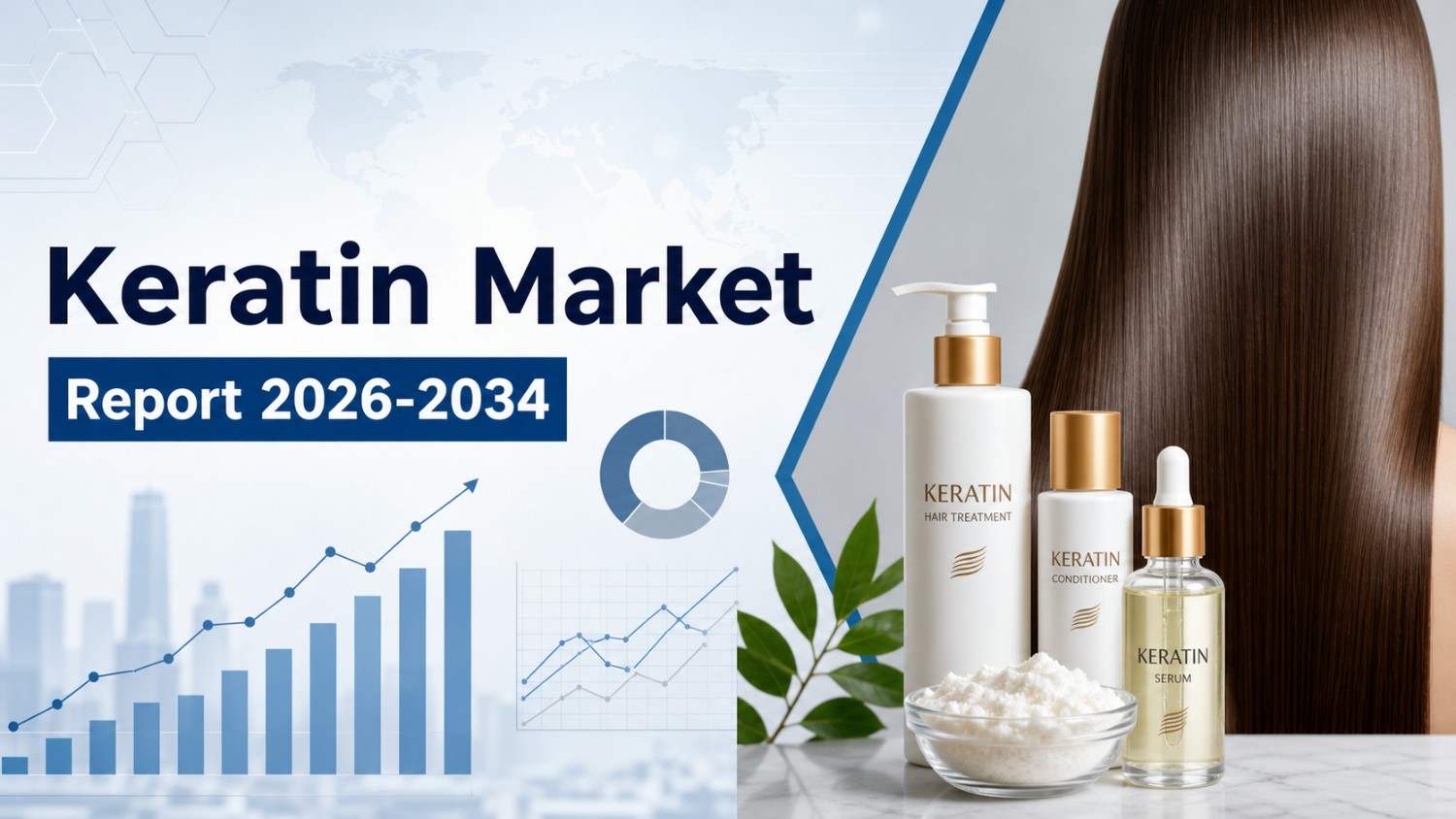
According to IMARC Group's latest research publication, "Keratin Market Size, Share, Trends and Forecast by Type, Application, and Region, 2026-2034", the global keratin market grew from USD 1.64 Billion in 2025 to USD 1.77 Billion in 2026. Looking forward, IMARC Group estimates the market to reach USD 2.76 Billion by 2034, exhibiting a CAGR of 5.72% from 2026-2034, with the industry witnessing steady expansion. Asia-Pacific currently dominates the market, holding a share of 36.5%, supported by cultural emphasis on hair quality, rising disposable incomes, and the widespread influence of K-beauty and J-beauty trends.
This detailed analysis primarily encompasses industry size, business trends, market share, key growth factors, and regional forecasts. The report offers a comprehensive overview and integrates research findings, market assessments, and data from different sources. It also includes pivotal market dynamics like drivers and challenges, while also highlighting growth opportunities, financial insights, technological improvements, emerging trends, and innovations. Besides this, the report provides regional market evaluation, along with a competitive landscape analysis.
How Clean Beauty and Biomedical Innovation are Reshaping the Future of the Keratin Market
Rising consumer awareness about hair health, aesthetics, and the biological role of proteins in maintaining structural integrity is broadening product adoption across professional and retail channels worldwide.
The expanding middle class in developing economies is accelerating demand for premium personal care formulations, including keratin-enriched shampoos, conditioners, and smoothing treatments.
Growing interest in functional nutrition is elevating demand for oral keratin supplements targeting hair, skin, and nail health as beauty-from-within trends reshape consumer priorities.
Technological advancements are enabling manufacturers to offer more efficacious, bioavailable, and sustainable ingredients at commercial scale.
California's Toxic-Free Cosmetics Act banned 24 chemicals, including formaldehyde from personal care products, compelling manufacturers to reformulate existing product lines to maintain market access.
Key Trends in the Keratin Market
Rising Demand for Keratin-Based Hair Care and Smoothing Treatments: Consumers worldwide are increasingly seeking keratin-based shampoos, conditioners, masks, and professional smoothing treatments to combat damage from heat styling, chemical processing, and environmental pollutants. The professional salon segment has been a key driver, with keratin smoothing services gaining widespread popularity for their ability to reduce frizz, strengthen hair fiber, and restore lasting shine to damaged strands. Social media influencers and beauty content creators have amplified consumer awareness, encouraging product experimentation across age groups and demographics worldwide. The male grooming segment is also expanding as men incorporate keratin-enriched products into their daily hair care routines, steadily broadening the consumer base for this category. As per IMARC Group, the global male grooming products market size was valued at USD 90.7 Billion. Demand is particularly strong in markets experiencing rapid urbanization and rising disposable incomes, where consumers are investing more in professional-grade appearance and grooming solutions.
Growing Adoption of Clean Beauty and Formaldehyde-Free Formulations: Regulatory pressure and consumer health awareness are driving a significant shift towards formaldehyde-free keratin formulations, fundamentally reshaping the keratin market outlook for ingredient innovation and competitive positioning. California's Toxic-Free Cosmetics Act banned 24 chemicals, including formaldehyde from personal care products, compelling manufacturers to reformulate existing product lines to maintain market access. Biotech-derived and vegan keratin ingredients are gaining commercial traction as brands respond to clean beauty mandates and shifting consumer values prioritizing ingredient transparency and safety. This evolving regulatory landscape is fundamentally transforming competitive dynamics, favoring manufacturers with strong research and development (R&D) capabilities and the ability to quickly adapt formulations. Brands achieving early compliance are positioned to secure stronger market positions across regulated North American and European markets while appealing to health-conscious consumers in Asia-Pacific who prioritize ingredient transparency in their purchasing decisions.
Expanding Biomedical and Nutraceutical Applications of Keratin: Beyond personal care, keratin is gaining significant traction in healthcare and food applications, emerging as one of the most dynamic keratin market trends. In biomedical contexts, keratin-based biomaterials, including hydrogels, scaffolds, films, and nanoparticles, are being explored for wound healing, drug delivery, tissue engineering, and nerve regeneration due to their exceptional biocompatibility and biodegradability. Research institutions and pharmaceutical companies are actively developing keratin-based platforms to deliver therapeutic agents with targeted precision, opening new commercial avenues beyond traditional cosmetics. In the nutraceutical space, oral keratin hydrolysate supplements are gaining clinical validation and mainstream consumer acceptance globally. Growing consumer interest in functional nutrition and protein-based supplements is further accelerating the adoption of keratin-derived ingredients. Additionally, advancements in extraction and purification technologies are improving the safety, efficacy, and scalability of keratin for medical and dietary applications.
Strong Regional Momentum in Asia-Pacific: Asia-Pacific dominates the global keratin market, supported by cultural emphasis on hair quality, rising disposable incomes, and the pervasive influence of K-beauty and J-beauty trends across the region. Rapid urbanization and middle-class expansion in China, Japan, South Korea, India, and Indonesia are fueling accelerated spending on personal care products, including keratin-enriched hair treatments and protein-based nutritional supplements. South Korea's beauty industry exports surpassed USD 10 Billion, with protein-enriched hair care products, including keratin treatments, emerging as one of the fastest-growing export categories within the global K-beauty product portfolio.
Growing Consumer Awareness About Hair Health: Rising consumer awareness about hair health, aesthetics, and the biological role of proteins in maintaining structural integrity is broadening product adoption across professional and retail channels worldwide. The growing influence of celebrity endorsements and social media beauty trends continues to accelerate adoption of keratin-based shampoos, conditioners, and professional smoothing services. Demand for oral keratin supplements targeting hair growth, nail strength, and skin elasticity is also gaining significant momentum, particularly among health-conscious consumers adopting wellness-oriented beauty routines.
Growth Factors in the Keratin Market
Rising Consumer Awareness About Hair Health: Rising consumer awareness about hair health, aesthetics, and the biological role of proteins in maintaining structural integrity is broadening product adoption across professional and retail channels worldwide. The growing influence of celebrity endorsements and social media beauty trends continues to accelerate adoption of keratin-based shampoos, conditioners, and professional smoothing services.
Expanding Middle Class in Developing Economies: The expanding middle class in developing economies is accelerating demand for premium personal care formulations, including keratin-enriched shampoos, conditioners, and smoothing treatments. Rapid urbanization and growth of the female workforce have fostered convenience-oriented consumption patterns, driving sustained demand for personal care products incorporating high-performance ingredients like keratin.
Growing Interest in Functional Nutrition: Growing interest in functional nutrition is elevating demand for oral keratin supplements targeting hair, skin, and nail health as beauty-from-within trends reshape consumer priorities. Oral keratin hydrolysate supplements are gaining clinical validation and mainstream consumer acceptance globally, with growing consumer interest in functional nutrition and protein-based supplements further accelerating the adoption of keratin-derived ingredients.
Technological Advancements in Extraction and Purification: Technological advancements are enabling manufacturers to offer more efficacious, bioavailable, and sustainable ingredients at commercial scale. Advancements in extraction and purification technologies are improving the safety, efficacy, and scalability of keratin for medical and dietary applications. Manufacturers are aggressively investing in next-generation hydrolyzed keratin components to provide improved bioavailability and deeper penetration into the hair cortex.
Regulatory Push Toward Clean Beauty Formulations: Regulatory pressure and consumer health awareness are driving a significant shift towards formaldehyde-free keratin formulations, fundamentally reshaping the keratin market outlook for ingredient innovation and competitive positioning. The European Cosmetics Regulation continues to drive manufacturers towards cleaner ingredient profiles, spurring innovation in biotech-derived and vegan keratin formulations that comply with stringent safety standards.
Leading Companies Operating in the Global Keratin Industry
Active Concepts LLC
Akola Chemicals Limited
BASF SE
Greentech Biochemicals Co. Ltd.
Hefei TNJ Chemical Industry Co. Ltd.
Keraplast Technologies
Keratin Express LLC
MakingCosmetics Inc.
NutriScience Innovations LLC
Parchem Fine & Specialty Chemicals
ProgenaCare Global
Rejuvenol Inc.
Wellgreen Technology Co. Ltd.
Keratin Market Report Segmentation
Breakup By Type
Alpha-Keratin
Beta-Keratin
Alpha-keratin holds 72.4% of the market share. With its coiled alpha-helical molecular structure, alpha-keratin is the most prevalent naturally occurring form of structural proteins found in human and animal hair, wool, nails, skin, and horn. Alpha-keratin's structural adaptability makes it ideal for use in personal care products, where its film-forming, conditioning, and strengthening qualities provide quantifiable advantages for skin and hair. Alpha-keratin is widely utilized in shampoos, conditioners, hair masks, and smoothing treatments due to its compatibility with a variety of formulation methods and its demonstrated ability to repair cuticle damage brought on by chemical processing, thermal styling, and environmental stresses. Well-established extraction and hydrolysis methods, which ensure consistent ingredient quality at commercial scale and support dependable supply chains, further benefit this segment.
Breakup By Application
Personal Care and Cosmetics
Healthcare and Pharmaceuticals
Food and Beverages
Personal care and cosmetics lead the market with a share of 64.8%. The broadest range of keratin applications is found in the personal care and cosmetics sector, which includes professional salon treatments, retail hair care products, nail formulations, skin care preparations, and color cosmetics. Formulation innovations are driven by consumer desire for practical, scientifically supported treatments to deal with frizz, brittleness, hair damage, and loss of shine. Global demand for keratin-enriched personal care products has increased due to the rising popularity of high-end hair care regimens, the quick development of e-commerce beauty platforms, and the growing impact of social media beauty trends. In order to provide improved bioavailability and deeper penetration into the hair cortex, manufacturers are aggressively investing in next-generation hydrolyzed keratin components. In March 2026, Schwarzkopf introduced KERATÎME Care & Styling range, enhanced by the brand's exclusive Multiplex Bonding Technology™, delivering salon-quality care for at-home use. The product line featured 'Deep Repair Shampoo,' designed for dry, damaged hair and enriched with keratin and silk extract.
Breakup By Region
Asia-Pacific (China, Japan, India, South Korea, Australia, Indonesia, Others)
North America (United States, Canada)
Europe (Germany, France, United Kingdom, Italy, Spain, Others)
Latin America (Brazil, Mexico, Others)
Middle East and Africa
Asia-Pacific, accounting for 36.5% of the share, enjoys the leading position in the market. The region's dominance is underpinned by cultural emphasis on hair quality and personal grooming, rapidly rising disposable incomes, and the pervasive influence of K-beauty and J-beauty philosophies across China, Japan, South Korea, India, and Indonesia. Rapid urbanization and growth of the female workforce have fostered convenience-oriented consumption patterns, driving sustained demand for personal care products, incorporating high-performance ingredients like keratin. Large domestic manufacturing bases in China and India provide cost-competitive production capabilities, while South Korean innovation hubs continue to advance premium keratin formulation technologies exported globally. South Korea's beauty industry exports surpassed USD 10 Billion, with protein-enriched hair care products, including keratin treatments, emerging as one of the fastest-growing export categories within the global K-beauty product portfolio.
North America is a leading region in the global keratin market, driven by high consumer spending on personal care and cosmetic products, a well-developed professional salon infrastructure, and strong adoption of keratin-based hair repair solutions. Growing awareness of keratin's biomedical applications in wound care, tissue engineering, and pharmaceutical delivery is further reinforcing demand across the regional healthcare segment. The clean beauty movement has catalyzed development of formaldehyde-free keratin treatments, encouraging both established and emerging brands to invest in innovation and reformulation to meet evolving consumer expectations. As per IMARC Group, the Canada e-commerce market size reached USD 536.00 Billion. The presence of advanced biotechnology and cosmetic research facilities is also supporting the development of high-performance keratin formulations.
The United States keratin market is propelled by a deeply ingrained beauty culture, a vast professional salon network, and one of the world's most sophisticated personal care retail ecosystems. Consumer spending on premium hair care products has remained resilient, reflecting the high value placed on appearance and hair health among American consumers. Demand for oral keratin supplements targeting hair growth, nail strength, and skin elasticity is also gaining significant momentum, particularly among health-conscious consumers adopting wellness-oriented beauty routines. The Bureau of Labor Statistics reported that barbers, hairstylists, and cosmetologists held 651,200 jobs across the United States, representing one of the world's largest professional salon workforces and creating a substantial, institutionalized distribution channel for professional-grade keratin treatment products and maintenance formulations. The FDA's Modernization of Cosmetics Regulation Act (MoCRA) is reshaping the industry by requiring manufacturers to register facilities and provide robust safety substantiation, strengthening regulatory compliance standards and favoring established brands with transparent ingredient sourcing and supply chain integrity.
The Europe keratin market is shaped by progressive regulatory standards, high consumer sophistication, and robust demand for premium hair care and wellness formulations. The region encompasses diverse national markets, with Germany, France, the United Kingdom, Italy, and Spain contributing most substantially to regional revenue through large professional salon networks and culturally ingrained personal grooming traditions. The European Cosmetics Regulation continues to drive manufacturers towards cleaner ingredient profiles, spurring innovation in biotech-derived and vegan keratin formulations that comply with stringent safety standards. Growing consumer interest in beauty-from-within supplementation is expanding demand for oral keratin hydrolysates across the region. Sustainability is increasingly central to purchasing decisions, with ethically sourced, cruelty-free keratin from wool, feathers, or plant-based materials favored by both consumers and regulators.
Latin America is an emerging market for keratin products, with Brazil serving as the dominant country due to its large population, strong beauty culture, and well-established professional salon industry. Brazil's cosmetics sector is one of the largest globally, fueling robust domestic demand for premium hair care and personal grooming products. Mexico and other markets across the region are also growing steadily as middle-class expansion fuels increasing demand for both professional salon treatments and retail keratin formulations.
The Middle East and Africa represent a growing market for keratin products, supported by rising disposable incomes, expanding retail and e-commerce infrastructure, and increasing consumer awareness of personal grooming and hair health. The findings from the 2023 Household Income and Consumption Expenditure Statistics revealed that the average monthly disposable income for households in the Kingdom of Saudi Arabia was SAR 11,839. Gulf Cooperation Council countries experience strong demand for premium hair care products, driven by high per-capita incomes and a well-developed professional salon sector.
Recent News and Developments in Keratin Market
March 2026: Schwarzkopf introduced KERATÎME Care & Styling range, enhanced by the brand's exclusive Multiplex Bonding Technology™, delivering salon-quality care for at-home use. The product line featured 'Deep Repair Shampoo,' designed for dry, damaged hair and enriched with keratin and silk extract.
April 2025: The Japanese brand Syoss introduced a premium hair dye made with natural clay in response to the growing worries about grey hair among older customers. The product included an after-color treatment with keratin PPT (Poly-Peptide Treatment) to assist in preserving color, reinforcing a highly positive keratin market forecast for the personal care and cosmetics application segment.
Regulatory developments including California's Toxic-Free Cosmetics Act, which banned 24 chemicals including formaldehyde from personal care products, are compelling manufacturers to reformulate existing product lines to maintain market access and driving the shift toward clean beauty formulations.
The clean beauty movement has catalyzed development of formaldehyde-free keratin treatments, encouraging both established and emerging brands to invest in innovation and reformulation to meet evolving consumer expectations across regulated North American and European markets.
Research institutions and pharmaceutical companies are actively developing keratin-based platforms to deliver therapeutic agents with targeted precision, opening new commercial avenues beyond traditional cosmetics in wound healing, drug delivery, and tissue engineering applications.
Note: If you require specific details, data, or insights that are not currently included in the scope of this report, we are happy to accommodate your request. As part of our customization service, we will gather and provide the additional information you need, tailored to your specific requirements. Please let us know your exact needs, and we will ensure the report is updated accordingly to meet your expectations.
About Us
IMARC Group is a global management consulting firm that helps the world's most ambitious changemakers to create a lasting impact. The company provide a comprehensive suite of market entry and expansion services. IMARC offerings include thorough market assessment, feasibility studies, company incorporation assistance, factory setup support, regulatory approvals and licensing navigation, branding, marketing and sales strategies, competitive landscape and benchmarking analyses, pricing and cost research, and procurement research.
Contact Us
IMARC Group
134 N 4th St. Brooklyn, NY 11249, USA
Tel No:(D) +91 120 433 0800
United States: +1-201971-6302
Tags : Keratin Market