GCC Celery Juice Market 2026 | Size, Share, and Demand Forecast by 2034
By jackleen jackleen 27-10-2026 2
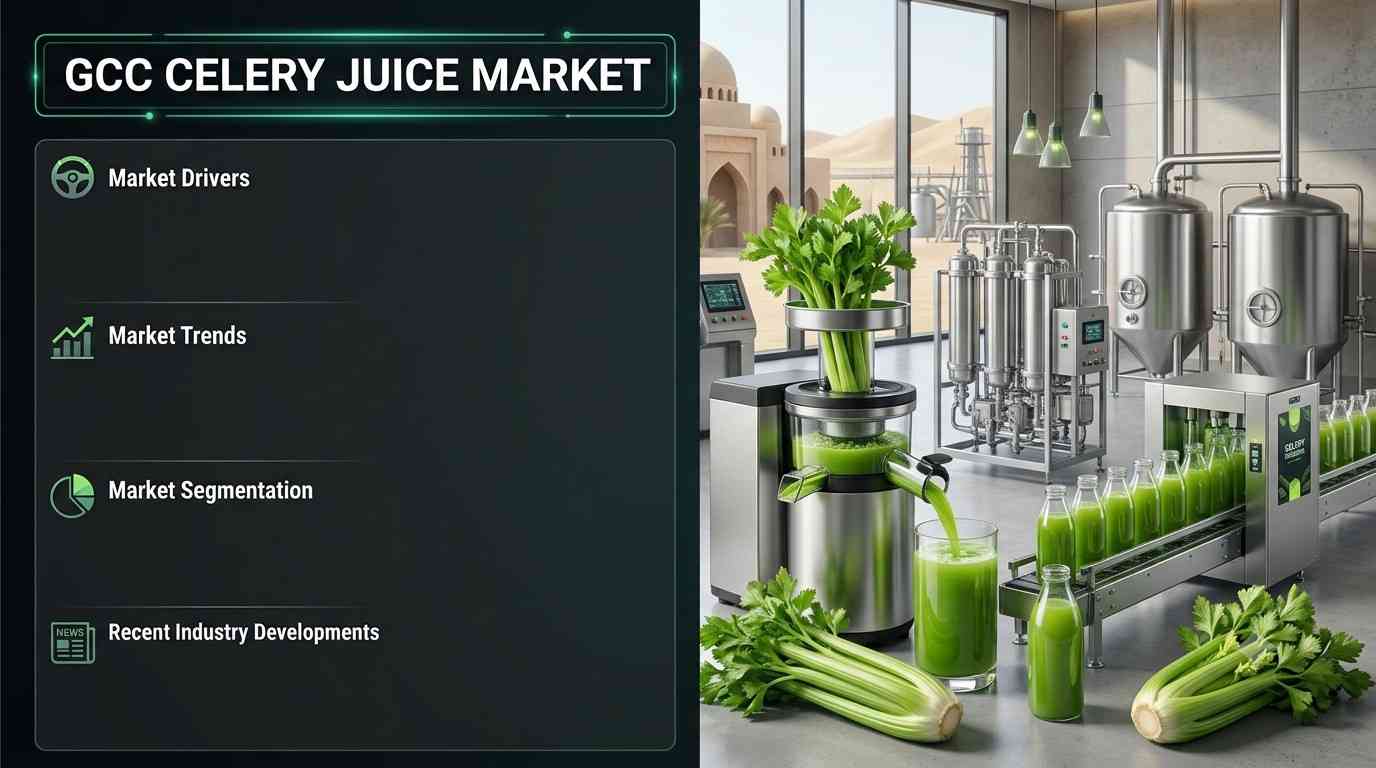
IMARC Group, a leading global market research and management consulting firm, has published its latest market intelligence report on the GCC Celery Juice Market. The GCC celery juice market size reached USD 656.3 Million in 2025 and is projected to reach USD 1,866.1 Million by 2034, exhibiting a CAGR of 11.94% during 2026-2034. The market is being propelled by growing health awareness, the rising prevalence of lifestyle diseases, the escalating impact of international food and health trends, changing consumer lifestyles and hectic schedules, and growing collaboration between juice manufacturers and healthcare providers.
Celery juice has moved from a niche wellness drink to a visible part of the GCC's functional beverage scene, sold as single-ingredient juice, as blends with apple, cucumber or greens, and as part of cleanse and detox packs through juice bars, supermarkets and online delivery. Demand is shaped by a health-conscious, urban and often expatriate population, high rates of diabetes and obesity that push consumers away from sugary drinks, and the influence of global wellness trends on social media. At the same time, the beverage landscape is being reshaped by sugar policy, with the UAE replacing its flat 50% excise tax on sweetened drinks with a tiered system linked to sugar content from 1 January 2026, which favors low-sugar vegetable-based options. Producers are responding with unique formulations, organic and non-GMO claims, premium glass packaging, subscription packs and partnerships with clinics and wellness providers. Scientific evidence on the specific benefits of celery juice remains limited, which makes transparent labeling and credible education important, but combined with strong purchasing power and a growing plant-based and keto-minded consumer base, these forces are shaping a fast-growing niche across Saudi Arabia, the UAE, Qatar, Bahrain, Kuwait, and Oman.
GCC Celery Juice Market at a Glance:
- Market Size (2025): USD 656.3 Million
- Market Forecast (2034): USD 1,866.1 Million
- Growth Rate (2026-2034): CAGR of 11.94%
- Base Year: 2025 | Historical Period: 2020-2025 | Forecast Period: 2026-2034
How AI is Reshaping the Future of the GCC Celery Juice Market
- Digital Marketing and Social Media Reach: According to the report, producers are using aggressive promotional and marketing campaigns through digital advertising and social media to improve brand visibility and raise awareness, while leading companies add influencer partnerships, health-focused messaging and educational blogs, videos and webinars, a data-rich channel where targeting and analytics increasingly guide spending.
- Online Ordering and Subscription Packs: Dubai-based Organic Press sells celery juice from AED 38 and a Celery Pack of four juices and one shot through online ordering with same-day delivery, illustrating how e-commerce and subscription-style bundles let producers reach geographically dispersed consumers and build repeat purchasing.
- Processing Technology and Shelf Life: Cold-pressing and centrifugation are the core production methods, and without pasteurization or high-pressure processing cold-pressed juices generally keep for only about three days refrigerated, so cold chain and processing technology are decisive in the region's hot climate and a key area of investment.
Grab a sample PDF of this report: https://www.imarcgroup.com/gcc-celery-juice-market/requestsample
GCC Celery Juice Market Trends and Drivers:
Demand for celery juice across the GCC is being underpinned by growing health awareness. Consumers are focusing on healthier lifestyles to address acute and chronic health issues, becoming more aware of global trends such as plant-based diets and natural supplements, and the expansion of hospitals and specialized wellness clinics in the region is bolstering interest. Educational institutions are incorporating health and nutrition into their curricula, and beverages that are low in sugar, rich in nutrients and associated with potential health benefits are finding greater acceptance, which fits celery juice's positioning as a low-calorie, vitamin- and mineral-rich option.
The market's structural differentiator is the combination of a high lifestyle-disease burden and sugar policy that favors low-sugar drinks. The report notes that the region has some of the highest rates of diabetes and obesity, driven by sedentary lifestyles and high-calorie diets, which is prompting consumers to seek alternatives to sugary beverages. Since 1 January 2026, the UAE has applied a tiered excise tax on sweetened drinks, with zero excise tax for beverages containing less than 5 grams of sugar or sweeteners per 100 ml and AED 1.09 per liter for products with 8 grams or more, while Al Ain Farms and Marmum Dairy have pledged to cut added sugar by 10% to 20% in everyday products by September 2026.
A third driver is the spread of specific dietary regimes and healthcare collaborations. A growing number of individuals following vegan, keto and paleo diets are looking for compliant beverages, healthcare practitioners are increasingly including natural supplements such as celery juice in holistic wellness plans alongside conventional treatment, and manufacturers are partnering with healthcare providers for promotional events and to offer celery juice in healthcare settings. Because the scientific literature on the benefits of specific juices is still developing, credible information and clear labeling help consumers make informed choices, a dynamic that is set to intensify over the coming decade.
Government Schemes and National Health Programs Driving Demand:
- UAE Tiered Excise Tax on Sweetened Beverages (from 1 January 2026): The UAE replaced its flat 50% excise tax with a system that links duty to sugar content, charging more for higher-sugar drinks and exempting drinks below a threshold, as part of a broader strategy to reduce non-communicable diseases, which favors unsweetened vegetable juices such as celery juice.
- Excise Taxes on Sugar-Sweetened Drinks in Saudi Arabia and the UAE: Both countries introduced a 50% excise tax on drinks with added sugars, according to Mordor Intelligence, pushing manufacturers across the GCC to expand non-sugar portfolios and improve cold chain infrastructure.
- Industry Sugar Reduction Pledges: Al Ain Farms and Marmum Dairy pledged to cut added sugars by 10% to 20% across a range of products by the back-to-school season in September 2026, reflecting the direction of national health policy.
- Healthcare Expansion and Health Education: According to the report, the expansion of healthcare infrastructure, including specialized wellness clinics, and the incorporation of health and nutrition into school curricula are raising health awareness and acceptance of low-sugar, nutrient-dense beverages.
- Oman Agricultural Sector Development: According to the report, Oman is focusing on boosting its agricultural sector, which offers options for local sourcing of celery and other produce.
GCC Celery Juice Market Industry Segmentation:
The report has segmented the market into the following categories:
Breakup By Juice Type:
- Multiple Product Mix Juice
- Single Product Mix Juice
The report provides a detailed breakup and analysis of multiple product mix juice and single product mix juice. Multiple product mix juices cater to different tastes and dietary needs, attract a broader consumer base and support bundled promotions and seasonal offerings, while single product juices allow stringent quality control, simpler production and inventory management and a clear brand message.
Breakup By Packaging Type:
- Plastic Bottles
- Glass Bottles
- Others
The report provides a detailed breakup and analysis of plastic bottles, glass bottles and others. Plastic bottles are cheaper to produce, lighter to ship and less likely to break, supporting competitive prices, while glass bottles are associated with higher-end products, help preserve taste and quality over time and can be sterilized and reused, supporting sustainability positioning.
Breakup By Distribution Channel:
- Modern Trade
- General Trade
- Online
- Others
The report provides a detailed breakup of modern trade, general trade, online and others. Modern trade offers high footfall, visibility and impulse purchases, general trade serves local neighborhoods with faster stock rotation, and online channels provide convenience, wide reach, product descriptions, reviews and nutritional information, with delivery models such as daily and same-day delivery packs.
Breakup By Country:
- Saudi Arabia
- UAE
- Qatar
- Bahrain
- Kuwait
- Oman
The report provides a comprehensive analysis of all six GCC markets. Saudi Arabia has the largest population and a mix of modern and general trade outlets, the UAE offers a diverse population, high tourist footfall and high per capita incomes, Qatar is a lucrative market for premium health-oriented products with a growing fitness trend, Bahrain is an open economy with concentrated urban access and rising online penetration, Kuwait has high disposable incomes and a willingness to pay for quality, and Oman combines a stable economy and a young, health-conscious population with efforts to boost agriculture.
Competitive Landscape:
Leading celery juice companies are focusing on unique formulations, often blending celery with other fruits or superfoods, seeking organic, non-GMO and other specialty certifications, leveraging social media and influencer partnerships, investing in sustainable sourcing and packaging, and expanding online sales channels through partnerships with health-focused retail chains and online marketplaces. Key players include:
- Organic Press
- Almarai
- Al Rabie Saudi Foods (with iPRO)
This is a partial list. Organic Press is a Dubai-based cold-pressed juice brand selling celery juice and celery packs, Almarai leads the wider GCC juice category, with Mordor Intelligence citing a 48% share in its July 2026 update, and Al Rabie Saudi Foods, which partnered with functional beverage specialist iPRO in 2025, represents the push into functional drinks. Competition is increasingly decided by formulation, certification, credible education and distribution reach.
Market Concentration Analysis:
- The GCC celery juice market sits within a juice category led by large dairy and beverage groups such as Almarai, whose scale in cold chain, distribution and retail relationships provides a platform for expanding into functional and vegetable-based juices, reflecting the importance of logistics in a hot climate.
- Fragmentation is high in the cold-pressed and wellness niche, where independent juice bars, boutique brands such as Organic Press, health stores and online sellers compete on freshness, formulation and delivery, creating a structure where large groups lead in mainstream juice while specialists focus on premium, single-ingredient and cleanse offerings.
- Partnerships and sugar-policy realignment are shaping the competitive balance, exemplified by Al Rabie Saudi Foods' 2025 partnership with iPRO on functional beverages, the shift toward low-sugar ranges under the UAE's tiered excise system from January 2026, and manufacturers' collaborations with healthcare providers to offer celery juice in healthcare settings.
What Does The Full Report Cover?
- Historical, current, and forecast market size for the GCC celery juice market from 2020 to 2034
- Market breakup by juice type, packaging type, distribution channel, and country
- Country-level analysis covering Saudi Arabia, UAE, Qatar, Bahrain, Kuwait, and Oman
- Key growth drivers, restraints, and opportunities shaping the market and their impact
- Porter's Five Forces analysis and value chain assessment
- Competitive landscape, market structure, and player positioning
- Detailed profiles of major celery juice companies in the GCC
Recent News and Developments in the GCC Celery Juice Market
- July 2026: Almarai's Q2 2026 update highlighted that its juice category regained market leadership with a 48% share, according to Mordor Intelligence, showing continued consumer interest in juice despite sugar-reduction policy.
- June 2026: Al Ain Farms and Marmum Dairy announced they would cut added sugars by 10% to 20% across a range of everyday UAE dairy products by September 2026, in line with the country's non-communicable disease prevention strategy.
- January 2026: The UAE replaced its flat 50% excise tax on sweetened beverages with a tiered system linked to sugar content, with zero excise tax below 5 grams per 100 ml and AED 1.09 per liter at 8 grams or more.
- 2025: Al Rabie Saudi Foods partnered with iPRO to combine local production capabilities with expertise in functional beverages, according to Mordor Intelligence.
Note: If you require specific details, data, or insights that are not currently included in the scope of this report, we are happy to accommodate your request. As part of our customization service, we will gather and provide the additional information you need, tailored to your specific requirements. Please let us know your exact needs, and we will ensure the report is updated accordingly to meet your expectations.
Key Questions This Report Answers
- How has the GCC celery juice market performed so far, and how will it perform in the coming years?
- What are the drivers, restraints, and opportunities in the GCC celery juice market?
- What is the impact of each driver, restraint, and opportunity on the market?
- What is the breakup of the market based on juice type, packaging type, and distribution channel?
- Which are the most attractive juice type, packaging type, and distribution channel in the market?
- What is the competitive structure of the GCC celery juice market?
- Who are the key players in the GCC celery juice market?
About Us
IMARC Group is a global management consulting firm that helps the world's most ambitious changemakers to create a lasting impact. The company provides a comprehensive suite of market entry and expansion services. IMARC offerings include thorough market assessment, feasibility studies, company incorporation assistance, factory setup support, regulatory approvals and licensing navigation, branding, marketing and sales strategies, competitive landscape and benchmarking analyses, pricing and cost research, and procurement research.
Media and Sales Contact
IMARC Group
Email: sales@imarcgroup.com
United States: +1-201-971-6302
India: +91-120-433-0800
United Kingdom: +44-753-714-6104
Tags : GCC Celery Juice Market