The GCC automotive lubricants landscape is closely connected with vehicle ownership, road transportation, commercial activity, and routine vehicle maintenance across the region. Lubricants perform several essential functions, including reducing friction, controlling heat, protecting components from wear, and supporting the operating efficiency of vehicle systems. These functions make lubrication an important part of both passenger and commercial vehicle maintenance.
The regional landscape is also becoming more diversified as vehicle users increasingly consider lubricant quality, durability, fuel efficiency, and suitability for specific operating conditions. The GCC automotive lubricant sector covers products such as engine oil, transmission fluid, brake fluid, gear oil, grease, coolants, and other specialized formulations, serving different vehicle types and maintenance requirements.
Several forces are shaping demand, including the expansion of vehicle fleets, changing maintenance practices, technological development in lubricant formulations, and the gradual introduction of electric and hybrid vehicles. At the same time, infrastructure development, commercial transportation, tourism activity, and industrial operations are influencing how frequently vehicles are used and maintained across Saudi Arabia, the UAE, Kuwait, Oman, Qatar, and Bahrain.
Vehicle Fleet Expansion Supports Lubricant Consumption
A growing vehicle population remains an important factor supporting lubricant demand across the GCC. Passenger cars account for a substantial portion of everyday transportation, while commercial vehicles support logistics, construction, tourism, public transportation, and other economic activities. Higher vehicle utilization generally creates recurring requirements for oil changes, fluid replacement, component protection, and preventive maintenance.
The operating environment also influences lubricant requirements. Vehicles operating under demanding conditions can experience greater thermal and mechanical stress, making appropriate lubrication important for maintaining component performance. Heavy-duty vehicles, in particular, require formulations designed to support engines and drivetrains under intensive operating cycles, including transportation and on- and off-highway applications.
Engine Oil Remains Central to Vehicle Maintenance
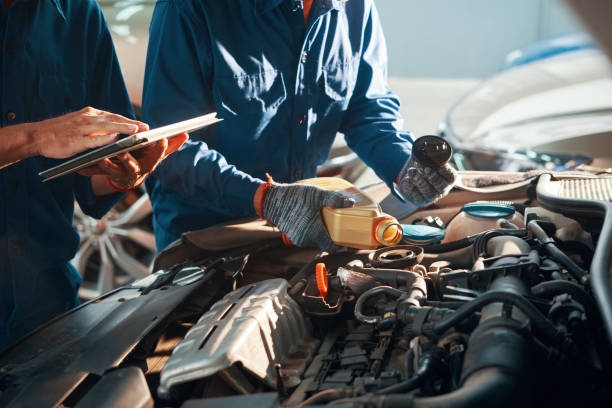
Engine oil occupies an important position because internal-combustion engines continue to represent a major part of the GCC vehicle fleet. Engine oils help reduce friction between moving components while also assisting with heat management, corrosion protection, and wear control. Regular replacement is therefore closely connected with vehicle servicing and preventative maintenance practices.
The demand environment is also encouraging greater attention to specialized engine oil formulations. High-mileage products, performance-oriented lubricants, and formulations designed around particular engine requirements can provide vehicle owners with options suited to different usage patterns. This reflects a broader shift from basic lubricant replacement toward maintenance decisions based on vehicle condition, operating requirements, and product performance.
Synthetic Lubricants Gain Importance
Base oil selection is another important dimension of the GCC automotive lubricant landscape. Mineral, synthetic, semi-synthetic, and bio-based oils serve different performance and application requirements. Synthetic lubricants are gaining attention because of their durability and suitability for modern driveline systems, including manual, semi-automatic, and automatic transmissions.
Modern vehicle engines increasingly require lubricants capable of operating efficiently across demanding conditions. Synthetic formulations can offer characteristics such as improved thermal stability, reduced friction, and longer service performance, depending on the formulation and application. Their use is therefore linked with the wider development of advanced engines and the requirements of original equipment manufacturers.
Maintenance Awareness Is Changing Consumer Behavior
Vehicle owners across the GCC are becoming more attentive to preventive maintenance. Wider access to automotive information has made consumers more aware of the relationship between regular oil changes, fluid replacement, engine condition, and long-term vehicle performance. This behavior can support demand for professional servicing and higher-quality lubricant products.
Independent workshops, garages, OEM-authorized service centers, retail outlets, and online channels all contribute to lubricant availability. The distribution landscape is consequently becoming more varied, allowing consumers and fleet operators to select products based on convenience, vehicle requirements, brand preferences, and service arrangements.
Infrastructure and Tourism Influence Commercial Demand
Infrastructure development across GCC countries can have indirect implications for automotive lubricant consumption. Expanding road networks, transportation systems, logistics infrastructure, and tourism facilities can increase vehicle movement and commercial fleet activity. Tourism is particularly relevant because taxis, rental cars, buses, logistics vehicles, and other transport services require regular operation and maintenance.
Saudi Arabia represents an important country within the regional landscape, supported by its large vehicle base and ongoing investments in roads, transportation, and infrastructure. The country’s ambitions to strengthen automotive-related capabilities and transportation networks can create additional requirements for vehicle maintenance products and services.
Electrification Creates a Long-Term Shift
The gradual adoption of electric and hybrid vehicles introduces a structural consideration for lubricant producers. Electric vehicles generally have different lubrication requirements from conventional internal-combustion vehicles, while hybrids combine elements of both powertrain technologies. As electrification progresses, lubricant manufacturers may need to adapt formulations and portfolios to address changing vehicle architectures.
At the same time, the continued presence of internal-combustion vehicles means conventional automotive lubricants remain relevant across much of the GCC vehicle fleet. This creates a transitional environment in which manufacturers and distributors must respond to established maintenance demand while monitoring the changing requirements associated with electrified powertrains.
Product Innovation Is Reshaping Competition
Competition in the GCC lubricant ecosystem increasingly involves product performance, formulation technology, distribution reach, and relationships with automotive manufacturers and service providers. Companies such as ADNOC, Aramco, Chevron Lubricants, Gulf Oil International, FUCHS Lubricants, Exxon Mobil, BP, Valvoline, TotalEnergies, and regional lubricant suppliers are identified within the competitive landscape of the sector.
Sustainability is also becoming more relevant to product development. The introduction of lubricants designed with environmental considerations demonstrates how manufacturers are responding to changing expectations around emissions, resource efficiency, and lower-impact automotive solutions. These developments may gradually broaden the range of products available to vehicle owners and commercial operators.
What the GCC Lubricant Landscape Indicates
The GCC automotive lubricant landscape is being shaped by the interaction of vehicle fleet expansion, intensive vehicle utilization, preventive maintenance, advanced lubricant formulations, infrastructure development, and the gradual transition toward electrified mobility. Engine oil remains central to conventional vehicle maintenance, while synthetic products and specialized formulations are gaining importance as vehicle technologies and consumer expectations evolve.
Overall, the sector reflects a transition rather than an immediate replacement of conventional lubricant demand. Existing vehicle fleets continue to require regular maintenance, while emerging powertrain technologies are creating new formulation requirements. The ability of lubricant manufacturers and distributors to respond to both established vehicle needs and changing automotive technologies will remain an important factor shaping the regional ecosystem.