Animal Vaccine Market Size: Distribution Channels & Industry Demand Forecast 2026-2034
By Ramanraj 27-10-2026 1
Market Overview:
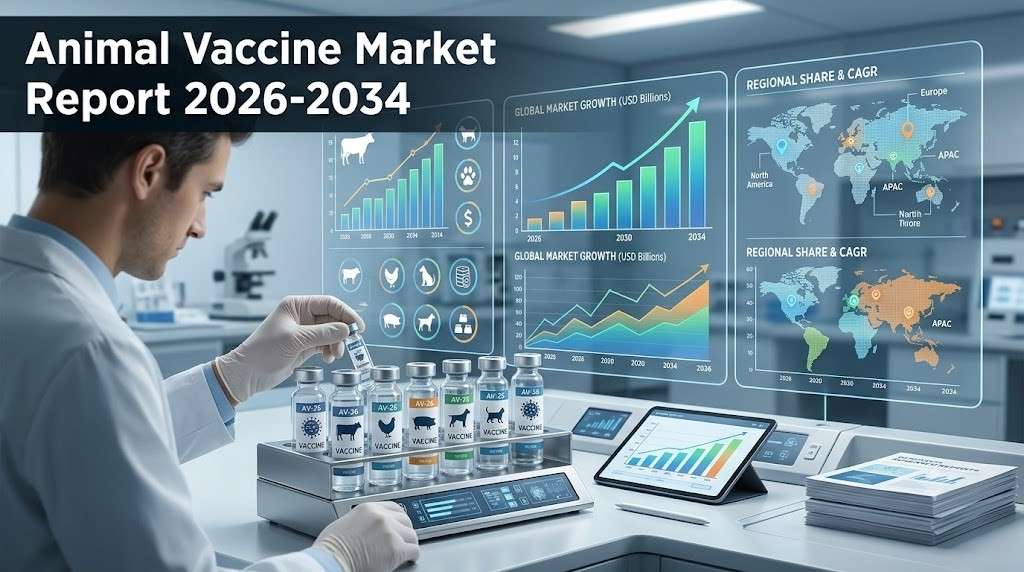
According to IMARC Group’s latest research publication, “Animal Vaccine Market: Global Industry Trends, Share, Size, Growth, Opportunity and Forecast 2026-2034”, The global animal vaccine market size reached USD 15.33 Billion in 2025 and is projected to reach USD 27.09 Billion by 2034, growing at a CAGR of 6.33% during 2026-2034.
This detailed analysis primarily encompasses industry size, business trends, market share, key growth factors, and regional forecasts. The report offers a comprehensive overview and integrates research findings, market assessments, and data from different sources. It also includes pivotal market dynamics like drivers and challenges, while also highlighting growth opportunities, financial insights, technological improvements, emerging trends, and innovations. Besides this, the report provides regional market evaluation, along with a competitive landscape analysis.
How Advancements in Vaccine Technology Are Reshaping the Animal Vaccine Market
- Approximately 60% of newly reported infectious diseases originate from animals, and over 30 new human pathogens have been identified in the past three decades, with 75% traced back to animal sources, making animal vaccination a critical line of defense in global public health.
- Livestock animals dominate the market with a 64.7% share in 2025, driven by large-scale vaccination programs in cattle, poultry, and swine that are essential for food security and economic stability.
- North America leads all regions with a 37.6% global market share, underpinned by advanced veterinary infrastructure, high livestock and pet population density, and strong government-supported preventive care programs.
- In May 2026, the Committee for Veterinary Medicinal Products (CVMP) at the European Medicines Agency (EMA) recommended marketing authorization for Nobivac NXT HCPChFeLV, marking the first veterinary vaccine to use self-amplifying RNA (saRNA) technology.
- In January 2026, Zoetis launched a comprehensive digital resource library at zoetisus.com/PoultryVaccination, providing best-practice guidance for in Ovo, spray cabinet, drinking water, intramuscular, and subcutaneous vaccination methods, enhancing the adoption of high-throughput poultry vaccination techniques.
Key Trends in the Animal Vaccine Market
- Rise of mRNA and Nucleic Acid Vaccine Platforms: The emergence of mRNA and self-amplifying RNA platforms is transforming veterinary vaccinology. In June 2024, Merck Animal Health announced USDA approval of NOBIVAC NXT Canine Flu H3N2, a next-generation vaccine using RNA-particle technology to generate precise immune responses and provide broad protection against multiple viral and bacterial pathogens in companion animals. These platforms allow vaccine developers to respond to emerging diseases in weeks rather than years.
- Accelerating Pet Humanization and Companion Animal Healthcare Spending: Rising pet ownership globally is driving companion animals to grow at the fastest rate within the market at approximately 6.7% through premiumization toward non-core vaccines. Non-core vaccines for conditions such as Lyme disease, leptospirosis, and canine influenza generate 40-80% higher revenue per dose than standard core vaccines, making this segment a high-value growth area for manufacturers.
- Government-Backed Livestock Vaccination Programs: India’s Livestock Health and Disease Control Programme (LHDCP) provides 100% central assistance for vaccinations targeting Foot and Mouth Disease (FMD), Brucellosis, Peste des Petits Ruminants (PPR), and Classical Swine Fever (CSF) across all Indian states and Union Territories. Such government-backed programs create a sustained, policy-driven demand floor for animal vaccines, especially in large livestock-producing economies.
- Expansion of Aquaculture Vaccine Applications: Aquaculture vaccines represent one of the fastest-growing sub-segments, expanding at an estimated 10-12% pace from a growing base. With global shrimp aquaculture currently having no commercially available vaccine against White Spot Syndrome Virus (WSSV) despite decades of research, successful development in this space represents the single largest untapped opportunity in animal vaccinology.
- Digital Health Integration Improving Vaccination Compliance: Digital health tools including telemedicine platforms, vaccination reminder apps, and electronic health records are improving companion animal vaccination adherence by 15-25%, creating measurable incremental vaccine revenue. This ecosystem creates competitive advantages for vaccine manufacturers who bundle digital platforms with their product portfolios, building commercial moats that pure-product competitors cannot easily replicate.
Growth Factors in the Animal Vaccine Market
- Zoonotic Disease Burden Driving Preventive Investment: Globally, zoonotic diseases are responsible for approximately one billion cases of illness and millions of deaths each year. This overwhelming disease burden reinforces the economic and public health rationale for sustained investment in livestock and companion animal vaccination, expanding both government procurement programs and private veterinary healthcare spending.
- Growing Global Demand for Meat, Dairy, and Aquaculture Products: As global populations grow and protein consumption rises, the need to maintain healthy and productive livestock populations has never been greater. Vaccination reduces disease-related production losses, improves feed conversion rates, and protects the economic investment of producers, directly expanding the addressable market for animal vaccines across cattle, poultry, swine, and aquatic species.
- Advancements in Recombinant and Subunit Vaccine Technologies: Beyond mRNA, recombinant, DNA plasmid, viral vectored, and subunit vaccine platforms are enabling the development of safer, more species-specific vaccines with improved immune response profiles. These innovations allow manufacturers to develop vaccines for pathogens that were previously difficult to vaccinate against, opening entirely new market categories such as African Swine Fever (ASF), which carries a commercial potential of USD 2-4 Billion from near-zero current revenue.
- Intranasal Vaccine Adoption Growing Rapidly: The intranasal route of administration is the fastest-growing delivery method at approximately 7.4%, driven by Bordetella bronchiseptica kennel cough vaccines, bovine intranasal respiratory vaccines, and the needle-free mucosal immunity advantages demonstrated for respiratory pathogen vaccines. This trend reduces animal stress, improves handler safety, and enables more efficient mass vaccination in large livestock and poultry operations.
- Post-COVID-19 Structural Shift in Pet Adoption and Companion Animal Healthcare: The COVID-19 pandemic permanently elevated pet adoption rates globally, creating a structurally larger companion animal population that requires ongoing preventive care. This demographic shift, combined with the humanization of pets as family members, has increased owner willingness to spend on comprehensive vaccination programs beyond the traditional core vaccine set, creating durable long-term demand growth.
Leading Companies Operating in the Global Animal Vaccine Industry:
- Merck & Co., Inc.
- Zoetis Inc.
- Boehringer Ingelheim International GmbH
- Elanco
- Virbac
Animal Vaccine Market Report Segmentation:
Breakup By Product:
- Attenuated Vaccines
- Inactivated Vaccines
- Subunit Vaccines
- Toxoid Vaccines
- Conjugate Vaccines
- Recombinant Vaccines
- DNA Vaccines
Breakup By Animal Type:
- Companion Animal
- Dogs
- Cats
- Livestock Animal
- Cattle
- Pigs
- Sheep
- Others
Livestock animals account for the majority of the market with 64.7% share, owing to large-scale preventive healthcare needs across commercial cattle, poultry, and swine operations that are critical for global food security and economic stability.
Breakup By Route of Administration:
- Subcutaneous
- Intramuscular
- Intranasal
- Others
Subcutaneous administration leads at 45.2% market share as it provides precise, consistent vaccine delivery with minimal stress or injury to animals, making it the preferred method across both livestock and companion animal immunization programs.
Breakup By Region:
- North America (United States, Canada)
- Asia Pacific (China, Japan, India, South Korea, Australia, Indonesia, Others)
- Europe (Germany, France, United Kingdom, Italy, Spain, Russia, Others)
- Latin America (Brazil, Mexico, Others)
- Middle East and Africa
North America holds the leading position with 37.6% of global market share, driven by advanced veterinary infrastructure, the world’s highest pet adoption rates, favorable regulatory compliance frameworks, and significant investment in next-generation vaccine technologies.
Recent News and Developments in the Animal Vaccine Market
- January 2026: Zoetis launched a comprehensive digital resource library at zoetisus.com/PoultryVaccination to help poultry producers maximize vaccine program effectiveness. The platform covers best-practice guidance for a full range of vaccination methods including in Ovo, spray cabinet, field spray, drinking water, wing web, intramuscular, subcutaneous, and intraocular techniques, enhancing adoption of high-throughput vaccination approaches.
- May 2026: Elanco Animal Health announced the phased launch of Befrena (tirnovetmab), a new anti-IL-31 monoclonal antibody injection designed to treat canine allergic and atopic dermatitis, expanding the company’s companion animal healthcare portfolio with a targeted biological therapy.
- May 2026: The Committee for Veterinary Medicinal Products (CVMP) at the European Medicines Agency recommended marketing authorization for Nobivac NXT HCPChFeLV, the first veterinary vaccine globally to utilize self-amplifying RNA (saRNA) technology, marking a landmark regulatory milestone for next-generation nucleic acid vaccine platforms in animal health.
Note: If you require specific details, data, or insights that are not currently included in the scope of this report, we are happy to accommodate your request. As part of our customization service, we will gather and provide the additional information you need, tailored to your specific requirements. Please let us know your exact needs, and we will ensure the report is updated accordingly to meet your expectations.
About Us:
IMARC Group is a global management consulting firm that helps the world’s most ambitious changemakers to create a lasting impact. The company provides a comprehensive suite of market entry and expansion services. IMARC offerings include thorough market assessment, feasibility studies, company incorporation assistance, factory setup support, regulatory approvals and licensing navigation, branding, marketing and sales strategies, competitive landscape and benchmarking analyses, pricing and cost research, and procurement research.
Contact Us:
IMARC Group
134 N 4th St. Brooklyn, NY 11249, USA
Email: sales@imarcgroup.com
Tel No: (D) +91 120 433 0800
United States: +1-201-971-6302
Tags : .....