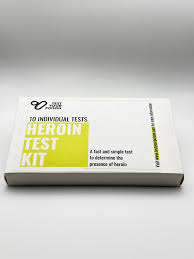
When a substance comes from an uncertain source, its appearance does not always reveal what it contains. Testing can offer additional information and help people better understand the uncertainty surrounding an unknown sample. A heroin test kit is designed to indicate the possible presence of heroin, but understanding its purpose and limitations is essential before interpreting any result.
Why Is Heroin Identification Important?
Heroin is an opioid that can cause serious health effects, including respiratory depression and potentially fatal overdose. One concern with unregulated substances is that their actual composition may differ from what people expect. They may contain unexpected compounds, other drugs, or potentially dangerous adulterants.
This makes identification testing an important topic in harm-reduction education. Rather than relying on colour, texture, or appearance, testing provides another source of information about a sample. However, it should never be considered a guarantee of safety.
How Does a Heroin Test Kit Work?
A heroin identification test kit generally uses a chemical reagent that reacts with certain substances and produces a visible colour change. The resulting reaction is compared with the product's reference information to help indicate whether heroin may be present.
The Test Your Poison heroin testing product is designed for non-biological samples, including powders and liquids. It is an identification test, meaning its purpose is to indicate the possible presence of heroin rather than measure its purity.
Understanding this distinction helps prevent confusion between different types of drug testing products. An identification test and a purity test do not answer the same question.
What Can the Test Results Tell You?
A colour reaction may indicate that heroin is present in the tested sample. However, the result should be understood within the capabilities of the specific testing method.
A positive indication does not reveal the complete chemical composition of a sample. It does not establish the concentration of heroin or identify every other substance that may be mixed with it.
Similarly, a negative result means heroin was not detected under the conditions of that test. It does not prove that the sample contains no other harmful substances or that it is safe.
This is why interpreting results carefully is just as important as understanding how the test works.
Understanding the Limitations of Heroin Testing
No simple reagent test provides a complete chemical analysis. Several factors can influence the appearance and interpretation of a reaction, including sample impurities, other substances in the mixture, lighting conditions, and differences in how results are read.
A heroin test kit is also designed to detect a particular substance, not every possible drug or adulterant. For example, concerns about fentanyl or other unexpected compounds may require separate, substance-specific testing methods.
Reagent testing should therefore be treated as preliminary information rather than definitive laboratory confirmation. More advanced analytical methods may be necessary when a detailed understanding of a sample's composition is required.
Heroin Identification vs. Purity Testing
Another common source of confusion is the difference between identification and purity testing.
Identification testing focuses on whether a particular substance may be present. Purity testing, on the other hand, aims to estimate the concentration of a target substance in a sample.
Someone looking for information about the possible presence of heroin may have a different testing question from someone interested in its estimated purity. Choosing a method that matches the question is important because one type of test cannot automatically provide the information offered by another.
Why Testing Should Be Part of a Broader Harm-Reduction Approach
Testing can improve awareness, but it cannot eliminate the risks associated with unknown substances. A single result should never be used as the only basis for judging whether a sample is safe.
Harm reduction involves understanding uncertainty, recognizing the limitations of available information, and knowing when additional support or professional analysis may be needed. For opioid-related emergencies, recognizing signs such as slow or stopped breathing and unresponsiveness is critical. Naloxone can reverse an opioid overdose, and emergency medical assistance should be sought immediately when an overdose is suspected.
Conclusion
Heroin testing can provide useful information, but its value depends on understanding what the results actually mean. A heroin test kit can indicate the possible presence of heroin, yet it cannot confirm the complete composition or guarantee that a sample is safe. Recognizing these limitations is an important part of responsible harm-reduction awareness. Test Your Poison aims to support better understanding through accessible testing resources and educational information that encourages informed decision-making.
Frequently Asked Questions
What does a heroin test kit detect?
It is designed to indicate the possible presence of heroin in a tested sample through a chemical reaction. Its capabilities depend on the specific product and testing method.
Can a heroin test kit identify every substance in a sample?
No. It is designed to detect heroin, not provide a complete analysis of all the substances present. Additional testing may be needed to investigate other compounds.
Does a negative result mean a sample is safe?
No. A negative result only means heroin was not detected under the conditions of that test. Other potentially harmful substances may still be present.
Is heroin identification testing the same as purity testing?
No. Identification testing checks for the possible presence of heroin, while purity testing estimates its concentration within a sample. They serve different purposes.